Anurag Thakur at 12th BRICS Parliamentary Forum in Delhi
Synopsis
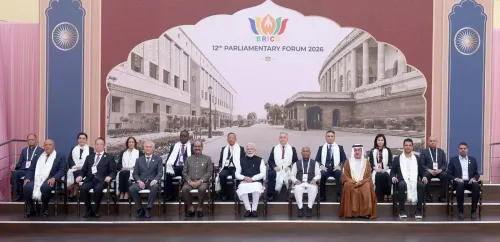
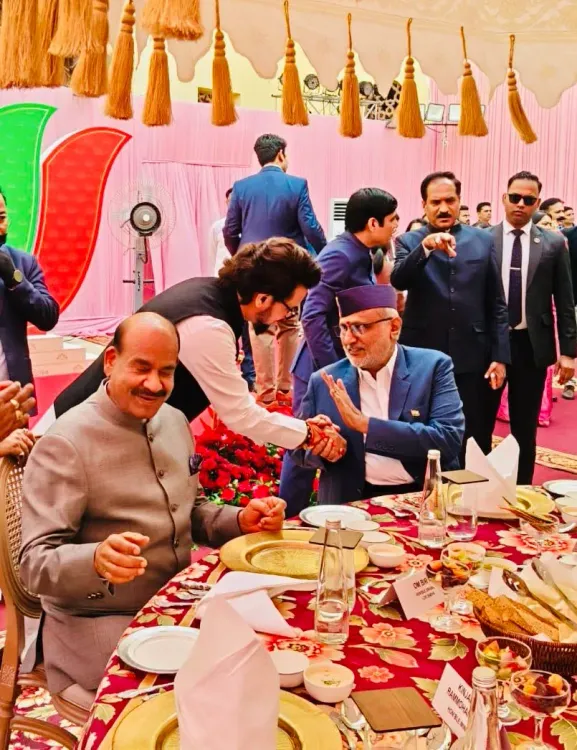
BJP MP Anurag Thakur attended the 12th BRICS Parliamentary Forum 2026 at Samvidhan Sadan, New Delhi, joining a lunch hosted by Vice-President C. P. Radhakrishnan. The forum, themed around people-centric development, brings together parliamentarians from BRICS member and partner nations to strengthen institutional cooperation and multilateral ties.
Key Takeaways
The 12th BRICS Parliamentary Forum 2026 is being held at Samvidhan Sadan, New Delhi on 27 October 2026 .
Vice-President and Rajya Sabha Chairman C.
Radhakrishnan hosted the official lunch for forum participants.
BJP MP Anurag Thakur , former Union Minister of Information and Broadcasting, attended the forum.
The forum's theme is 'Fostering Parliaments for People-Centric Development' , focusing on legislative cooperation within BRICS.
India uses BRICS parliamentary forums to complement executive-level diplomacy with institutional, legislator-to-legislator engagement.
A joint statement or follow-up mechanism from the forum is the key outcome to watch.
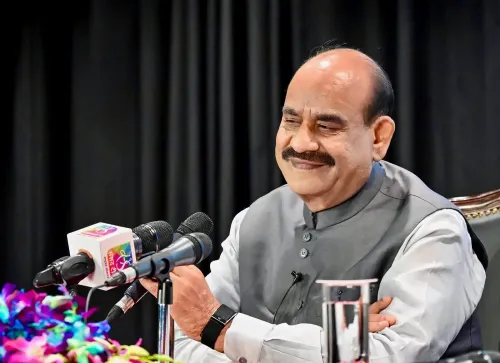
Parliamentary diplomacy took centre stage at Samvidhan Sadan, New Delhi, on Tuesday, 27 October 2026, as legislators from BRICS member and partner nations gathered for the 12th BRICS Parliamentary Forum 2026 — and BJP MP Anurag Thakur was among those at the table.
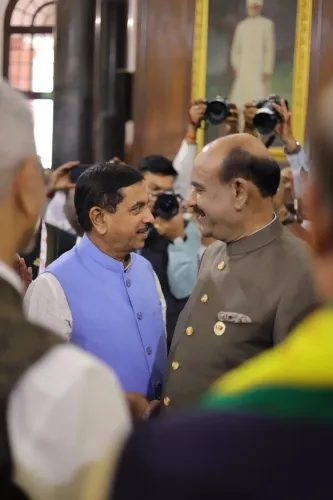
Thakur attended a lunch hosted by Vice-President of India and Rajya Sabha Chairman C. P. Radhakrishnan on the sidelines of the forum. The event is being held under the theme 'Fostering Parliaments for People-Centric Development' — a framing that places legislative institutions, not just executive summits, at the heart of the BRICS agenda.
Why a parliamentary forum matters inside BRICS
BRICS, the intergovernmental grouping of major emerging economies, has long been associated with leader-level summits and finance-minister communiqués. The parliamentary forum works a different lever: it brings elected representatives together to compare legislative approaches, debate shared developmental priorities, and build institutional trust below the executive layer. That is a slower, quieter form of diplomacy — but often a more durable one.
India has consistently used such formats to reinforce its multilateral credentials, treating parliamentary engagement as a complement to — not a substitute for — the summitry conducted by the Prime Minister and External Affairs Ministry. The presence of a senior Lok Sabha MP like Thakur, a former Union Minister for Information and Broadcasting and Youth Affairs and Sports, signals the weight New Delhi attaches to these exchanges.
What Samvidhan Sadan brings to the symbolism
Samvidhan Sadan — India's historic parliamentary complex — provides a deliberate backdrop. Hosting a multilateral parliamentary forum inside the seat of Indian democracy sends an implicit message: that India's constitutional institutions are open to and capable of anchoring global conversations. It is a soft-power choice as much as a logistical one.
Thakur described the forum as 'an important platform for parliamentarians from BRICS member and partner countries to exchange perspectives, strengthen institutional cooperation and deliberate on shared developmental priorities,' adding that such engagements 'reaffirm the importance of parliamentary diplomacy in fostering mutual understanding' and 'advancing inclusive, sustainable and people-centric development.'
The joint statement and what follows
The immediate question after any BRICS parliamentary meeting is whether the deliberations produce a joint statement — and whether any follow-up mechanism gets institutionalised. India's broader BRICS calendar and its evolving relationship with the grouping's expanded membership will determine how much weight the forum's outcomes carry in the months ahead.
For now, the 12th forum puts parliamentary diplomacy back on the map — and India, as host, is writing the itinerary.
Point of View
Participation links his legislative profile to India's foreign-policy apparatus at a time when BRICS's relevance as a counterweight to Western-led institutions is under constant scrutiny. The real test will be whether the forum produces actionable commitments or remains, as critics of such gatherings often argue, a high-table conversation without binding follow-through.
NationPress
27 Oct 2026
Frequently Asked Questions
What is the 12th BRICS Parliamentary Forum 2026?
The 12th BRICS Parliamentary Forum 2026 is a multilateral gathering of elected legislators from BRICS member and partner countries, held at Samvidhan Sadan in New Delhi. It focuses on exchanging legislative perspectives and strengthening institutional cooperation under the theme 'Fostering Parliaments for People-Centric Development.'
Who hosted the BRICS Parliamentary Forum lunch in New Delhi?
Vice-President of India and Rajya Sabha Chairman C. P. Radhakrishnan hosted the official lunch for participants of the 12th BRICS Parliamentary Forum 2026 at Samvidhan Sadan, New Delhi.
Why did Anurag Thakur attend the BRICS Parliamentary Forum?
Anurag Thakur, BJP Lok Sabha MP from Hamirpur and former Union Minister, attended the forum as part of India's parliamentary delegation, reflecting the country's broader practice of engaging multilateral forums at the legislative level alongside executive-level diplomacy.
What is the theme of the 12th BRICS Parliamentary Forum 2026?
The forum is being held under the theme 'Fostering Parliaments for People-Centric Development,' emphasising the role of legislative institutions in advancing inclusive and sustainable development within the BRICS grouping.
Where is Samvidhan Sadan located and why is it significant?
Samvidhan Sadan is the historic parliamentary complex in New Delhi. It serves as India's primary legislative venue and is used for major official and multilateral events, lending constitutional symbolism to gatherings hosted there.