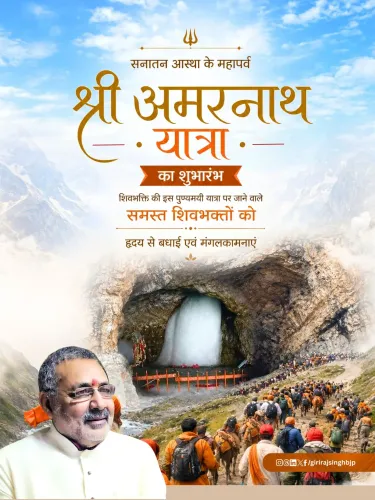
Anurag Thakur Greets Pilgrims as Amarnath Yatra Begins

Synopsis
BJP MP Anurag Thakur greeted pilgrims on the commencement of the Amarnath Yatra on 3 July 2026, praying that the sacred high-altitude pilgrimage to the Baba Barfani shrine in Jammu and Kashmir bring peace, prosperity, and new energy to all devotees.
Key Takeaways
BJP MP Anurag Thakur posted greetings on X on 3 July 2026 marking the start of the Amarnath Yatra .
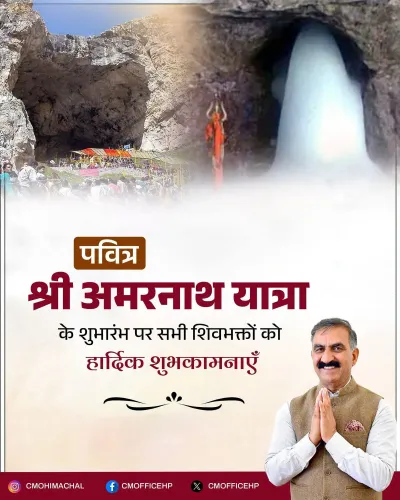
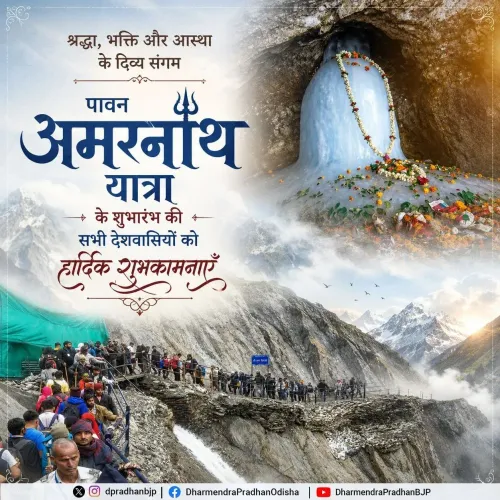
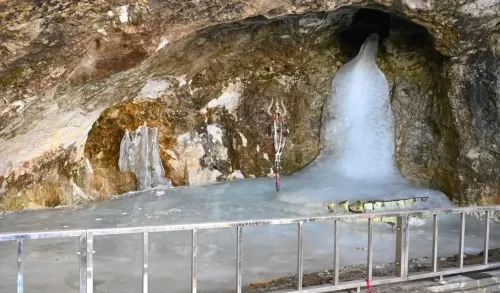
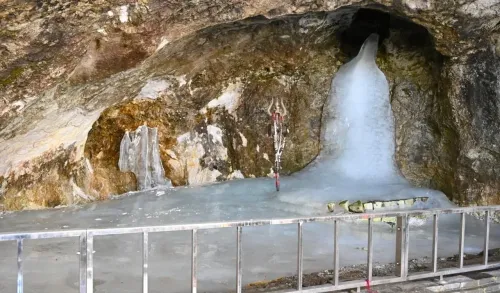
The yatra is dedicated to a naturally formed ice lingam — Baba Barfani — in a high-altitude cave in Jammu and Kashmir .
The pilgrimage is managed by the Shri Amarnathji Shrine Board , a statutory body overseeing logistics, registration, and security coordination.
Two primary routes — Baltal and Pahalgam — serve hundreds of thousands of registered pilgrims each season.
The yatra was last suspended in 2020 due to the COVID-19 pandemic; it has otherwise been held annually every summer.
Post-2019, administrations have linked the yatra to broader religious tourism and connectivity initiatives in the Union Territory.
BJP MP Anurag Thakur extended greetings to pilgrims on Friday, 3 July 2026, marking the commencement of the Shri Amarnath Yatra, the annual high-altitude Hindu pilgrimage to the sacred cave shrine in Jammu and Kashmir. The Lok Sabha MP from Hamirpur, Himachal Pradesh, posted his wishes on X, invoking the blessings of Lord Shiva for all devotees undertaking the journey.
Context
Thakur's post, written in Hindi, offered heartfelt greetings — 'सभी श्रद्धालुओं व तीर्थयात्रियों को हार्दिक शुभकामनाएँ' ('heartfelt best wishes to all devotees and pilgrims') — on the auspicious start of the yatra. He prayed that the pilgrimage, dedicated to Devadhideva Mahadeva (the supreme deity, Lord Shiva), bring happiness, peace, prosperity, and new energy into the lives of all devotees. He signed off with the invocation 'हर-हर महादेव', a traditional Shaivite salutation.
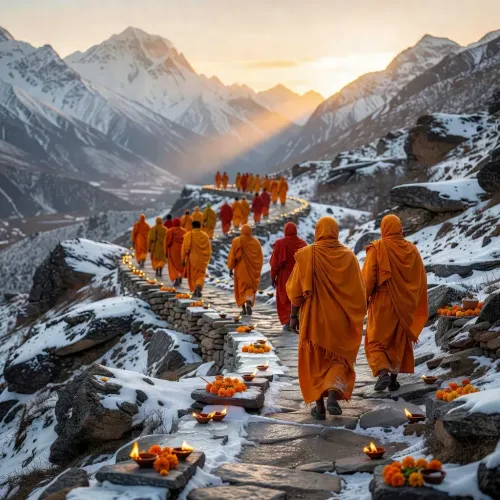
The Amarnath Yatra draws hundreds of thousands of registered pilgrims each season to the naturally formed ice lingam — revered as Baba Barfani (the 'ice deity') — housed inside a high-altitude cave in the Himalayan ranges of Jammu and Kashmir. The pilgrimage is conducted along two primary routes: Baltal and Pahalgam.
Policy Backdrop
The Shri Amarnathji Shrine Board (SASB), a statutory body constituted under Jammu and Kashmir legislation, oversees all logistics, registration, and conduct of the annual yatra. The Board coordinates with security forces, health authorities, and civil administration to manage the pilgrimage across challenging high-altitude terrain.
The yatra has been held every summer without interruption barring 2020, when it was suspended due to the COVID-19 pandemic. Following the reorganisation of Jammu and Kashmir into a Union Territory in 2019, successive administrations have placed the yatra at the centre of the region's religious tourism and connectivity agenda, investing in route infrastructure, medical camps, and security deployment.
Stakeholders and Impact
The yatra's primary stakeholders include Hindu pilgrims from across India and abroad, Jammu and Kashmir residents whose livelihoods are tied to the pilgrimage economy, and the security forces responsible for safe passage along sensitive mountain routes. Local traders, pony operators, and porters along the Baltal and Pahalgam corridors depend significantly on the annual footfall.
For elected representatives like Thakur — whose constituency of Hamirpur in neighbouring Himachal Pradesh shares cultural and religious ties with the broader Shaivite tradition — public messaging around the yatra carries both devotional and political resonance, reflecting the centrality of religious pilgrimage to the BJP's cultural outreach.
What's Next
The Shri Amarnathji Shrine Board is expected to release updates on daily pilgrim movement, weather advisories, and route conditions as the yatra progresses through the summer season. The Ministry of Home Affairs typically coordinates security deployment along the routes, and any developments on that front will be closely watched.
As one of India's largest annual religious gatherings, the Amarnath Yatra serves as a barometer of both administrative preparedness in Jammu and Kashmir and the broader push to position the Union Territory as a destination for faith-based tourism — a trend likely to intensify in the seasons ahead.
Point of View
As one of India's highest-profile faith events, provides a natural platform for outreach to a broad Hindu voter base. For a former Union Minister now in the opposition benches of the ruling alliance, such messaging also signals continued relevance on cultural issues. More broadly, the yatra's smooth conduct each year has become a soft metric of governance credibility in Jammu and Kashmir since the 2019 reorganisation.
NationPress
3 Jul 2026
Frequently Asked Questions
When did the Amarnath Yatra 2026 begin?
The Amarnath Yatra 2026 commenced on or around 3 July 2026 , as indicated by BJP MP Anurag Thakur's greetings post on X marking the yatra's start.
What is the Amarnath Yatra?
The Amarnath Yatra is an annual Hindu pilgrimage to the Amarnath cave shrine in the Himalayas of Jammu and Kashmir , where devotees venerate a naturally formed ice lingam believed to represent Lord Shiva , also called Baba Barfani.
Who manages the Amarnath Yatra?
The Shri Amarnathji Shrine Board (SASB) , a statutory body constituted under Jammu and Kashmir legislation, oversees all arrangements including pilgrim registration, route management, medical facilities, and security coordination.
What are the routes for the Amarnath Yatra?
Pilgrims can reach the Amarnath cave shrine via two main routes: the Baltal route, which is shorter and steeper, and the Pahalgam route, which is longer but considered more scenic and traditionally significant.
Has the Amarnath Yatra ever been cancelled?
Yes, the Amarnath Yatra was suspended in 2020 due to the COVID-19 pandemic . It has otherwise been conducted every summer by the Shri Amarnathji Shrine Board without interruption.