Anurag Thakur Hails 12 Years of Northeast Development Under Modi
Synopsis
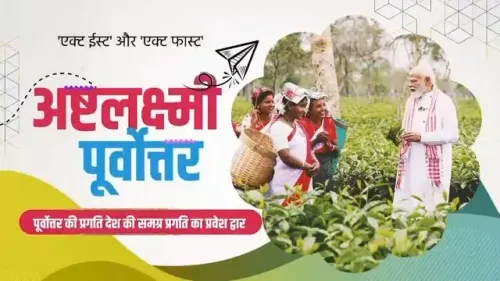
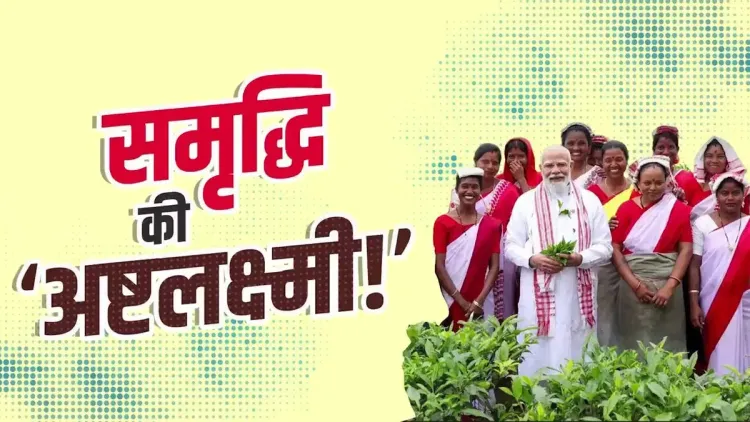
BJP MP Anurag Thakur marked twelve years of Modi government's Northeast policy on 20 June 2026, calling the region the 'Ashtlakshmi of prosperity' and framing its progress as foundational to India's Viksit Bharat vision.
Key Takeaways
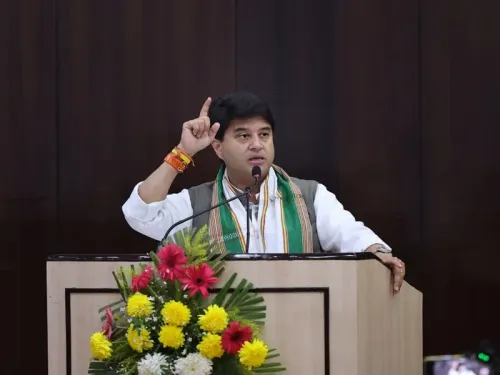
Anurag Thakur , BJP Lok Sabha MP from Hamirpur, posted on X on 20 June 2026 marking 12 years of Northeast development under PM Modi.
He invoked the Ashtlakshmi metaphor, describing the eight northeastern states as eight forms of prosperity.
The post frames Northeast progress as 'the foundation of a Developed India' under the government's Viksit Bharat agenda.
Key policy milestones include the Act East Policy (2014) , the NESIDS scheme (2017) , and enhanced DoNER Ministry budgets.
Flagship infrastructure projects — including the India-Myanmar-Thailand Trilateral Highway and railway lines in Arunachal Pradesh and Manipur — underpin the connectivity push.
The BJP and its allies now govern the majority of northeastern states , a significant political shift since 2014.
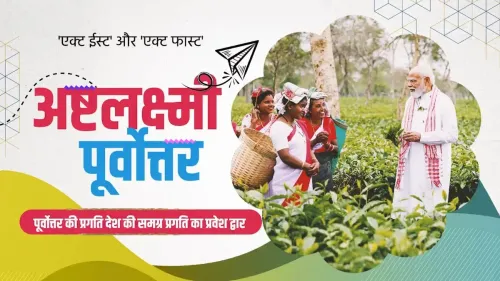
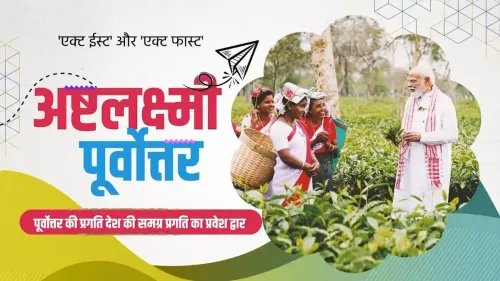
BJP MP Anurag Thakur on Saturday, 20 June 2026 took to X to mark twelve years of what he called a 'new sunrise of development, trust, and opportunity' for Northeast India under Prime Minister Narendra Modi. The post, tagged #12YearsOfRisingNorthEast, framed the region's progress as foundational to the broader vision of a developed India, invoking the cultural metaphor of Ashtlakshmi — the eight forms of prosperity — to describe the eight northeastern states.
Context
Thakur's post, written in Hindi, opens with the phrase 'Samridhi ki Ashtlakshmi' ('The Ashtlakshmi of prosperity'), a reference to the government's long-standing branding of the eight northeastern states — Arunachal Pradesh, Assam, Manipur, Meghalaya, Mizoram, Nagaland, Sikkim, and Tripura — as the eight manifestations of the goddess Lakshmi. He writes that under PM Modi's leadership, 'the Northeast has witnessed a new sunrise of development, trust, and opportunity over the past twelve years.' The post concludes: 'Poorvottar ki pragati, Viksit Bharat ki pragati ka aadhar hai' — 'The progress of the Northeast is the foundation of the progress of a developed India.'
Policy Backdrop
The Bharatiya Janata Party government's engagement with the Northeast since 2014 has been anchored in several structural shifts. The Look East Policy of the 1990s was rebranded as the Act East Policy at the 2014 India-ASEAN Summit, explicitly repositioning the Northeast as a gateway to Southeast Asia rather than a peripheral region. The North East Special Infrastructure Development Scheme (NESIDS), launched in 2017, replaced earlier non-lapsable pool funding arrangements and directed central resources toward roads, power, and connectivity projects.
The Ministry of Development of North Eastern Region (DoNER) received enhanced budgetary outlays across successive Union Budgets, and flagship corridor projects — including the India-Myanmar-Thailand Trilateral Highway and new railway lines in Arunachal Pradesh and Manipur — have been advanced as centrepieces of the region's integration with the national economy. Road, rail, air, and digital connectivity have all been cited by the government as pillars of this integrated approach.
Stakeholders and Impact
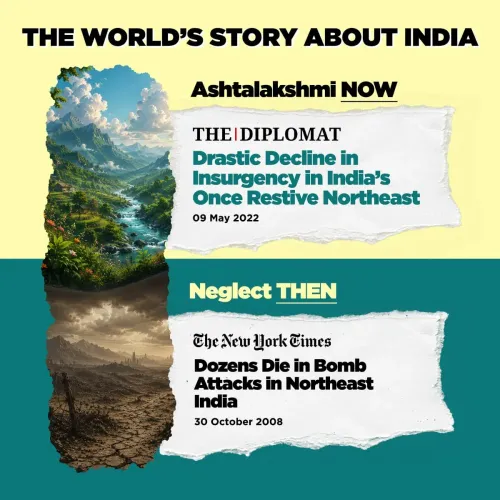
The primary beneficiaries of this policy push are the approximately 45 million residents of the eight northeastern states, particularly border communities whose economic activity and security environment are directly shaped by infrastructure investment and diplomatic engagement with neighbouring countries. Improved connectivity has also been framed as a tool for reducing insurgency-era isolation, with the government pointing to a decline in active militant groups and armed incidents across several states since 2014. Specific outcome metrics for the full twelve-year period have not been independently verified.
For the BJP, the Northeast has also emerged as an important electoral theatre. The party and its allies now govern the majority of northeastern states, a reversal from the pre-2014 political landscape dominated by the Indian National Congress and regional formations.
What's Next
Attention will now turn to parliamentary deliberations on the forthcoming DoNER Ministry budget and on-ground progress reports for corridor projects such as the India-Myanmar-Thailand Trilateral Highway. The government's ability to translate infrastructure outlays into measurable trade and livelihood outcomes for border communities will be a key metric by which the twelve-year record is assessed by opposition parties and independent analysts alike. As India pushes its Viksit Bharat ('Developed India') agenda toward 2047, the Northeast's role as both a connectivity hub and a security buffer will remain central to national policy debates.
Point of View
Reinforcing BJP's claim of transformative regional stewardship ahead of potential electoral cycles in several northeastern states. The invocation of 'Ashtlakshmi' is a deliberate cultural framing that elevates a policy achievement into a civilisational motif, a rhetorical device the party has used consistently to embed governance in Hindu cultural symbolism. By anchoring the twelve-year arc to PM Modi personally, the post also serves as a loyalty signal and a reminder of the central government's continued investment in a region that was historically a Congress stronghold. The broader pattern suggests the BJP intends to make Northeast transformation a signature legacy claim as India approaches its centenary of independence in 2047.
NationPress
20 Jun 2026
Frequently Asked Questions
What did Anurag Thakur say about Northeast India?
Anurag Thakur posted on X on 20 June 2026 saying that under PM Modi's leadership over the past 12 years, the Northeast has seen 'a new sunrise of development, trust, and opportunity,' calling the region the 'Ashtlakshmi of prosperity.'
What is the Ashtlakshmi metaphor for Northeast India?
The 'Ashtlakshmi' metaphor refers to the eight northeastern states — Arunachal Pradesh, Assam, Manipur, Meghalaya, Mizoram, Nagaland, Sikkim, and Tripura — being likened to the eight forms of the goddess Lakshmi, symbolising eight sources of prosperity for India.
What is the Act East Policy and how does it affect Northeast India?
The Act East Policy, announced at the 2014 India-ASEAN Summit, repositioned the Northeast as India's gateway to Southeast Asia, accelerating infrastructure and trade connectivity projects in the region.
What is the North East Special Infrastructure Development Scheme (NESIDS)?
NESIDS is a central government scheme launched in 2017 to fund infrastructure projects in the northeastern states, replacing earlier non-lapsable pool funding arrangements and focusing on roads, power, and connectivity.
What is Viksit Bharat and what role does the Northeast play in it?
Viksit Bharat, or 'Developed India,' is the Modi government's vision for India's development by 2047. The Northeast is positioned as foundational to this vision due to its strategic location, connectivity potential, and natural resources.