Anurag Thakur Highlights India-Japan Cultural Ties
Synopsis
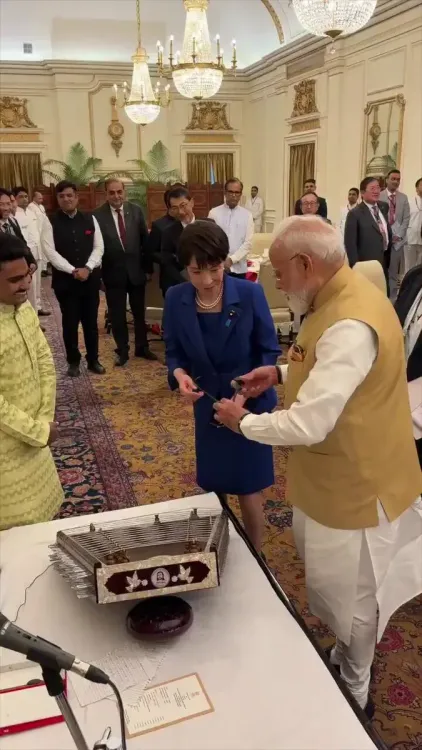
BJP MP Anurag Thakur on 2 July 2026 celebrated India-Japan cultural bonds with a video post captioned 'melodious relations', spotlighting the two nations' expanding people-to-people and artistic diplomacy under their Special Strategic and Global Partnership.
Key Takeaways
BJP MP Anurag Thakur posted a video on 2 July 2026 describing India-Japan ties as 'surmayee sambandh' (melodious relations).
India and Japan elevated bilateral ties to a Special Strategic and Global Partnership in 2014 , covering cultural and strategic dimensions.
The India-Japan Cultural Exchange Programme , launched in 2012 , promotes performing arts and music collaborations between the two nations.
The ICCR and Indian missions in Japan are the primary institutional channels for cultural diplomacy between the two countries.
Cultural exchanges complement major economic projects like the Mumbai-Ahmedabad High-Speed Rail Corridor and regular 2+2 security dialogues .
The next India-Japan Annual Summit and the 2026-27 cultural calendar will be key milestones to watch for further people-to-people initiatives.
BJP MP Anurag Thakur on Thursday, 2 July 2026, invoked the phrase 'surmayee sambandh' ('melodious relations') to celebrate the cultural bond between India and Japan, sharing a video that underscores the two nations' growing people-to-people connect.
Context
Thakur's post, captioned 'सुरमयी संबंध' — meaning 'melodious relations' — paired with the Indian and Japanese flags and a musical note emoji, signals an appreciation of the artistic and cultural thread woven into the bilateral relationship. The accompanying video, while its specific content could not be independently verified, appears to depict a musical or cultural exchange between the two countries. The former Union Minister of Information and Broadcasting has consistently championed soft-power diplomacy through cultural programming during his ministerial tenure.
Policy Backdrop
India and Japan elevated their bilateral ties to a Special Strategic and Global Partnership in 2014, institutionalising annual summits and a broad framework for people-to-people engagement. The two countries signed the Comprehensive Economic Partnership Agreement in 2011, which included provisions for cultural and educational cooperation. A dedicated India-Japan Cultural Exchange Programme, launched in 2012, has since facilitated collaborations in performing arts, music and heritage, with Indian missions in Japan and the Indian Council for Cultural Relations (ICCR) serving as primary channels for such initiatives.
The Annual India-Japan Summit mechanism, instituted in 2006, has helped synchronise cultural diplomacy with strategic priorities in the Indo-Pacific region. Music and arts exchanges have increasingly been used to build public goodwill alongside high-stakes economic projects such as the Mumbai-Ahmedabad High-Speed Rail Corridor and regular 2+2 security dialogues.
Stakeholders and Impact
Cultural performers, youth exchange participants and diaspora communities on both sides stand to benefit from sustained India-Japan artistic collaboration. For India, such exchanges reinforce its Act East Policy, which positions Japan as a cornerstone partner in economic, defence and cultural outreach across Asia. For Japan, engagement with India's rich classical and folk music traditions adds a distinct dimension to its own cultural diplomacy in South Asia.
Posts of this nature from senior political figures also serve a signalling function — communicating to domestic and international audiences that the bilateral relationship extends well beyond trade and security into the realm of shared heritage and artistic expression.
What's Next
Attention will now turn to the next India-Japan Annual Summit and the cultural calendar for 2026-27, including any planned ICCR music tours or joint festivals that may have prompted Thakur's post. As India deepens its Indo-Pacific engagement, cultural diplomacy with Japan is expected to remain an active and visible strand of the overall relationship.
Point of View
He draws on soft-power vocabulary that resonates with both domestic audiences and the Indian diaspora in Japan. The timing — mid-2026 — likely aligns with a cultural event or diplomatic calendar milestone, reinforcing that people-to-people engagement is being actively curated alongside the harder edges of the Special Strategic and Global Partnership. For the BJP, such posts also serve to associate the party's governance record with India's expanding global cultural footprint.
NationPress
1 Oct 2026
Frequently Asked Questions
What did Anurag Thakur post about India and Japan?
Anurag Thakur posted a video on 2 July 2026 with the caption 'surmayee sambandh' (melodious relations), celebrating the cultural and people-to-people ties between India and Japan.
What is India's cultural partnership with Japan?
India and Japan launched the India-Japan Cultural Exchange Programme in 2012 to promote performing arts and music collaborations. The ICCR and Indian missions in Japan coordinate these exchanges under the broader Special Strategic and Global Partnership framework established in 2014.
What is the India-Japan Special Strategic and Global Partnership?
India and Japan elevated their bilateral relationship to a Special Strategic and Global Partnership in 2014, institutionalising annual summits and cooperation across strategic, economic and cultural domains.
How does India use culture in its Act East Policy?
India's Act East Policy uses cultural diplomacy — including music, performing arts and heritage programmes — to build public goodwill with East and Southeast Asian partners, with Japan being a key focus country.
Who is Anurag Thakur?
Anurag Thakur is a BJP Lok Sabha MP from Hamirpur, Himachal Pradesh, and a former Union Minister of Information and Broadcasting as well as Youth Affairs and Sports.