Anurag Thakur Hails India-UK CETA Coming into Force
Synopsis
BJP MP Anurag Thakur on 15 July 2026 hailed the India-UK Comprehensive Economic and Trade Agreement coming into force, saying zero duties on thousands of Indian goods will benefit farmers, fishermen, MSMEs, and exporters, and open new avenues for Make in India.
Key Takeaways
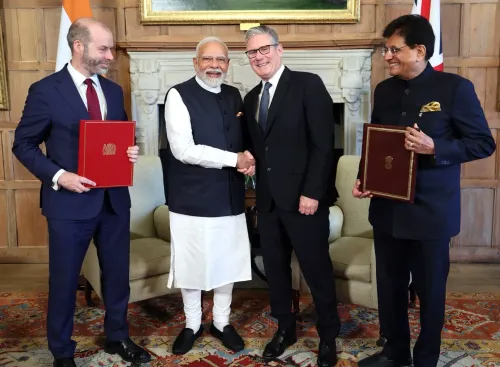
BJP MP Anurag Thakur announced that the India-UK Comprehensive Economic and Trade Agreement (CETA) entered into force on 15 July 2026 .
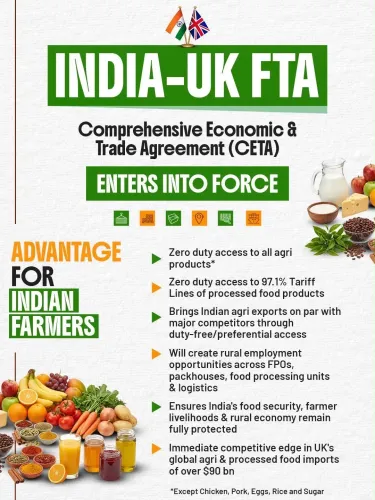
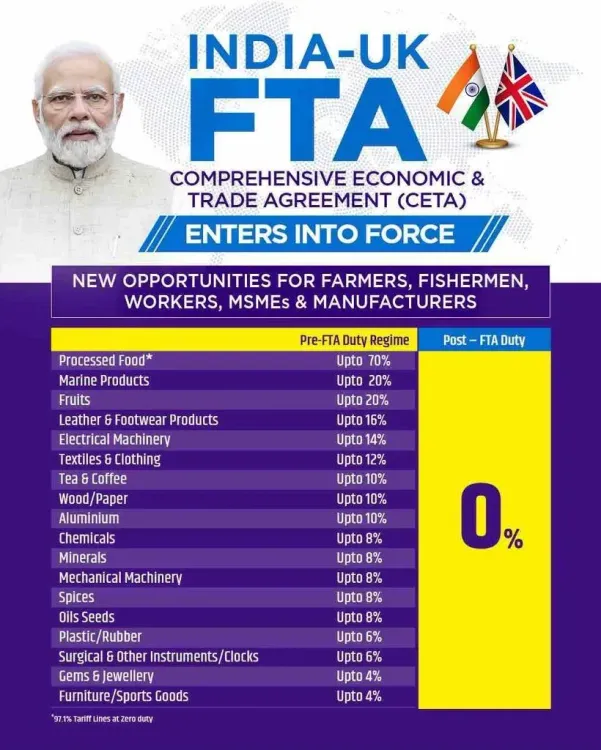
Duties on thousands of Indian products have been reduced to zero under the agreement.
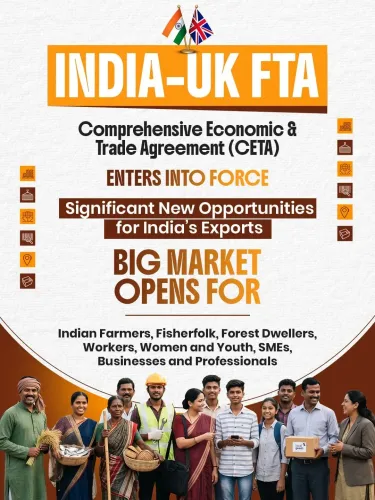
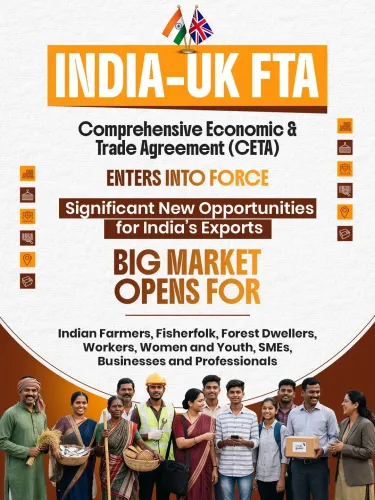
Key beneficiaries cited include Indian farmers, fishermen, MSMEs, manufacturers, and exporters .
The deal is expected to create new opportunities for the Make in India initiative by improving market access in the United Kingdom .
Formal India-UK FTA negotiations were launched in January 2022 , following the UK's exit from the European Union.
Implementing tariff schedules and early trade data will be key indicators of the agreement's real-world impact.
BJP MP Anurag Thakur on Wednesday, 15 July 2026 welcomed the entry into force of the India-UK Comprehensive Economic and Trade Agreement (CETA), calling it a 'proud moment for Bharat' and crediting the development to the leadership of Prime Minister Narendra Modi.
Context
Thakur posted on X that duties on 'thousands of Indian products' have been slashed to zero under the agreement, which he said would benefit farmers, fishermen, MSMEs, manufacturers, and exporters. He also highlighted that the deal opens 'new doors of opportunity' for the Make in India initiative.
The India-UK trade relationship has been in the spotlight since January 2022, when both governments formally launched free trade agreement negotiations following years of exploratory talks that gained momentum after the United Kingdom's departure from the European Union.
Policy Backdrop
The Make in India programme, launched in 2014, has been a cornerstone of India's manufacturing and export strategy, aiming to attract foreign investment and integrate Indian producers into global value chains. A bilateral trade deal with the United Kingdom — one of the world's largest consumer economies — has been viewed as a significant potential accelerant for that agenda.
India has pursued multiple bilateral trade agreements since 2020 as part of a broader push to diversify export markets. The United Kingdom, likewise, has actively sought fresh economic partnerships outside the EU framework since Brexit, making an India deal among its most strategically significant targets.
Stakeholders and Impact
Indian farmers, fishermen, and small and medium enterprises (MSMEs) are among the primary beneficiaries cited by Thakur. Zero-duty access for a wide range of goods could improve price competitiveness for Indian products in the UK market, which has historically applied tariffs aligned with former EU schedules.
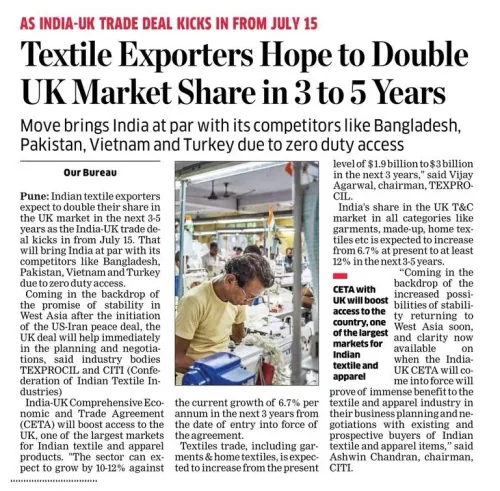
Indian exporters in sectors such as textiles, engineering goods, processed foods, and seafood are expected to be among the early movers to take advantage of the revised tariff architecture. The agreement's investment provisions may also ease market-entry conditions for Indian manufacturers looking to establish a foothold in Britain.
What's Next
Attention will now turn to the official tariff schedules and implementing notifications issued by both governments, which will detail the precise product categories and timelines for duty elimination. Parliamentary scrutiny of implementing legislation in both countries and early trade data releases will be closely watched to assess real-world impact.
For India's broader trade diplomacy, the operationalisation of the India-UK CETA adds momentum to ongoing negotiations with other major partners and reinforces the Modi government's positioning of bilateral economic agreements as instruments of strategic outreach.
Point of View
The deal offers a politically salient narrative — zero duties benefiting farmers and MSMEs — that maps neatly onto its domestic electoral messaging. The United Kingdom's eagerness to conclude the deal also reflects the continued search for post-Brexit economic dividends, making this a rare instance where both sides' domestic political incentives aligned with strategic necessity. How quickly exporters and small businesses can operationalise the new tariff access will determine whether the agreement translates from diplomatic headline to measurable economic gain.
NationPress
15 Jul 2026
Frequently Asked Questions
What is the India-UK CETA and when did it come into force?
The India-UK Comprehensive Economic and Trade Agreement (CETA) is a bilateral free trade deal between India and the United Kingdom. It entered into force on 15 July 2026 , according to BJP MP Anurag Thakur's announcement.
Which Indian sectors benefit from the India-UK free trade agreement?
The agreement is expected to benefit Indian farmers, fishermen, MSMEs, manufacturers, and exporters by reducing duties on thousands of Indian products to zero in the UK market.
How does the India-UK CETA help Make in India?
By opening zero-duty access for Indian-manufactured goods to the UK market, the agreement creates stronger export incentives for domestic producers, directly supporting the Make in India initiative launched in 2014.
When did India and UK start FTA negotiations?
Formal negotiations for the India-UK free trade agreement were launched in January 2022 , following the United Kingdom's departure from the European Union.
What did Anurag Thakur say about the India-UK trade deal?
BJP MP Anurag Thakur called it a 'proud moment for Bharat,' crediting PM Narendra Modi's leadership and saying the deal slashes duties on thousands of Indian products to zero while opening new opportunities for Make in India.