Anurag Thakur Hails Jewellers Association Jaipur Centenary
Synopsis
BJP MP Anurag Thakur marked the centenary of the Jewellers Association Jaipur, founded in 1927, calling its hundred-year preservation of values and credibility a remarkable institutional achievement and invoking classical Indian texts on jewellery craftsmanship as a form of disciplined artistry.
Key Takeaways
Jewellers Association Jaipur entered its hundredth year in 2026, having been founded in 1927 .
BJP MP Anurag Thakur extended congratulations during a visit to Jaipur on 4 July 2026 .
Thakur cited India's classical scriptures, describing jewellery craftsmanship as a sadhana — a discipline of creating beauty through patience and concentration.
Jaipur is a nationally recognised hub for kundan , meenakari and gem-set jewellery with deep artisan traditions.
The Gem and Jewellery Export Promotion Council , established in 1966 , provides the broader institutional framework within which regional associations like this one operate.
Centenary events and potential government policy references to Jaipur's artisan clusters are expected to draw attention through 2027 .
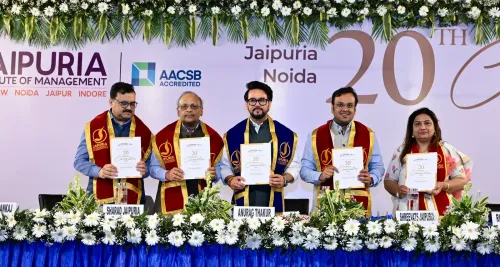
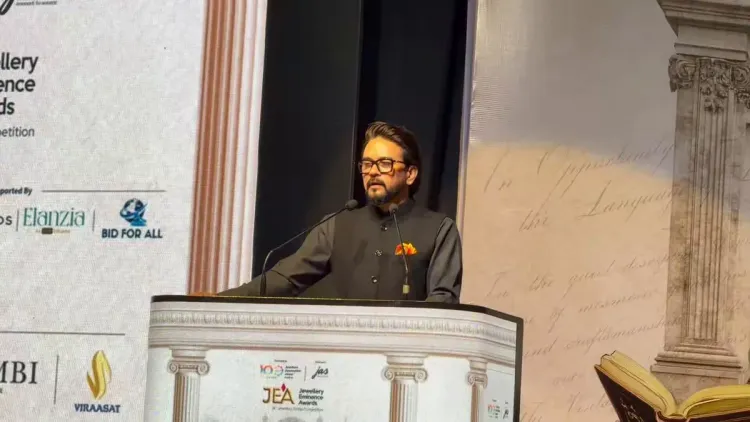
BJP MP Anurag Thakur on Saturday, 4 July 2026, extended warm congratulations to the Jewellers Association Jaipur as the trade body entered its hundredth year, describing the century-long journey as a rare and remarkable achievement for any institution.
Context
Posting from Jaipur, Thakur wrote in Hindi that jewellery craftsmanship is described in India's classical texts not merely as a livelihood but as a 'sadhana' (spiritual discipline) — a practice of creating beauty through patience and concentration. He noted that the association, founded in 1927, has now stepped into its centenary year, calling it no ordinary feat to have preserved one's values, credibility and leadership across a full century.
The message was accompanied by a video, and the post was geotagged to Jaipur, Rajasthan, indicating Thakur's presence in the city for the occasion.
Policy Backdrop
Jaipur has long been recognised as one of India's foremost centres for traditional jewellery craftsmanship, particularly kundan, meenakari and gem-set designs rooted in centuries of artisan knowledge. The city's jewellery sector sits at the intersection of living heritage and export commerce, with institutional bodies playing a key role in maintaining trade standards and artisan training.
India's gem and jewellery trade gained a formal promotional framework when the Gem and Jewellery Export Promotion Council was established in 1966, providing an organised channel through which regional associations such as the Jaipur body could engage with national and international markets. The Jewellers Association Jaipur's own roots predate that council by nearly four decades, reflecting the city's deep-seated commercial and craft traditions.
Stakeholders and Impact
The association represents traditional jewellers and artisans across Jaipur, a community whose livelihoods depend on both domestic demand and export networks. A centenary milestone carries symbolic weight for such a body, reinforcing its credibility among member craftspeople, buyers and policymakers alike.
Political figures have increasingly issued public tributes to centenary trade bodies, framing classical Sanskrit references to craft alongside contemporary commercial significance. Thakur's message follows this pattern, linking scriptural tradition with the association's institutional longevity to underscore the cultural and economic value of Jaipur's jewellery cluster.
What's Next
Attention is likely to turn to any formal centenary programme the association may schedule through 2027, the full hundredth year of its founding. State and central government references to artisan clusters in upcoming budget or MSME policy statements could also draw on milestones such as this one to make the case for sustained support of heritage craft industries.
For Jaipur's jewellers, the centenary offers an opportunity to consolidate the association's standing and potentially attract fresh policy attention to the sector's training, export and infrastructure needs.
Point of View
Lending institutional anniversaries a weight beyond mere ceremony. By invoking Sanskrit scriptural tradition alongside a century of commercial continuity, the message positions Jaipur's jewellery sector as both a heritage asset and an economic pillar deserving of policy attention. This approach reflects a broader BJP strategy of foregrounding living craft clusters in Rajasthan to reinforce cultural identity while simultaneously signalling support for artisan-led MSME ecosystems. The centenary timing also primes the association for potential inclusion in upcoming budget or export-promotion narratives around India's gem and jewellery sector.
NationPress
4 Jul 2026
Frequently Asked Questions
When was the Jewellers Association Jaipur founded?
The Jewellers Association Jaipur was founded in 1927 , making 2026 the year it entered its hundredth year of existence.
Why did Anurag Thakur congratulate the Jewellers Association Jaipur?
BJP MP Anurag Thakur congratulated the association on reaching its centenary milestone, praising its hundred-year record of preserving values, credibility and leadership in Jaipur's jewellery trade.
What is Jaipur famous for in jewellery?
Jaipur is renowned for traditional jewellery styles including kundan , meenakari and gem-set designs, making it one of India's most significant centres for heritage jewellery craftsmanship and export.
What did Anurag Thakur say about jewellery craftsmanship?
Thakur quoted India's classical scriptures, stating that jewellery making is described not merely as a livelihood but as a sadhana — a disciplined practice of creating beauty through patience and concentration.
What is the Gem and Jewellery Export Promotion Council?
The Gem and Jewellery Export Promotion Council was established in 1966 to organise and promote India's gem and jewellery trade, providing an institutional framework that regional associations like the Jaipur body engage with.