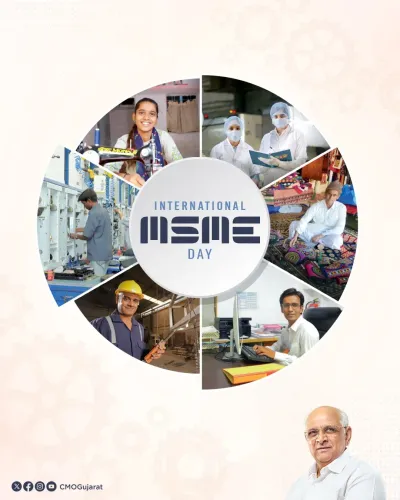
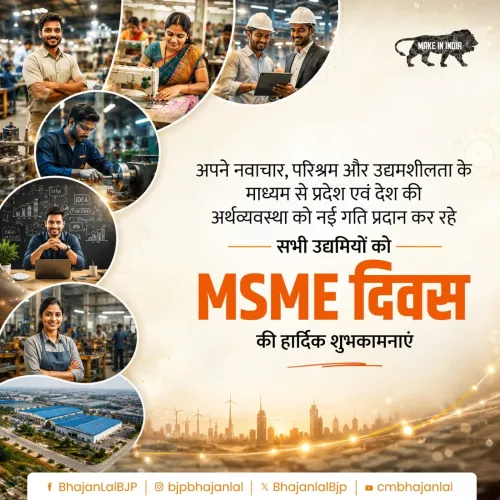
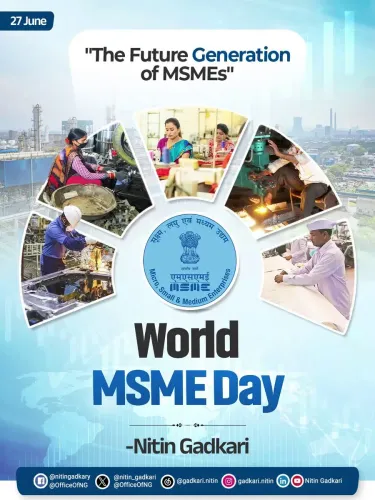
Anurag Thakur Hails MSME Schemes on International MSME Day

Synopsis
On International MSME Day 2026, BJP MP Anurag Thakur credited 12 years of the Modi government with transforming India's MSME sector through Udyam Registration, PM Vishwakarma, CGTMSE and a Rs 10,000 crore SME Growth Fund, calling small businesses the drivers of Atmanirbhar Bharat.
Key Takeaways
Anurag Thakur , BJP Lok Sabha MP from Hamirpur , posted on 27 June 2026 to mark International MSME Day .
He cited 12 years of the Modi government as transformative for India's MSME sector under the #12YearsOfSeva campaign.
The Udyam Registration portal, launched in July 2020 , simplified paperless MSME formalisation and replaced Udyog Aadhaar.
The PM Vishwakarma scheme, with an outlay of Rs 13,000 crore , supports 13 traditional trades with training, toolkits and subsidised credit.
CGTMSE has provided collateral-free loan guarantees to micro and small enterprises since 2000 , with progressively raised limits.
A Rs 10,000 crore SME Growth Fund and easier credit access were highlighted as additional pillars of the government's MSME push.
BJP MP Anurag Thakur on Saturday, 27 June 2026 extended greetings to MSME entrepreneurs, artisans and innovators on International MSME Day, crediting 12 years of the Modi government with transforming India's small-business landscape through a suite of formalisation, credit and skilling schemes.
Context
Observed annually on 27 June, International MSME Day was designated by the United Nations to spotlight the contribution of micro, small and medium enterprises to sustainable development and employment. This year's theme — 'Empowering MSMEs through Innovation and Sustainable Industrial Development' — aligns with a global push to make small businesses more technology-ready and climate-resilient. Thakur, a Lok Sabha MP from Hamirpur, Himachal Pradesh and former Union Minister of Information and Broadcasting, used the occasion to catalogue the BJP-led central government's MSME agenda since 2014.
In his post, Thakur wrote that the theme 'perfectly aligns with Modi Government's vision,' adding that Prime Minister Narendra Modi's leadership had made 'the last 12 years transformative for Bharat's MSMEs.' The post was tagged #12YearsOfSeva, a campaign hashtag marking a dozen years of the Modi administration.
Policy Backdrop
Thakur specifically cited four pillars of the government's MSME push. The Udyam Registration portal, launched in July 2020, replaced the earlier Udyog Aadhaar system with a fully paperless, instant registration process, dramatically lowering the barrier for micro-enterprises to enter the formal economy. The Credit Guarantee Fund Trust for Micro and Small Enterprises (CGTMSE), operational since 2000, has progressively raised its guarantee limits to enable collateral-free lending to small borrowers.
The PM Vishwakarma scheme, announced in the 2023-24 Union Budget with an outlay of Rs 13,000 crore, targets 13 traditional trades — from blacksmiths to weavers — offering skill training, toolkit support and subsidised credit. Thakur also referenced a Rs 10,000 crore SME Growth Fund and easier credit access as further evidence of the government's commitment, though granular disbursement data for this fund was not independently available at the time of publication.
These measures sit within the broader Atmanirbhar Bharat and Make in India frameworks, which since 2020 have sought to raise the manufacturing share of GDP and integrate Indian MSMEs into global value chains. Parallel production-linked incentive schemes and emerging green manufacturing incentives extend the same logic to larger industrial players.
Stakeholders and Impact
India's MSME sector is widely regarded as the backbone of the domestic economy, accounting for a significant share of employment, exports and GDP. Entrepreneurs, artisans and innovators — the three constituencies Thakur specifically addressed — span a vast range, from urban tech start-ups to rural craft clusters. Formalisation through Udyam Registration has brought millions of previously unregistered units into the policy net, making them eligible for credit guarantees, government procurement preferences and skilling support.
Traditional craftspeople stand to benefit most directly from PM Vishwakarma, which is designed to modernise age-old trades without displacing their cultural character. Wider credit access through CGTMSE and the SME Growth Fund addresses the persistent financing gap that has historically constrained MSME expansion and technology adoption.
What's Next
Attention will turn to the 2026 monsoon session of Parliament, where any proposed amendments to MSME credit or registration law could be tabled. The Ministry of MSME's next annual report is expected to carry utilisation data for the PM Vishwakarma scheme and the SME Growth Fund, offering a clearer picture of on-ground impact. As the government's '12 years of seva' narrative intensifies ahead of future electoral cycles, MSME policy outcomes will likely remain a key benchmark for both the ruling party and the opposition.
Point of View
The post attempts to align domestic policy branding with globally resonant sustainability discourse. The specific mention of PM Vishwakarma and CGTMSE signals that the government sees traditional artisan support and collateral-free credit as electorally potent proof-points. Whether scheme utilisation data, when it emerges, validates this narrative will be the harder political test.
NationPress
27 Jun 2026
Frequently Asked Questions
What is International MSME Day and when is it observed?
International MSME Day is observed on 27 June every year. It was designated by the United Nations to recognise the role of micro, small and medium enterprises in achieving sustainable development and generating employment.
What is the PM Vishwakarma scheme?
PM Vishwakarma is a central government scheme announced in the 2023-24 Union Budget with an outlay of Rs 13,000 crore . It supports 13 traditional trades — such as blacksmiths, potters and weavers — with skill training, modern toolkits and subsidised credit to help artisans modernise without losing their craft identity.
What is Udyam Registration for MSMEs?
Udyam Registration is an online portal launched in July 2020 that replaced the earlier Udyog Aadhaar system. It provides instant, paperless registration to micro, small and medium enterprises, enabling them to access government schemes, credit guarantees and procurement preferences.
What is CGTMSE and how does it help small businesses?
CGTMSE — the Credit Guarantee Fund Trust for Micro and Small Enterprises — has been providing collateral-free loan guarantees to micro and small businesses since 2000 . It allows lenders to extend credit without requiring borrowers to pledge assets, reducing the financing barrier for small entrepreneurs.
What is the Rs 10,000 crore SME Growth Fund mentioned by Anurag Thakur?
The Rs 10,000 crore SME Growth Fund was cited by Thakur as part of the Modi government's effort to improve credit access for small businesses. Granular disbursement and operational details for this fund were not independently confirmed at the time of publication.