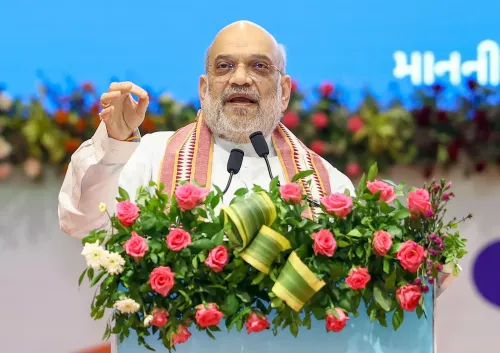
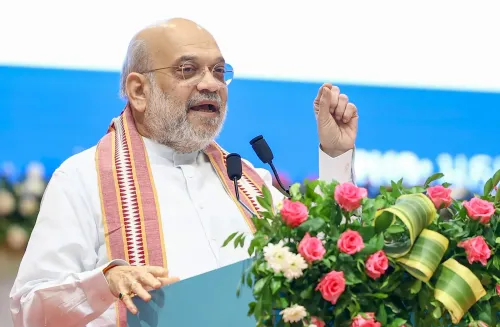
Amit Shah backs Bharat Taxi's 'Sarathi' model for driver dignity
Synopsis
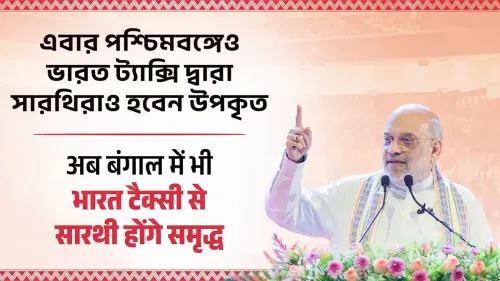
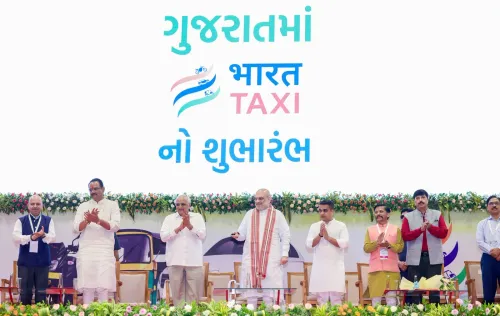
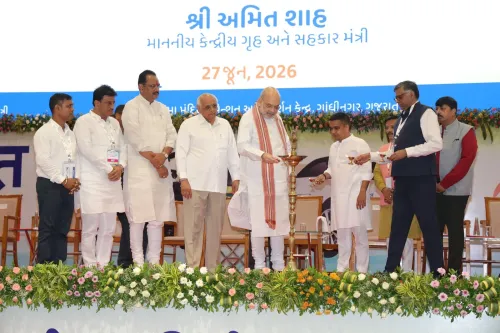
Union Home Minister Amit Shah on June 27 contrasted private ride-hailing platforms with Bharat Taxi's cooperative model, arguing that calling drivers 'Sarathi' reflects genuine respect — a signal of the government's push to extend cooperatives into India's urban transport sector.
Key Takeaways
Union Home Minister Amit Shah posted on June 27, 2026 highlighting the conceptual difference between 'driver' and 'Sarathi' in the context of Bharat Taxi .
Bharat Taxi is a cooperative-model ride-hailing platform positioned as an alternative to private app-based aggregators.
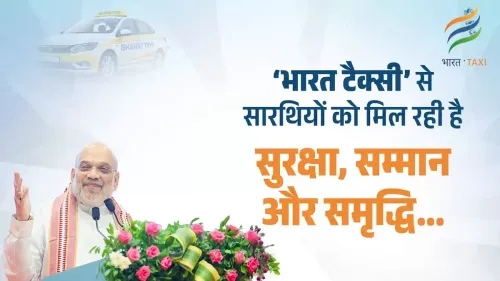
The word Sarathi — meaning charioteer or guide — is used to signal dignity and respect for transport workers under the cooperative model.
The Ministry of Cooperation , established in July 2021 under Shah, has been expanding the cooperative framework beyond agriculture into urban services.
Private aggregator drivers have long raised concerns over commissions, algorithmic control, and lack of social-security benefits — gaps the cooperative model aims to address.
Parliamentary and regulatory attention on cooperative transport platforms is expected to grow as such initiatives scale.
Union Home Minister Amit Shah on Saturday, June 27, 2026, drew a sharp distinction between how private ride-hailing companies treat their drivers and how the cooperative-based Bharat Taxi platform positions them — arguing that the latter confers genuine respect on transport workers by calling them 'Sarathi' rather than merely 'drivers'.
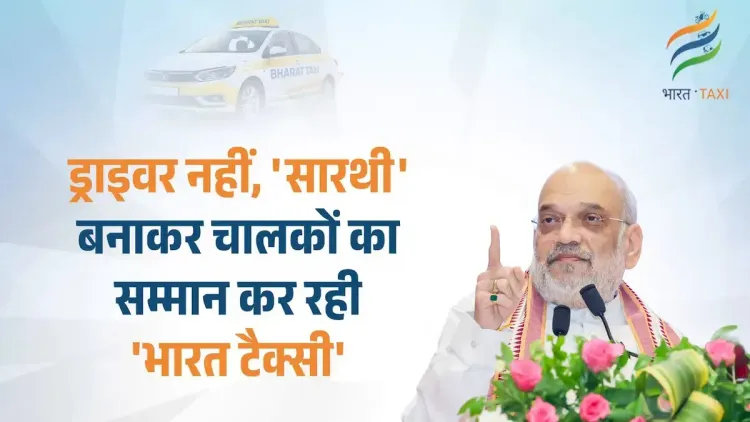
In a post on X, Shah wrote: 'Driver' aur 'Sarathi' ki avdharna mein yahi mool antar hai — 'This is the fundamental difference between the concepts of 'driver' and 'Sarathi': private companies treat them only as drivers, while Bharat Taxi gives them the honour of 'Sarathi'.' The word Sarathi carries deep cultural resonance in India, evoking the charioteer — a guide and companion — rather than a mere operator of a vehicle.
Context
Shah's remarks centre on Bharat Taxi, a cooperative-model transport platform that has been positioned as an alternative to app-based private aggregators such as those that dominate urban mobility in Indian cities. The post signals the government's intent to promote cooperative structures in service sectors where gig-economy platforms have long set the terms of work. The framing of drivers as 'Sarathi' is both a branding choice and a policy statement about worker dignity.
Policy Backdrop
The Ministry of Cooperation was established in July 2021 with Amit Shah as its first minister, marking the first time a dedicated ministry was created to strengthen India's cooperative sector. Since then, the ministry has worked to extend the cooperative model beyond its traditional base in agriculture and dairy into newer domains including housing, fisheries, and urban services. The push into ride-hailing through platforms like Bharat Taxi represents an extension of that mandate into the gig economy.
Private app-based aggregators have faced sustained criticism from driver unions across India over commission structures, algorithmic management, and the absence of social-security benefits. Cooperative alternatives, by design, offer drivers a share in ownership and governance — a structural difference that Shah's post underscores through the symbolic contrast between 'driver' and 'Sarathi'.
Stakeholders and Impact
The primary beneficiaries of this framing are India's millions of urban taxi and cab-aggregator drivers, a workforce that has grown rapidly since the smartphone-based ride-hailing boom of the 2010s but has largely remained outside the formal employment net. For these workers, cooperative membership could mean profit-sharing, a say in platform rules, and access to welfare schemes. Passengers and urban commuters would also be stakeholders, as the entry of a cooperative platform could introduce competitive pressure on pricing and service norms.
The contrast Shah draws also has political dimensions: it positions the cooperative model as a more humane, India-rooted alternative to multinational or large-capital platforms, aligning with a broader 'vocal for local' and self-reliance narrative that has been central to government messaging in recent years.
What's Next
Observers will watch for any parliamentary discussion or formal policy announcement expanding the cooperative transport model to additional cities or sectors. The Ministry of Cooperation's track record since 2021 suggests incremental but steady expansion of cooperative frameworks into non-traditional domains. Should Bharat Taxi scale meaningfully, it could prompt regulatory conversations about how cooperative platforms are treated under existing aggregator and labour laws — a legislative space that remains unsettled in India.
Point of View
Framing the cooperative transport model as morally superior to gig-economy platforms — not just economically different. This fits a consistent arc since the Ministry of Cooperation's creation in 2021: using cooperative structures as a counter-narrative to large-capital, often foreign-linked, platform businesses. The messaging also serves to build a political constituency among urban cab drivers, a numerically significant and economically precarious group. Whether the cooperative model can deliver on its promise at scale remains the central question that will determine if this framing translates into lasting policy impact.
NationPress
25 Sept 2026
Frequently Asked Questions
What is Bharat Taxi and how is it different from Ola or Uber?
Bharat Taxi is a cooperative-based ride-hailing platform in India. Unlike private aggregators such as Ola or Uber, where drivers work as gig contractors, a cooperative model gives drivers ownership stakes and a voice in governance, with the aim of fairer earnings and better working conditions.
What does 'Sarathi' mean and why did Amit Shah use the term?
'Sarathi' is a Sanskrit-origin Hindi word meaning charioteer or guide, carrying cultural connotations of a trusted companion rather than a hired hand. Amit Shah used the term to argue that Bharat Taxi treats drivers with greater dignity than private platforms do.
What is the Ministry of Cooperation and what does it do?
The Ministry of Cooperation was established in July 2021 as a dedicated ministry to promote and strengthen India's cooperative sector. Amit Shah has been its minister since inception, overseeing efforts to expand cooperatives into sectors beyond their traditional base in agriculture and dairy.
How does a cooperative taxi model benefit drivers?
In a cooperative model, drivers typically share in the platform's profits, participate in decision-making, and may access social-security or welfare benefits — contrasting with gig-economy arrangements where algorithmic management and commission deductions are common grievances.
What is the government's broader policy on gig workers in India?
India has been gradually developing a regulatory framework for gig and platform workers, including provisions in the Code on Social Security, 2020. The promotion of cooperative alternatives like Bharat Taxi reflects a parallel track: creating worker-owned platforms rather than only regulating privately owned ones.