Amit Shah backs Bharat Taxi, calls rivals' price cuts bid to block entry
Synopsis
Union Home Minister Amit Shah on 27 June 2026 accused established cab-aggregator companies of slashing prices to prevent Bharat Taxi from gaining market ground, pledging the platform will hold its position. The statement raises the political stakes for incumbent ride-hailing firms and signals possible regulatory scrutiny.
Key Takeaways
Amit Shah publicly accused rival cab companies of cutting prices specifically to block Bharat Taxi's market entry.
He warned that incumbents aim to resume 'arbitrary' pricing once the new entrant is neutralised.
Shah affirmed that Bharat Taxi will remain 'firmly in the field' with its commitment to service.
The statement comes from Shah in his capacity as Minister of Cooperation , signalling a policy dimension beyond a routine political comment.
The Competition Commission of India has previously examined pricing conduct by established ride-hailing platforms, making regulatory follow-up a credible next step.
Urban commuters and cooperative taxi operators stand to benefit if the new platform sustains competitive pressure on incumbents.
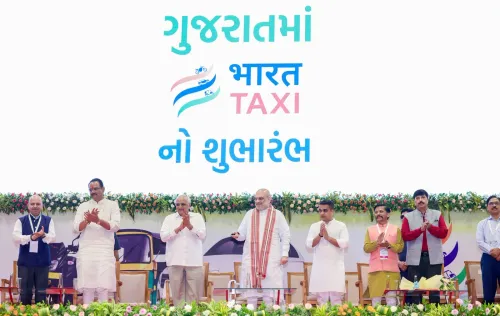
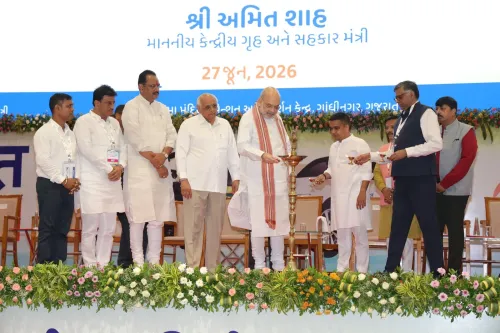
Union Home Minister Amit Shah on Saturday, 27 June 2026, publicly backed Bharat Taxi, asserting that sudden price reductions by competing cab-aggregator companies are a deliberate attempt to block the new service's entry into the market so that established players can resume unchecked pricing once the threat is neutralised.
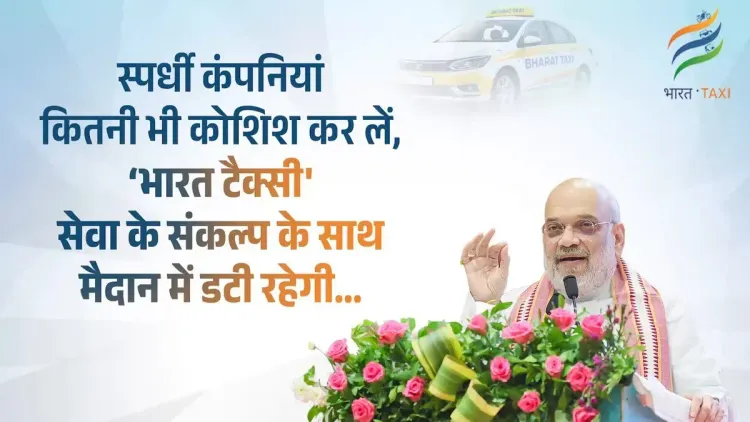
Posting in Hindi on X, Shah wrote: 'Spardhi kampaniyon dwara achanak daam ghatana 'Bharat Taxi' ki entry rokne ki koshish hai taaki ve phir manmani kar sakein, par 'Bharat Taxi' seva ke sankalp ke saath maidan mein dati rahegi.' — 'The sudden price cuts by rival companies are an attempt to block the entry of Bharat Taxi so they can again act arbitrarily, but Bharat Taxi will remain firmly in the field with its commitment to service.'
Context
Shah's statement frames the pricing behaviour of established ride-hailing platforms as predatory — a classic market-entry deterrence tactic in which incumbents temporarily slash fares to make a new entrant financially unviable. His intervention signals that the government views Bharat Taxi not merely as a commercial venture but as a policy instrument to introduce competitive discipline into the app-based cab sector. The post carries the weight of Shah's dual role as Union Home Minister and Minister of Cooperation, the ministry under whose ambit cooperative and people-centric enterprises fall.
Policy Backdrop
Indian ministers have periodically raised concerns about pricing practices in the app-based cab sector, particularly around surge pricing and the market dominance of a handful of large platforms. The Competition Commission of India (CCI) has in earlier years examined similar complaints against established ride-hailing aggregators on issues of preferential treatment and pricing opacity. The government's broader push for domestic digital alternatives in services — mirroring the 'vocal for local' and self-reliance narrative — provides the ideological backdrop for championing a platform branded with the 'Bharat' prefix.
The Ministry of Cooperation, which Shah heads, has been active in promoting cooperative-model enterprises as counterweights to large private-sector monopolies. A cooperative or government-backed taxi aggregator would fit squarely within that mandate, giving ordinary drivers a platform without the commission burden associated with dominant private apps.
Stakeholders and Impact
For taxi and auto-rickshaw operators, particularly those affiliated with cooperatives or small fleets, a credible government-backed alternative could mean lower commissions and greater income stability. For urban commuters, the entry of a new platform — if it sustains operations beyond the introductory phase — could structurally keep fares competitive over the long term. Established ride-hailing companies face reputational and regulatory risk if the government's framing of their pricing moves as 'predatory' gains traction with the CCI or other regulators.
Shah's public statement effectively raises the political cost for incumbent platforms, making any overt attempt to undercut Bharat Taxi out of the market a matter of government scrutiny rather than a purely commercial decision.
What's Next
Attention will now turn to whether the Ministry of Cooperation or the CCI follows up with formal regulatory action examining the pricing behaviour of rival cab aggregators. Any official complaint or investigation would mark a significant escalation from political statement to regulatory intervention. The sustainability and scale of Bharat Taxi's own operations will also be closely watched, as the platform's ability to maintain service quality will ultimately determine whether Shah's backing translates into lasting market impact.
Point of View
He simultaneously shields Bharat Taxi from market attrition and signals to regulators that the government is watching. This mirrors a broader pattern of using ministerial bully pulpits to tilt competitive dynamics in favour of state-backed or cooperative enterprises. The move also pre-emptively shifts blame for any future fare volatility onto incumbent platforms rather than the new entrant.
NationPress
26 Sept 2026
Frequently Asked Questions
What is Bharat Taxi?
Bharat Taxi is a cab-aggregator service that Union Home Minister Amit Shah has publicly backed as a domestic alternative to established private ride-hailing platforms in India.
Why did Amit Shah comment on Bharat Taxi?
Shah posted on X on 27 June 2026 to accuse rival companies of cutting prices to block Bharat Taxi's entry, pledging the platform would remain committed to serving the public.
Is Bharat Taxi a government service?
Shah's backing through the Ministry of Cooperation suggests a government or cooperative-model orientation, but the precise ownership and operational structure have not been officially detailed in public records available so far.
Can the Competition Commission of India act on cab pricing?
Yes. The CCI has jurisdiction over anti-competitive practices including predatory pricing. It has previously examined conduct by ride-hailing aggregators and could take up a fresh inquiry if a formal complaint is filed.
How does Bharat Taxi affect everyday commuters?
If Bharat Taxi sustains operations, it could structurally keep cab fares competitive by breaking the pricing power of dominant platforms, potentially benefiting urban commuters across Indian cities.