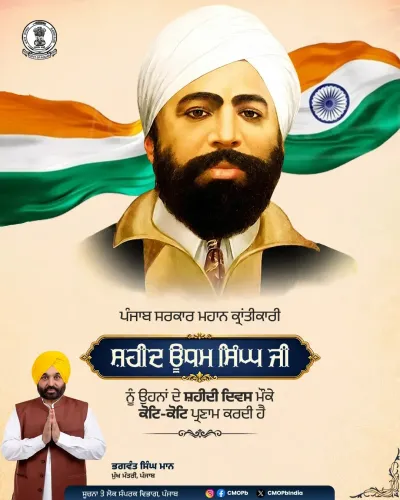
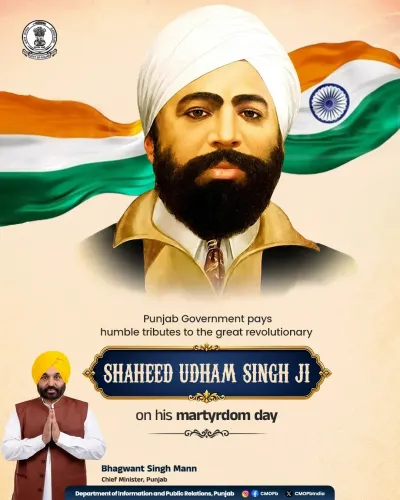
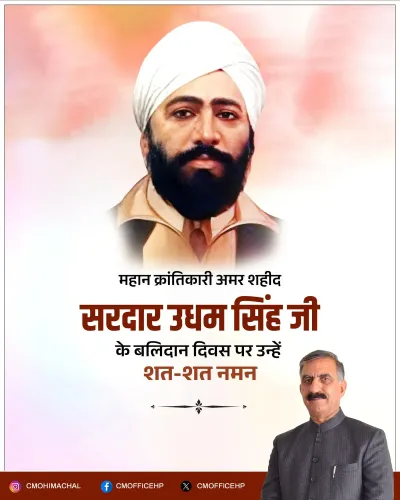
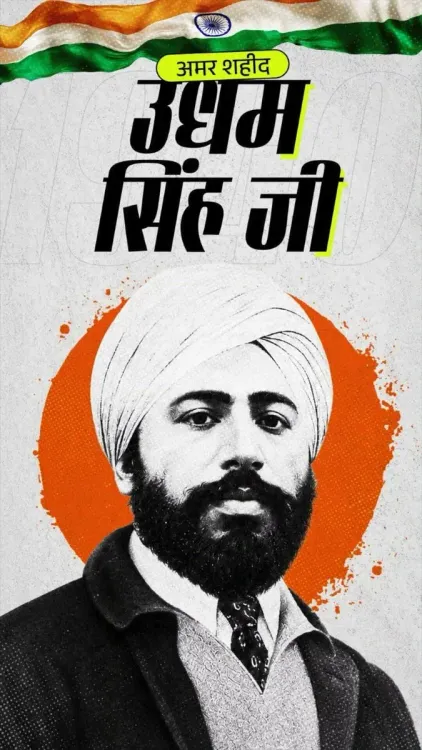
Anurag Thakur pays tribute to Shaheed Udham Singh on martyrdom day
Synopsis
On 31 July 2026, BJP MP Anurag Thakur paid homage to revolutionary martyr Udham Singh on the 86th anniversary of his execution, honouring the man who assassinated former Punjab Lt Governor Michael O'Dwyer in 1940 to avenge the Jallianwala Bagh massacre of 1919.
Key Takeaways
Anurag Thakur , BJP Lok Sabha MP from Hamirpur, Himachal Pradesh , posted a tribute to Udham Singh on his martyrdom anniversary, 31 July 2026 .
Udham Singh was hanged on 31 July 1940 at Pentonville Prison, London, after assassinating former Punjab Lt Governor Michael O'Dwyer on 13 March 1940 .
O'Dwyer had approved General Reginald Dyer's order to fire on civilians at Jallianwala Bagh, Amritsar on 13 April 1919 , killing hundreds.
Udham Singh's remains were repatriated to India in 1974 and cremated with state honours in Sunam, Punjab .
BJP leaders regularly commemorate armed revolutionaries such as Udham Singh and Bhagat Singh as part of a broader nationalist commemorative tradition.
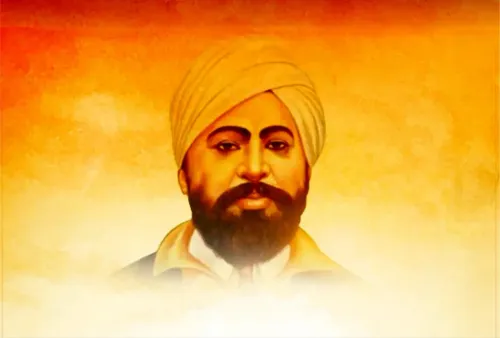
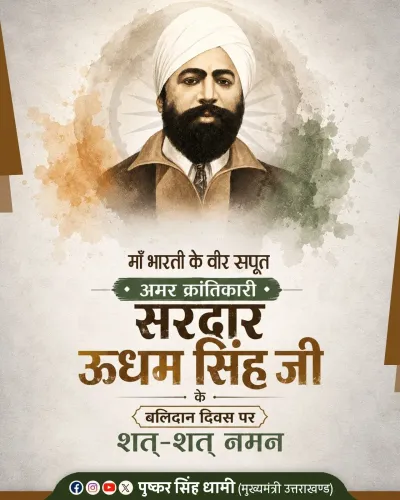
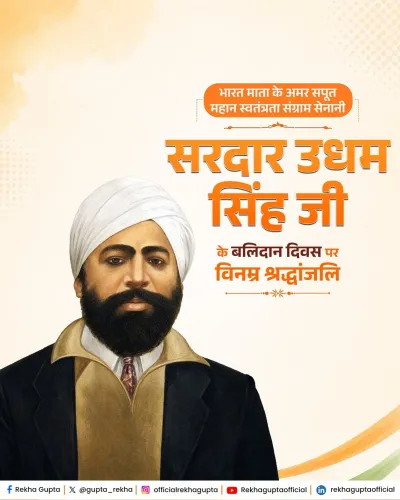
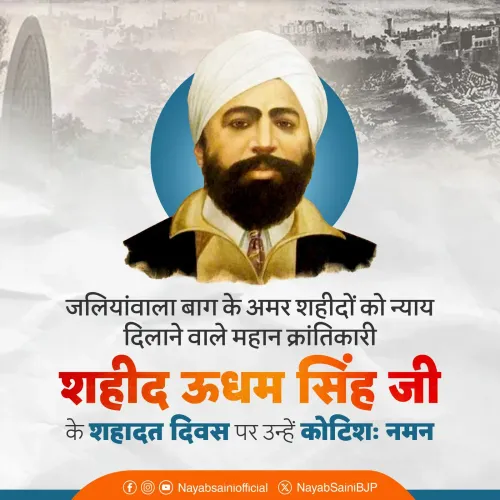
Eighty-six years after Udham Singh walked calmly to the gallows in London rather than betray the vow he had carried for two decades, his name still echoes through Indian political memory — and BJP MP Anurag Thakur marked the occasion on 31 July 2026 with a salute to the revolutionary's sacrifice.
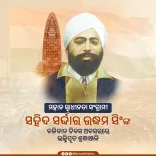
Thakur, the Lok Sabha MP from Hamirpur, Himachal Pradesh and former Union Minister, posted in Hindi: 'Bhartiya swatantrata sangram ke agrani krantikari, Jallianwala Bagh narsanhar ka pratishodh lene wale amar shaheed Udham Singh ji ke balidan diwas par karbaddh naman' — 'Reverential salute, hands folded, to immortal martyr Udham Singh — a pioneering revolutionary of India's freedom struggle and the man who avenged the Jallianwala Bagh massacre.'
The vow made in Amritsar, kept in London
The story behind the tribute is one of the most dramatic arcs in India's independence history. On 13 April 1919, British troops under General Reginald Dyer opened fire on unarmed civilians gathered at Jallianwala Bagh in Amritsar, killing hundreds in minutes. Among those present that day was a young Udham Singh, who survived and reportedly swore revenge.
He waited twenty-one years. On 13 March 1940, at Caxton Hall in London, he shot and killed Michael O'Dwyer — the former Lieutenant Governor of Punjab who had approved Dyer's action — at a public meeting. He made no attempt to flee. Tried and convicted, Udham Singh was hanged at Pentonville Prison on 31 July 1940.
Revolutionary martyrs and the BJP's commemorative tradition
Thakur's post is part of a consistent pattern within the BJP of foregrounding armed revolutionaries — Udham Singh, Bhagat Singh, Sukhdev, Rajguru — alongside the Gandhian mainstream of the freedom movement. These tributes, posted on martyrdom and birth anniversaries, reflect a deliberate effort to broaden the nationalist canon beyond non-violent struggle.
Since independence, national commemorations of revolutionary martyrs have been woven into civic life through state honours, school curricula, and parliamentary references — though the armed revolutionary tradition has historically received less institutional spotlight than the non-cooperation movement. Posts like Thakur's keep that counter-narrative visible in the public square.
Udham Singh's remains were repatriated to India in 1974, and he was cremated with full state honours in his native Sunam, Punjab. He is officially recognised as a martyr of the Indian independence movement.
On the 86th anniversary of his execution, the salute from Hamirpur to London — across eight decades and an ocean — is a reminder that some debts a nation considers permanently unpaid.
Point of View
Bhagat Singh and Rajguru — as co-equals to the Gandhian mainstream. This is not merely ceremonial: it shapes a nationalist historiography that valorises decisive, even violent, resistance to colonial injustice. For a party that has long sought to rebalance the official memory of independence, these annual martyrdom-day posts serve as low-cost, high-resonance signals to a base that identifies strongly with revolutionary patriotism. The consistency of the pattern across BJP leaders and anniversaries suggests coordination, not spontaneity.
NationPress
31 Jul 2026
Frequently Asked Questions
Who was Udham Singh and why is he famous?
Udham Singh was an Indian revolutionary who assassinated Michael O'Dwyer, former Lieutenant Governor of Punjab, in London on 13 March 1940 to avenge the Jallianwala Bagh massacre of 1919, in which British troops killed hundreds of unarmed civilians in Amritsar.
When was Udham Singh executed?
Udham Singh was executed by hanging at Pentonville Prison in London on 31 July 1940, which is observed as his martyrdom day every year.
What was the Jallianwala Bagh massacre?
The Jallianwala Bagh massacre occurred on 13 April 1919 in Amritsar, Punjab, when British troops under General Reginald Dyer opened fire on a large, unarmed crowd gathered at the Jallianwala Bagh garden, killing hundreds and wounding over a thousand.
Who did Udham Singh kill and why?
Udham Singh killed Michael O'Dwyer, the former Lieutenant Governor of Punjab who had sanctioned General Dyer's firing order at Jallianwala Bagh. Udham Singh, who was present at the massacre as a young man, carried out the act as a deliberate act of revenge.
What did Anurag Thakur post about Udham Singh?
On 31 July 2026, BJP MP Anurag Thakur posted a tribute in Hindi on X, offering a reverential salute to Udham Singh on his martyrdom anniversary, describing him as a pioneering revolutionary of India's freedom struggle and the man who avenged the Jallianwala Bagh massacre.