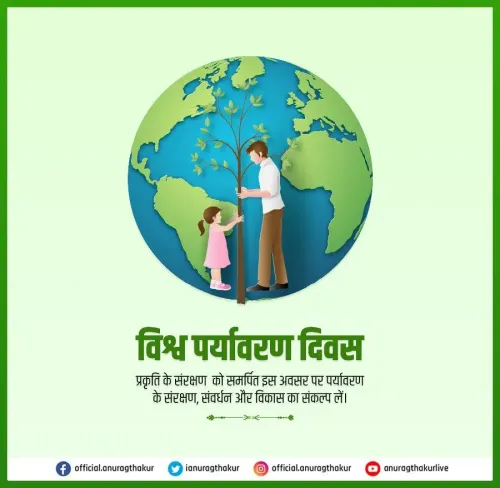
Anurag Thakur Calls for Mass Tree Plantation Drive from Hamirpur
Synopsis
BJP MP Anurag Thakur on June 23 called for a mass tree plantation drive from Hamirpur, warning that glacial melt, rising sea levels, and monsoon disruption demand urgent citizen-led afforestation action across India.
Key Takeaways
Anurag Thakur , BJP Lok Sabha MP from Hamirpur, Himachal Pradesh , posted a climate-action appeal on June 23, 2026 .
He identified glacial melt, rising sea levels, and monsoon variability as clear indicators of accelerating climate change.
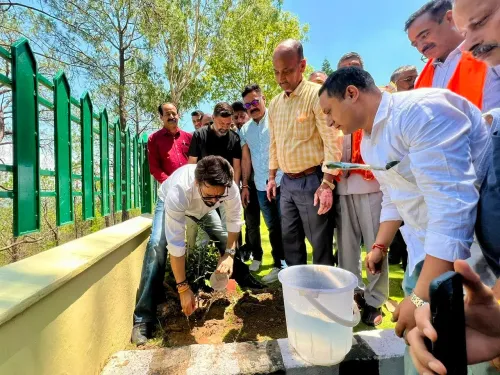
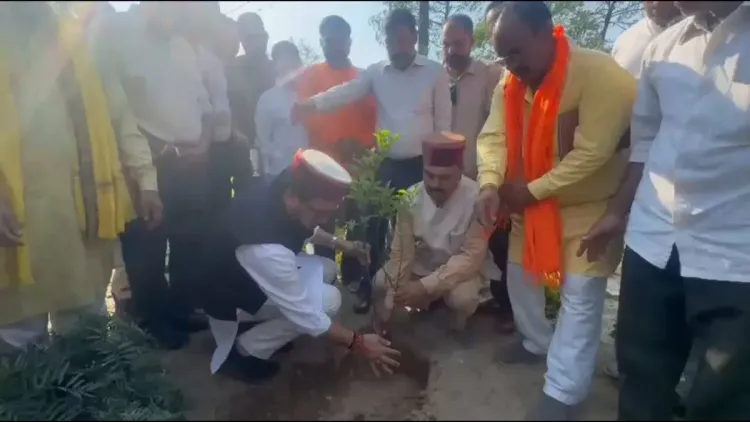
Thakur called for a large-scale tree plantation campaign and stressed the need for every citizen's active participation.
India's National Mission for a Green India (2008) and updated NDCs under the Paris Agreement (2022) both set afforestation targets aligned with this call.
India has committed to achieving net-zero emissions by 2070 , with forest cover expansion as a key pillar.
The post is geo-tagged to Hamirpur , a Himalayan constituency directly exposed to glacial and monsoon-related ecological risks.
BJP MP Anurag Thakur on Tuesday, June 23, 2026, called for a large-scale tree plantation campaign to address climate change, posting from Hamirpur, his parliamentary constituency in Himachal Pradesh. Thakur highlighted rapidly melting glaciers, rising sea levels, and shifting monsoon patterns as clear warning signs of an accelerating climate crisis.
Context
In his post, Thakur wrote: 'वृक्ष लगाएँ, धरा बचाएँ' ('Plant trees, save the earth'), framing afforestation as an urgent collective responsibility. He stated that climate change has emerged as a 'major challenge before the entire world' and that 'active participation of every citizen is extremely important' for protecting nature.
The call comes from a constituency situated in the Himalayan foothills, a region among the most visibly affected by glacial retreat and erratic rainfall in India. Hamirpur residents have witnessed first-hand the consequences of ecological disruption that Thakur described.
Policy Backdrop
India's commitment to afforestation has a formal policy lineage stretching back to the National Action Plan on Climate Change (2008), which included the National Mission for a Green India aimed at expanding and restoring forest cover. More recently, India's updated Nationally Determined Contributions (NDCs) submitted under the Paris Agreement in 2022 set a target of creating an additional carbon sink through afforestation by 2030.
India has also committed to achieving net-zero emissions by 2070, with increased forest and tree cover forming a central pillar of that long-term strategy. Large-scale plantation campaigns at both central and state levels have been a recurring instrument toward meeting these targets.
Stakeholders and Impact
The appeal is directed at ordinary citizens, urging individual action alongside government-led programmes. For Himachal Pradesh specifically, the stakes are high: the state's Himalayan glaciers feed rivers that supply water to millions across northern India, and their accelerated melting poses risks to agriculture, hydropower, and drinking water security.
Monsoon variability — another concern Thakur flagged — affects crop cycles for farmers across the state and the broader Indo-Gangetic plain. Sustained afforestation is widely recognised by ecologists as one of the most cost-effective tools for stabilising local microclimates and reducing soil erosion in hilly terrain.
What's Next
State and central governments typically intensify plantation drives during the monsoon season (July–September), when soil conditions are optimal for saplings to take root. Thakur's post signals early political momentum for such drives in Himachal Pradesh ahead of the monsoon window.
Progress on national afforestation goals will also come under scrutiny as India prepares its positions for upcoming Conference of the Parties (COP) climate negotiations. Constituency-level calls like this one from elected representatives contribute to building public pressure and local participation in meeting India's international climate commitments.
Point of View
Lending the appeal credibility beyond routine political messaging. The call also arrives at a politically useful moment: with COP cycles demanding visible domestic action, elected representatives who publicly champion afforestation provide the government with a distributed advocacy network. Whether the post translates into a measurable local plantation drive will be the real test of its intent.
NationPress
22 Sept 2026
Frequently Asked Questions
What did Anurag Thakur say about climate change?
Anurag Thakur called for a mass tree plantation campaign on June 23, 2026, stating that climate change is a major global challenge and that glacial melt, rising sea levels, and shifting monsoon patterns are its clear signs. He urged every citizen to participate actively in protecting nature.
Why is Hamirpur significant in the context of climate change?
Hamirpur is a parliamentary constituency in the Himalayan foothills of Himachal Pradesh, a region directly affected by glacial retreat and erratic rainfall. Its rivers and water sources depend heavily on Himalayan glaciers, making climate change a pressing local issue.
What is India's afforestation target under the Paris Agreement?
India's updated Nationally Determined Contributions submitted in 2022 target the creation of an additional carbon sink through afforestation by 2030, as part of broader commitments that include achieving net-zero emissions by 2070.
What is the National Mission for a Green India?
The National Mission for a Green India is one of eight missions under India's National Action Plan on Climate Change, launched in 2008. It aims to expand, restore, and improve the quality of forest and tree cover to address climate change and biodiversity loss.
When is the best time for tree plantation drives in Himachal Pradesh?
The monsoon season from July to September is considered the optimal window for tree plantation drives in Himachal Pradesh, as soil moisture levels support sapling survival. State and central governments typically launch or intensify such campaigns during this period.