AP CM Naidu Reviews July 2026 Economic Report, GSDP Hits 9.9%
Synopsis
Andhra Pradesh's real GSDP growth jumped from 6.5% in 2023-24 to 9.9% in 2025-26, outpacing national growth for two consecutive years. CM Chandrababu Naidu reviewed the July 2026 Monthly Economic Report and directed planners to build El Niño-resilient GSDP strategies.
Key Takeaways
Andhra Pradesh's real GSDP growth rate rose from 6.5% in 2023-24 to 9.9% in 2025-26 , according to the July 2026 Monthly Economic Report.
The state has outpaced the national GDP growth rate for two consecutive years .
Growth was recorded across all three sectors: agriculture, industry, and services .
CM Nara Chandrababu Naidu directed Planning Department officials to design strategies that protect GSDP targets even during El Niño -level climate crises.
The review meeting included Principal Secretary Piyush Kumar , Planning ED V.R.
Alaparti , and CMO officials Rajamowli and Pradyumna .
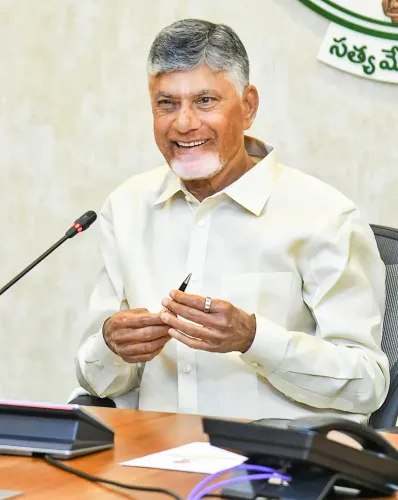
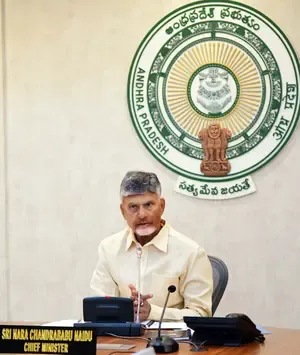
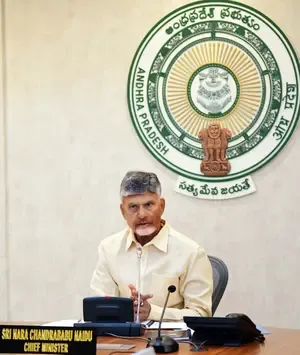
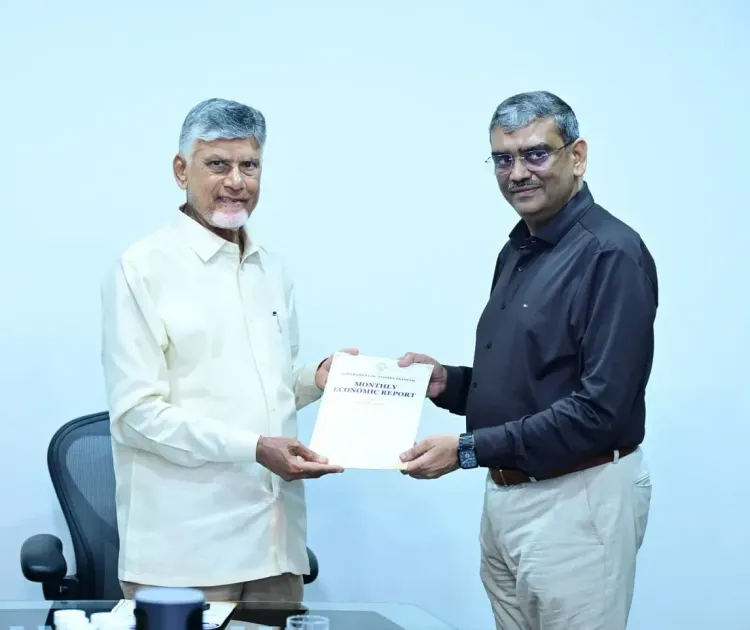
Andhra Pradesh's economy is growing faster than the national average — and the numbers are now on paper. The Chief Minister's Office of Andhra Pradesh announced on Tuesday, 11 August 2026 that the state's real GSDP growth rate has surged from 6.5 percent in 2023-24 to 9.9 percent in 2025-26, as presented in the July 2026 Monthly Economic Report submitted to Chief Minister Nara Chandrababu Naidu at the CM Camp Office.
From 6.5% to 9.9%: Two Years of Outpacing India
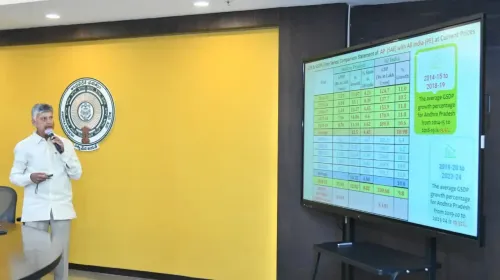
The report places Andhra Pradesh's growth trajectory firmly above the national GDP growth rate for two consecutive years — a benchmark the state government has publicly tracked since the post-bifurcation restructuring era began in 2014. All three pillars of the economy — agriculture, industry, and services — recorded significant growth, according to the monthly report.
Planning Department officials from the CM Camp Office formally presented the findings to CM Naidu, underscoring the administration's emphasis on data-driven governance and regular economic monitoring.
Naidu's Climate-Resilience Directive to Planners
The review meeting was not just a report presentation — it came with a directive. CM Naidu instructed Planning Department officials to ensure that GSDP targets remain achievable even during crisis conditions such as El Niño, signalling that climate-linked economic disruption is now formally embedded in the state's fiscal planning calculus. The instruction reflects a shift from reactive relief to proactive output protection.
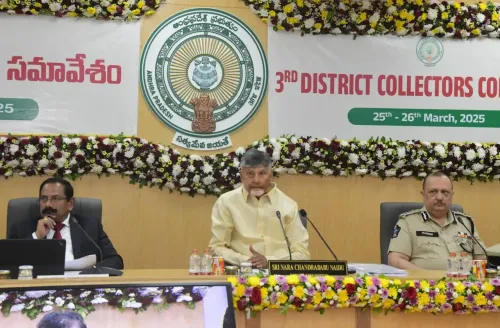
The meeting was attended by Piyush Kumar, Principal Secretary of Finance and Planning; V.R. Alaparti, Executive Director of the Planning Department; and CMO officials Rajamowli and Pradyumna, among others.
AP's Economic Reporting as a Political Signal
Since bifurcation, successive Andhra Pradesh governments have used periodic GSDP comparisons against national averages as a key political and administrative communication tool. Under Naidu's current term, this practice has intensified — monthly economic reports now serve as public accountability documents, not just internal bureaucratic reviews. A state that lost its capital city and revenue base in 2014 is methodically building a narrative of fiscal recovery and outperformance.
The next test will be whether the momentum holds through the 2026-27 budget cycle and whether subsequent monthly reports sustain the 9.9 percent real growth benchmark under tightening global conditions.
Point of View
Beating national growth figures is a core legitimacy argument for the Naidu administration. The El Niño resilience directive signals a maturation in state economic planning, embedding climate-risk thinking into fiscal targets rather than treating weather shocks as post-hoc excuses. If subsequent monthly reports sustain this trajectory, it strengthens AP's case for enhanced central transfers and investor confidence ahead of the 2026-27 budget cycle. The real question is whether the 9.9% figure holds up to independent scrutiny — GSDP revisions in Indian states have historically softened initial estimates.
NationPress
11 Aug 2026
Frequently Asked Questions
What is Andhra Pradesh's GSDP growth rate in 2025-26?
According to the July 2026 Monthly Economic Report, Andhra Pradesh's real GSDP growth rate reached 9.9 percent in 2025-26 , up from 6.5 percent in 2023-24.
Has Andhra Pradesh's economy grown faster than India's national GDP?
Yes. The July 2026 Monthly Economic Report states that AP's GSDP growth rate has exceeded the national GDP growth rate for two consecutive years .
What did CM Chandrababu Naidu say about El Niño and the economy?
CM Naidu directed Planning Department officials to ensure that GSDP targets remain achievable even during crisis periods like El Niño , making climate resilience a formal part of state economic planning.
Which sectors drove Andhra Pradesh's economic growth?
The July 2026 report cited significant growth across all three major sectors: agriculture, industry, and services .
Who attended the July 2026 economic report review meeting with CM Naidu?
The meeting was attended by Principal Secretary (Finance and Planning) Piyush Kumar , Planning Department Executive Director V.R. Alaparti , and CMO officials Rajamowli and Pradyumna , among others.