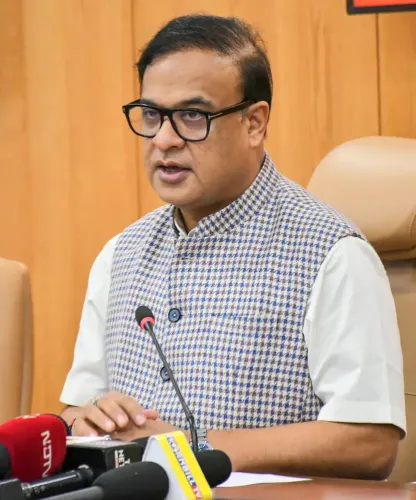
CM Chandrababu Naidu Pushes Zero FIR for Cyber Crime

Synopsis
Chief Minister Chandrababu Naidu has directed Andhra Pradesh police to adopt Zero FIR for cyber crime, enabling instant bank alerts through the Cyber War Room to freeze fraudulent transfers within the 'golden hour'. He also called for dedicated cyber patrolling units to proactively protect citizens from online criminals.
Key Takeaways
CM Nara Chandrababu Naidu chaired a high-level review on cyber crime at the Andhra Pradesh Secretariat on 29 May 2026 .
He directed immediate implementation of Zero FIR — allowing complaints to be registered at any police station without jurisdictional delay — upon a victim's call to the Cyber War Room .
The 'golden hour' principle requires banks to be alerted instantly so funds cannot be transferred out of victim accounts before a freeze is applied.
Cyber patrolling units, modelled on conventional beat policing, are to be established to proactively prevent citizens from falling victim to online fraudsters.
Senior officials present included Chief Secretary Saiprasad , DGP Harish Kumar Gupta , CID Chief Ravishankar Ayyannar , EAGLE Chief AK Ravikrishna , and Special Secretary Vijay Kumar .
The initiative aligns with the national I4C framework and builds on Andhra Pradesh's existing digital governance infrastructure.
The Chief Minister's Office of Andhra Pradesh announced on Friday, 29 May 2026 that Chief Minister Nara Chandrababu Naidu has directed the immediate rollout of a Zero FIR mechanism to combat cyber crime, instructing police to register complaints instantly upon a victim's call to the Cyber War Room and freeze suspicious accounts within the 'golden hour' window before funds can be transferred.
Context
Addressing a high-level review meeting at the Andhra Pradesh Secretariat, CM Naidu directed that victims contacting the Cyber War Room must have a Zero FIR lodged immediately — 'జీరో ఎఫ్ఐఆర్ నమోదు చేయడం ద్వారా బ్యాంకులను అప్రమత్తం చేయాలి' ('register a Zero FIR and alert the banks immediately'). The instruction centres on exploiting the narrow time window — termed the 'golden hour' — before fraudulently obtained funds are moved out of victim accounts. Banks are to be notified in real time so that transfers can be blocked at source.
The Chief Minister also called for cyber patrolling on the lines of conventional police patrolling, ordering that citizens be shielded from falling prey to cyber criminals through proactive online surveillance. The meeting was attended by Chief Secretary Saiprasad, DGP Harish Kumar Gupta, CID Chief Ravishankar Ayyannar, EAGLE Chief AK Ravikrishna, and Special Secretary Vijay Kumar, along with other senior officials.
Policy Backdrop
A Zero FIR allows a police complaint to be registered at any station regardless of jurisdiction, ensuring no procedural delay in the critical early phase of a cyber fraud. The concept gained national traction after the Ministry of Home Affairs established the National Cyber Crime Reporting Portal in 2019, creating a centralised framework — later expanded into the Indian Cyber Crime Coordination Centre (I4C) — for cross-state coordination on digital offences.
Andhra Pradesh has a prior track record in technology-enabled governance. During Naidu's 2014–2019 tenure, the state expanded cyber crime cells alongside broader e-governance infrastructure. The current directive builds on that lineage, applying rapid-response logic to financial fraud at a time when digital transactions across India have surged and online scams have multiplied correspondingly.
Stakeholders and Impact
Cyber crime victims stand to benefit most directly: the Zero FIR model removes the jurisdictional hurdle that often causes delays of hours or days, during which stolen funds are layered across multiple accounts and become near-impossible to recover. Banking institutions operating in the state will need to establish or strengthen real-time alert channels with the Cyber War Room to act on freeze requests within minutes.
For the Andhra Pradesh Police, the directive demands both structural change — dedicated cyber patrolling units — and operational agility. States that have piloted similar rapid-response cyber cells have reported improved fund-recovery rates in the immediate aftermath of fraud, though sustained impact depends on staffing, training, and inter-agency coordination with banks and payment networks.
What's Next
The immediate focus will be on operationalising the Zero FIR workflow within the existing Cyber War Room infrastructure and establishing a direct, low-latency communication protocol with banks. The rollout of dedicated cyber patrolling units — analogous to beat policing but applied to the digital domain — will be a key indicator of how quickly the directive translates into field-level action.
If successfully implemented, Andhra Pradesh could serve as a replicable model for other Indian states grappling with rising financial cyber fraud, particularly as the national I4C framework encourages state-level innovation in first-response mechanisms.
Point of View
The Andhra Pradesh government is effectively borrowing emergency-response logic from disaster management and applying it to digital fraud. The simultaneous push for cyber patrolling signals an intent to move beyond complaint-handling toward deterrence. Whether the initiative delivers measurable outcomes will hinge on the depth of bank integration and the speed at which field units are trained and deployed.
NationPress
12 Oct 2026
Frequently Asked Questions
What is Zero FIR and how does it help cyber crime victims in Andhra Pradesh?
A Zero FIR allows a police complaint to be registered at any station regardless of jurisdiction, eliminating procedural delays. In Andhra Pradesh, CM Naidu has directed that a Zero FIR be filed the moment a victim calls the Cyber War Room, so banks can be alerted immediately to block fraudulent transfers.
What is the 'golden hour' in cyber fraud cases?
The 'golden hour' refers to the narrow time window immediately after a cyber fraud is reported, during which funds have not yet been moved to secondary accounts. Acting within this window — by freezing accounts and alerting banks — significantly increases the chance of recovering stolen money.
What is the Andhra Pradesh Cyber War Room?
The Cyber War Room is a dedicated state-level command centre for receiving and responding to cyber crime complaints in Andhra Pradesh. Under the new directive, it will serve as the first point of contact for victims and will coordinate real-time bank alerts and Zero FIR registration.
What is cyber patrolling and why has CM Naidu ordered it?
Cyber patrolling involves proactive online monitoring by police units to detect and deter criminal activity in digital spaces, similar to how beat officers patrol physical areas. CM Naidu ordered its introduction to prevent citizens from falling victim to cyber criminals before a fraud even occurs.
How does Andhra Pradesh's Zero FIR cyber crime policy fit into India's national framework?
The policy builds on the national I4C framework established by the Ministry of Home Affairs, which encourages state-level coordination on cyber crime. Andhra Pradesh's approach of combining Zero FIR with real-time bank alerts and cyber patrolling goes a step further by integrating financial institutions directly into the first-response chain.