AQIS joins Pakistan battle, backing TTP against security forces and ISKP
Synopsis
Al Qaeda's South Asian wing has stepped off the sidelines and into Pakistan's war — and Islamabad didn't see it coming. AQIS is now training TTP recruits and joining operations against Pakistani forces and the ISKP, which Pakistan itself brought into the fight. With the BLA's women's unit striking for the first time and multiple designated terror groups now fighting on Pakistani soil, the country faces a multi-front security implosion of its own making.
Key Takeaways
AQIS has entered the Pakistan conflict theatre, actively supporting the TTP against Pakistani security forces and the ISKP .
The trigger was Islamabad's decision to enlist the ISKP and Lashkar-e-Taiba against the TTP and BLA .
AQIS operatives — scattered across Pakistan after being expelled from Afghanistan — are now training new TTP recruits and participating in field operations.
The BLF recently announced its women's squad carried out its first attack on Pakistani security forces; the BLA 's women's wing is assessed as a 'lethal unit' by intelligence officials.
Officials describe Pakistan's security situation as significantly more complex than anticipated, with multiple armed factions now operating simultaneously on its territory.
Al Qaeda in the Indian Subcontinent (AQIS) has formally entered the Pakistan theatre, siding with the Tehreek-e-Taliban Pakistan (TTP) against the Pakistani security establishment — a development that, according to officials, Islamabad did not anticipate and was not prepared for. The move adds a dangerous new layer to Pakistan's already fractured internal security landscape, which was already strained by the TTP, the Balochistan Liberation Army (BLA), and the Balochistan Liberation Front (BLF).
What Triggered AQIS's Entry
According to officials, AQIS had, for years, remained on the periphery — limiting itself to digital propaganda and recruitment through its media arm, the Al Sahab Media Foundation. It did not conduct active operations in either Afghanistan or Pakistan and remained a passive observer of the deteriorating security situation.
The turning point, officials say, came when Islamabad chose to enlist the Islamic State Khorasan Province (ISKP) — alongside the Lashkar-e-Taiba — to fight the TTP and the BLA. That decision reportedly drove a change in calculus at the top levels of AQIS leadership. Cadres had grown impatient, conveying to their commanders that they could no longer remain 'mute spectators,' officials noted. The entry of the ISKP into the fight gave the AQIS leadership the trigger it needed to greenlight active participation.
AQIS's Role on the Ground
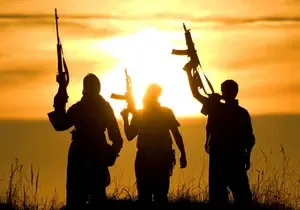
An Intelligence Bureau official said that AQIS operatives — scattered across Pakistan after being driven out of Afghanistan by US forces — are now actively participating in TTP operations against Pakistani security forces, the Lashkar-e-Taiba, and the ISKP.
The Al Sahab Media Foundation has shifted from providing moral backing to openly endorsing TTP operations and calling on cadres to join the fight 'in large numbers,' the official said. Where AQIS brings particular value is in logistics and training — drawing on doctrines developed since the era of Osama Bin Laden. Newer TTP recruits are reportedly being trained by AQIS operatives before being deployed to the battlefield.
Pakistan's Deepening Security Crisis
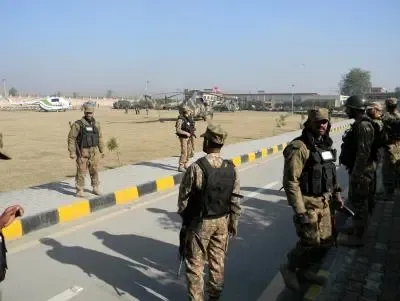
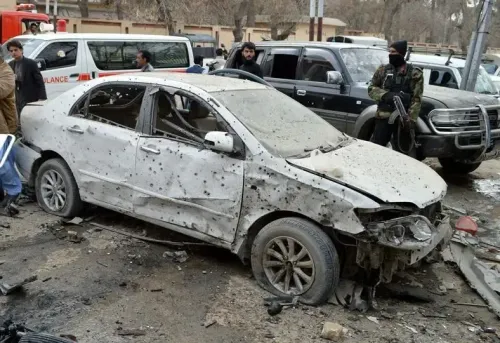
Pakistan's security forces were already facing severe pressure before AQIS entered the picture. The TTP has inflicted heavy casualties on Pakistani military and paramilitary units. The BLA and BLF have targeted infrastructure and personnel across Balochistan. Notably, the BLF recently announced that its women's squad had carried out its first attack on Pakistani security forces — a development officials described as significant. The BLA's own women's wing is assessed by intelligence officials to be a 'lethal unit.'
Islamabad's decision to bring in the ISKP and the Lashkar-e-Taiba — both internationally designated terror groups — drew attention to what officials described as Pakistan's 'desperation' and its willingness to leverage banned organisations for short-term tactical gain.
AQIS vs ISKP: A Parallel Conflict Within Pakistan
Al Qaeda and the Islamic State have long been engaged in a bitter ideological and operational rivalry. That rivalry has now migrated from Afghan soil to Pakistan, with both groups fighting on opposite sides of an internal Pakistani conflict. AQIS has historically grown more slowly than the ISKP in the region, but its expertise in logistics, training, and propaganda infrastructure gives the TTP a meaningful operational boost.
What This Means for the Region
For Islamabad, officials say, the situation has become significantly more complex. Pakistan had apparently hoped that AQIS would stay on the sidelines; that calculation has now been overtaken by events. With multiple armed groups — each with distinct ideologies and sponsors — now operating simultaneously across its territory, Pakistan faces a multi-front security challenge that is, according to officials, unlike anything it has encountered in recent years. How Islamabad manages these overlapping conflicts, and whether its reliance on proxy groups backfires further, will shape the country's internal stability in the months ahead.
Point of View
And this iteration looks no different. What is new and more dangerous is the overlay of the global Al Qaeda–Islamic State rivalry now playing out on Pakistani soil, turning an internal insurgency into a proxy theatre for competing jihadist ideologies. The BLF's women's unit making its combat debut is a detail mainstream coverage has underplayed — it signals organisational depth and resolve that Pakistan's security planners will find harder to degrade than a male-led cell.
NationPress
2 Oct 2026
Frequently Asked Questions
What is AQIS and why has it entered Pakistan's conflict?
Al Qaeda in the Indian Subcontinent (AQIS) is Al Qaeda's regional wing, which had for years focused on digital propaganda and recruitment rather than active operations. It entered Pakistan's conflict after Islamabad enlisted the ISKP to fight the TTP and BLA, prompting AQIS cadres — who had grown impatient — to seek and receive approval from their leadership to join the battle on the TTP's side.
How does AQIS support the TTP on the ground?
AQIS operatives scattered across Pakistan are now participating in TTP operations against Pakistani security forces, the Lashkar-e-Taiba, and the ISKP. Their primary contribution is logistics expertise and training — newer TTP recruits are reportedly trained by AQIS before being deployed to the battlefield, drawing on doctrines developed since the era of Osama Bin Laden.
Why did Pakistan bring in the ISKP and Lashkar-e-Taiba?
Pakistani security forces had suffered severe losses at the hands of the TTP, BLA, and BLF, and reportedly turned to the ISKP and Lashkar-e-Taiba as tactical allies to counter these groups. Officials described the move as reflecting Pakistan's desperation and its readiness to enlist internationally designated terror organisations for short-term security gains.
What role are the BLA and BLF playing in Pakistan's security crisis?
The Balochistan Liberation Army (BLA) and Balochistan Liberation Front (BLF) have caused significant damage to the Pakistani establishment. The BLF recently announced its women's squad had conducted its first attack on Pakistani security forces, while the BLA's women's wing is assessed by intelligence officials to be a highly capable unit.
What does AQIS's entry mean for Pakistan's stability?
Officials say AQIS's involvement was not anticipated by Islamabad and has made an already complex security environment significantly worse. Pakistan now faces simultaneous threats from the TTP, BLA, BLF, and AQIS on one side, while its own tactical partners — the ISKP and Lashkar-e-Taiba — add further volatility. The situation is described as unlike any Pakistan has faced in recent years.