Supreme Court panel to inspect Aravalli mining, forests in Dungarpur and Banswara
Synopsis
The Supreme Court's Aravalli conservation panel heads to Rajasthan's tribal heartland — Dungarpur and Banswara — on October 11-13 to inspect mining operations, forest cover, and tribal livelihoods directly. The visit was triggered by earlier criticism that local and tribal voices were shut out of the process. With a final report due November 30, these three days could shape the legal future of one of India's oldest mountain ranges.
Key Takeaways
The Supreme Court-appointed High-Powered Committee (HPC) will inspect Dungarpur and Banswara districts in Rajasthan from 11 to 13 October 2026 .
The panel will assess mining and quarrying , forest cover, water sources, land-use patterns, and their impact on tribal livelihoods .
The visit follows criticism that an earlier Rajasthan tour had inadequate participation from rural and tribal communities.
A Supreme Court order dated 7 September directed the committee to ensure adequate tribal stakeholder inclusion in both Rajasthan and Gujarat.
The HPC was constituted on 25 May 2026 , chaired by the Director General of ICFRE , and must submit its report by 30 November 2026 .
The Rajasthan Forest Department has deployed senior officials and DCFs as field coordinators for the inspections.
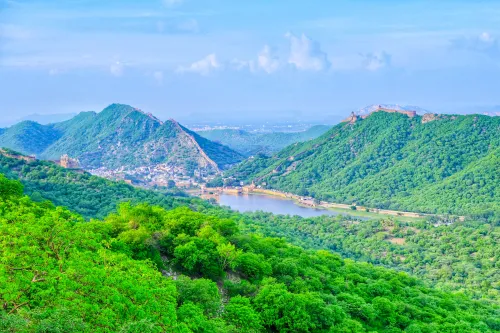
The Supreme Court-appointed High-Powered Committee (HPC), mandated to assess the definition, ecological status, and conservation of the Aravalli mountain range, will conduct field inspections across Rajasthan's southern Vagad region from 11 to 13 October 2026. The panel will examine mining activities, forest ecosystems, and tribal livelihoods in Dungarpur and Banswara districts — areas where the Aravalli landscape's ecological and economic tensions are most acute.
Schedule and Inspection Areas
The committee will arrive in southern Rajasthan on 11 October, immediately following the conclusion of its Gujarat tour on 10 October. On the first day, inspections will cover the Paldeval-Sarkan area of Dungarpur district. The following day, the panel will assess the Kevadiya-Kothara area of Banswara district, before concluding its Rajasthan leg on 13 October. Each day includes evening consultation sessions of approximately three hours for direct engagement with local residents and stakeholders.
What the Committee Will Examine
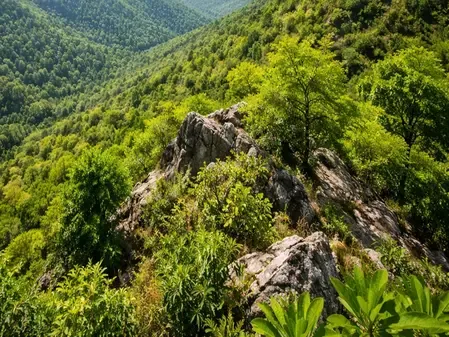
Inspectors will assess multiple dimensions of the region's environmental and economic landscape, including stone-crushing and quarrying operations, forest cover, water sources, and ecological conditions in surrounding areas. Land-use patterns and their environmental consequences will also be scrutinised, as will the broader impact of mining activity on tribal communities and rural livelihoods. The panel will seek input from a wide cross-section of participants — environmentalists, subject experts, mining leaseholders, farmers, labourers, and villagers.
Background: Why This Visit Matters
The HPC was constituted by the Supreme Court in an order dated 25 May 2026, chaired by the Director General of the Indian Council of Forestry Research and Education (ICFRE). The five-member body was tasked with independently reviewing the previously formulated definition of the Aravalli range and the demarcation methodology used to identify its boundaries. During an earlier five-day Rajasthan inspection, concerns arose that participation had been inadequate — particularly from rural residents and tribal communities — prompting calls for a fresh ground-level assessment with greater inclusivity. A subsequent Supreme Court order dated 7 September explicitly directed the committee to ensure sufficient opportunities for all relevant stakeholders, including tribal populations in both Rajasthan and Gujarat, to present their views.
State Preparations and Ground Coordination
The Rajasthan government has mobilised its Forest Department ahead of the visit. A senior Forest Department official will serve as field coordinator, supported by Deputy Conservators of Forests (DCFs) and field personnel from both Dungarpur and Banswara. These arrangements are designed to facilitate site access, provide on-ground data, and enable structured dialogue between the committee and local communities.
Report Deadline and Next Steps
The committee's findings from this visit will feed into a comprehensive report that the Supreme Court has directed it to submit by 30 November 2026. The report will address the Aravalli range's ecological characterisation, demarcation boundaries, and conservation imperatives — and will inform the Court's further directions on one of India's most contested environmental disputes. The outcome could have significant implications for mining policy, tribal land rights, and ecological governance across the range.
Point of View
Tribal rights, and ecological survival for a range that spans four states and anchors the water table for large parts of northwestern India. Whether the November 30 deadline produces a genuinely independent assessment, or a bureaucratically shaped one, will depend heavily on how freely the committee engages with the communities most at risk — and that is exactly what these three days in Vagad are meant to test.
NationPress
9 Oct 2026
Frequently Asked Questions
What is the Supreme Court's High-Powered Committee on the Aravalli range?
It is a five-member committee constituted by the Supreme Court on 25 May 2026, chaired by the Director General of the Indian Council of Forestry Research and Education (ICFRE). The panel is tasked with independently examining the definition, demarcation, ecological status, and conservation needs of the Aravalli mountain range across Rajasthan, Gujarat, Haryana, and Delhi.
Why is the committee visiting Dungarpur and Banswara specifically?
These two districts in southern Rajasthan's Vagad region are areas where the relationship between Aravalli landscapes, mining operations, forest cover, and tribal livelihoods is particularly complex. The visit was also prompted by concerns that an earlier Rajasthan tour had insufficient participation from rural and tribal communities, necessitating a fresh, more inclusive ground assessment.
What will the committee inspect during the October 11-13 visit?
The panel will examine mining and stone-crushing operations, forest cover and water sources, land-use patterns and their ecological implications, and the socio-economic impact on tribal communities and local residents. Evening consultations of approximately three hours each are planned in both districts for direct stakeholder engagement.
When must the committee submit its final report to the Supreme Court?
The committee must submit its comprehensive report to the Supreme Court by 30 November 2026. The report will address the Aravalli range's ecological characterisation, demarcation methodology, and conservation framework, and will inform the Court's subsequent directions.
What did the Supreme Court's September 7 order say about tribal inclusion?
The Supreme Court's order dated 7 September clarified that the committee must ensure sufficient opportunities for all relevant stakeholders — including tribal communities in both Rajasthan and Gujarat — to express their views. The directive came after concerns that earlier field visits had not adequately represented voices from these communities.