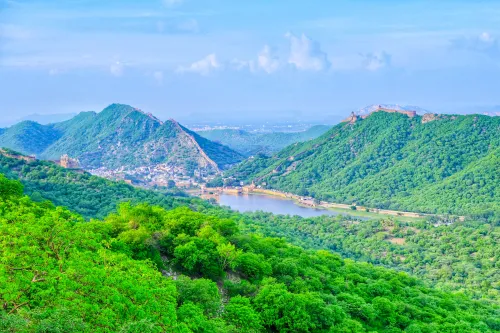
What Will the SC Address in Tomorrow's Hearing on Aravalli Definition?
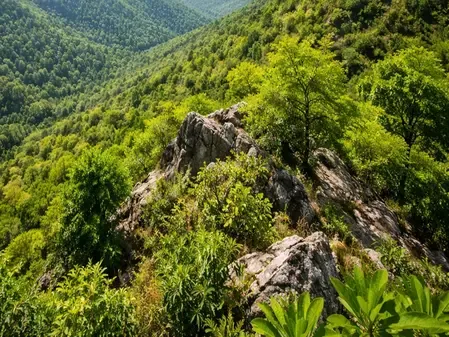
Synopsis
The Supreme Court's imminent suo motu hearing on the Aravalli Hills definition raises vital questions about ecological protection. With the government pledging to safeguard this fragile region, the upcoming session promises to be a pivotal moment for environmental advocacy. Will the court take decisive action for preservation?
Key Takeaways
Supreme Court to hear significant case regarding Aravalli Hills.
Concerns over ecological protection have prompted judicial review.
The government has imposed a total ban on new mining leases.
Further identification of protected areas is underway.
Political leaders are raising alarms over recent redefinitions.
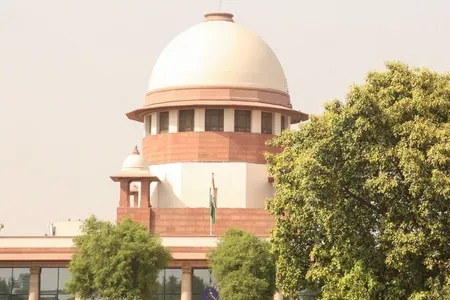
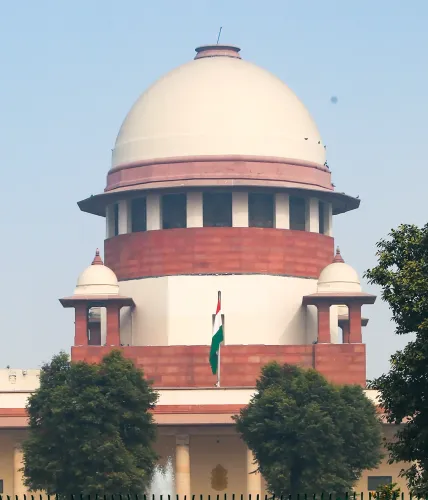
New Delhi, Dec 28 (NationPress) The Supreme Court is set to conduct a significant suo motu hearing on the definition of the Aravalli Hills on Monday, focusing on the urgent need to safeguard this ecologically sensitive area in light of the government’s pledges.
According to the causelist available on the apex court's website, a Bench led by Chief Justice of India (CJI) Surya Kant, along with Justices J.K. Maheshwari and A.G. Masih, will deliberate on the suo motu writ petition titled “In Re: Definition of Aravalli Hills and Ranges and Ancillary Issues” on December 29.
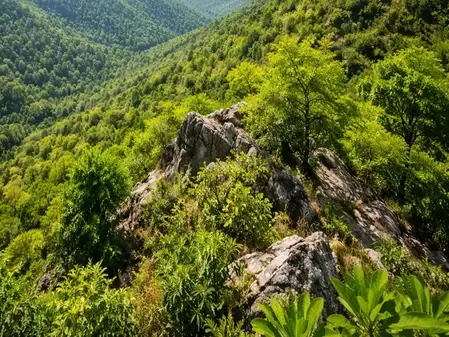
This judicial examination was initiated by the Supreme Court, reflecting the rising unease regarding the preservation of the ecologically fragile Aravalli range alongside the government’s repeated commitments to its protection.
In a bold initiative to combat illegal mining and bolster ecological safeguards, the Union Ministry of Environment, Forest and Climate Change (MoEF&CC) has instructed state governments to enforce a “total ban” on the issuance of new mining leases in the Aravalli region.
The Ministry emphasized that this ban will be uniformly applied across the Aravalli landscape, spanning from Delhi to Gujarat. The aim is to “maintain the continuity of the range as a unified geological ridge” and eliminate unregulated mining practices.
To further enhance conservation efforts, the MoEFCC has tasked the Indian Council of Forestry Research and Education (ICFRE) with identifying additional zones across the entire Aravalli range where mining activities should be prohibited, beyond the already restricted areas mandated by the Centre.
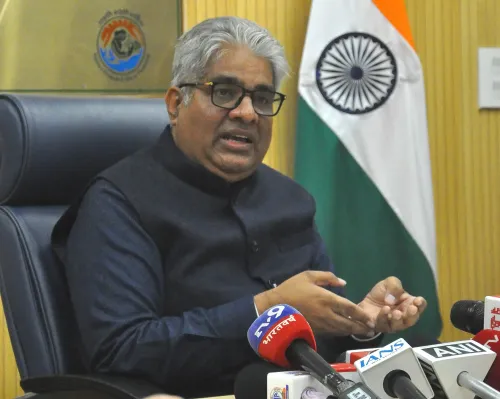
In a related matter, Congress leader and former Environment Minister Jairam Ramesh raised pertinent issues regarding the recent redefinition of the Aravalli Hills in a letter to Union Minister for Environment, Forests and Climate Change Bhupender Yadav.
Ramesh contended that the new definition limits the classification to landforms with an elevation of 100 meters or more.
On Sunday, he shared the letter on social media platform X, stating, “Here is my most recent letter to the Union Minister of Environment, Forests & Climate Change posing four critical questions regarding the troubling redefinition of the Aravallis.”
In his letter dated December 28, the Congress leader highlighted what he termed as widespread apprehensions concerning the new definition and sought clarification from the minister by formulating four specific inquiries. He addressed Minister Yadav, stating: “There are understandably widespread concerns with the re-definition of the Aravalli Hills that limits them to landforms having an elevation of 100 meters or more. In this connection, please allow me to raise four specific questions for your consideration.”
Point of View
I see the Supreme Court’s upcoming hearing as a crucial juncture for environmental policy and legal frameworks in India. The Aravalli Hills are not just a geographical feature; they represent a significant ecological and cultural heritage. It is imperative that we prioritize their protection, balancing development with sustainability. The court’s ruling could set a precedent for how we approach environmental conservation in the future.
NationPress
8 Oct 2026
Frequently Asked Questions
What is the significance of the Aravalli Hills?
The Aravalli Hills are crucial for biodiversity, protecting ecosystems, and supporting local climates. They also hold cultural importance for many communities.
What is the Supreme Court's role in environmental protection?
The Supreme Court can enforce legal measures to protect ecological areas, ensuring that government policies align with environmental conservation efforts.
Why has the government imposed a ban on mining in the Aravalli region?
The ban aims to curb illegal mining activities that threaten the ecological balance and integrity of the Aravalli Hills.
How does the recent redefinition impact the Aravalli Hills?
The redefinition may limit the classification and protection of certain areas, potentially exposing them to developmental pressures.
What can individuals do to support Aravalli conservation?
Individuals can advocate for sustainable practices, support environmental organizations, and stay informed about policies affecting the Aravalli region.