Is Carbon an Opportunity for Green Energy Generation?
Synopsis
Discover how experts at the Vibrant Gujarat Summit are transforming carbon emissions into an opportunity for agriculture and green energy, highlighting innovative solutions that promise to reshape the future of farming and environmental sustainability.
Key Takeaways
Carbon emissions can be transformed into green molecules for agricultural use.
Innovative solutions are essential for addressing climate change and food demands.
Green molecules enhance soil fertility and crop yields.
The Vibrant Gujarat Summit emphasizes the importance of sustainable development .
Over 1,500 MoUs expected to be signed during the conference.
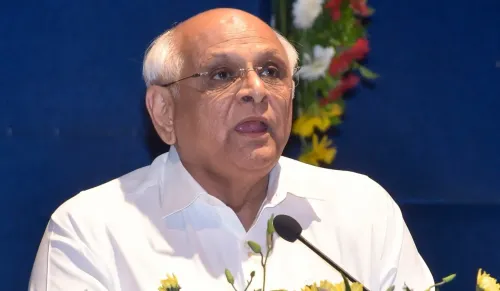
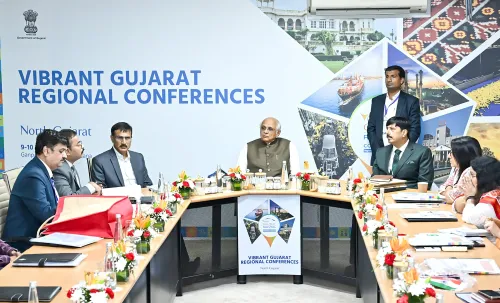
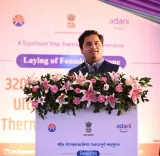
Rajkot, Jan 11 (NationPress) During the two-day Vibrant Gujarat Regional Conference (VGRC), a seminar titled "From Carbon to Crops: Green Molecules, Higher Yields" was held on Sunday.
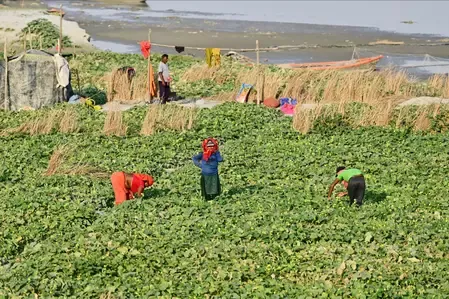
The seminar aimed to showcase that in today's world of global climate change and increasing food demands, innovative and sustainable agricultural practices, coupled with green energy initiatives, are essential.
The phrase "From Carbon to Crops" embodies a groundbreaking methodology where carbon dioxide from the atmosphere or industrial carbon emissions are transformed into green molecules beneficial for agriculture.
Experts at the seminar explored current advancements in green energy and the promising initiatives that lie ahead.
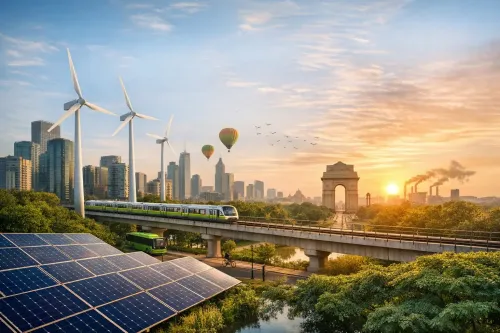
They stressed that carbon should not be perceived as a liability but rather as a chance to cultivate green energy.
These green molecules can serve as bio-fertilisers, bio-stimulants, soil enhancers, and crop growth catalysts.
This leads to enhanced soil fertility, stronger root systems, and improved nutrient uptake in plants.
Utilising carbon-derived green molecules greatly boosts crop yields, diminishes reliance on chemical fertilisers, maintains soil health, optimises water usage, and fosters a more sustainable agricultural ecosystem.
This strategy serves not only to elevate agricultural output but also plays a critical role in mitigating carbon emissions, addressing climate change, and boosting farmers' earnings.
Thus, the journey "From Carbon to Crops" integrates green technology with contemporary farming practices, establishing a robust foundation for future food security, wherein green molecules drive higher yields, heralding a transformative era in agricultural progress.
Positive deliberations on augmenting India's existing green energy and green hydrogen capabilities were also part of the conference, ensuring that Gujarat, in conjunction with the nation, achieves excellent outcomes in this sector.
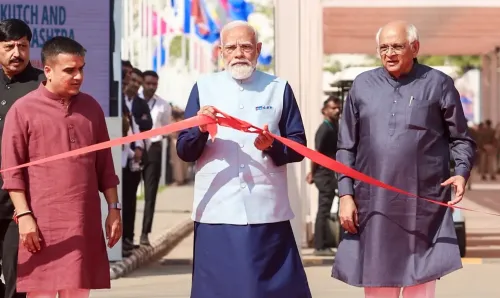
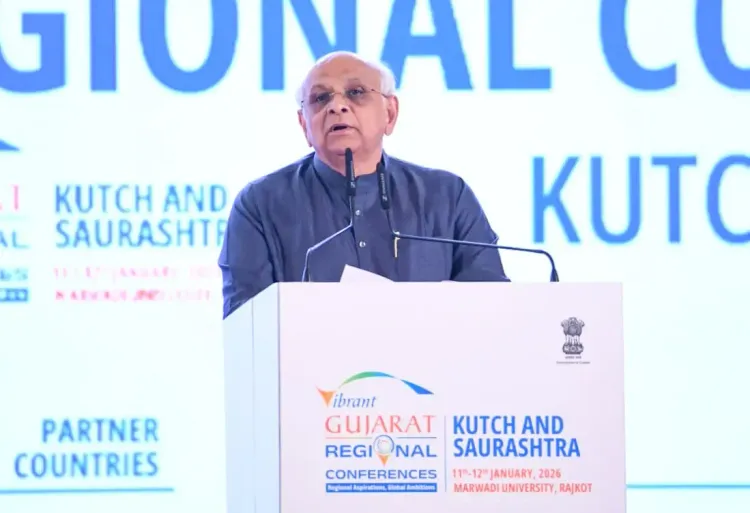
On Sunday, Prime Minister Narendra Modi graced the second edition of the Vibrant Gujarat Regional Conference (VGRC) for Kutch and Saurashtra at Marwadi University in Rajkot.
The Prime Minister inaugurated the two-day conference, which focuses on Kutch and Saurashtra, and laid the cornerstone for 13 greenfield smart estates under the Gujarat Industrial Development Corporation Limited across seven districts—Amreli, Kutch, Bhavnagar, Morbi, Rajkot, Jamnagar, and Surendranagar—covering over 3,540 acres.
During the event, popular Gujarati folk singer Geeta Ben Rabari also entertained attendees.
Approximately 4,000 industrialists from Gujarat and beyond participated in the event.
In his address, PM Modi remarked, "This is my first visit to Gujarat in 2026, and it is significant as it began with prayers at the Somnath Temple. Now, I am partaking in this magnificent event in Rajkot, indicating the mantra of 'Vikas bhi or Virasat bhi (Development alongside Heritage)' is resonating everywhere."
He noted that over the last two decades, the Vibrant Gujarat initiative has established a "global benchmark". He highlighted that ten editions have taken place, each strengthening the "identity and impact" of the summit.
According to him, "The platform of the Vibrant Gujarat Summit is not merely an event; it represents the journey of a modern India in the 21st century that started as a dream and has now evolved into a steadfast belief."
He elaborated that the summit's initial goal was to showcase Gujarat's potential to the world, attract investments, and ensure mutual benefits for both India and global investors. However, it has since transcended investment conversations, emerging as a robust platform for global growth, international collaboration, and partnerships.
PM Modi noted the increasing number of global partners over the years, stating that the summit has become a prominent "example of inclusion", where corporate groups, cooperatives, MSMEs, start-ups, multilateral and bilateral organisations, and international financial entities converge to engage in discussions and advance Gujarat's progress.
He remarked that one-fourth of the 21st century has elapsed, and in the previous decade, "India has made remarkable strides", emphasizing Gujarat's pivotal role in this development.
He pointed out that India is on a fast track to becoming the world's third-largest economy, with rising expectations globally. He stated, "India is the fastest-growing large economy, and inflation is under control."
PM Modi highlighted India's agricultural achievements, mentioning that it ranks first in milk production, generic medicine production, and vaccine manufacturing.
He described India's growth narrative as a success story driven by the "mantra of Facilitate, Reform, Perform, and Transform."
Over the past 11 years, he noted, India has emerged as the world's largest mobile data consumer, with UPI becoming the leading real-time digital transaction platform. He also pointed out the shift from dependence on imported mobile phones to India becoming the second-largest mobile manufacturer globally.
He praised India's advancements in the start-up ecosystem, solar energy production, aviation, metro connectivity, and more.
According to him, "Every global expert and institution is optimistic about India's future. The IMF regards India as the engine of global growth."
He emphasized that India's political stability and policy continuity have fostered unprecedented certainty amid global volatility.
PM Modi urged investors to seize the moment, stating, "The Vibrant Gujarat Regional Summit conveys a clear message: now is the ideal time to invest."
He concluded that Kutch and Saurashtra represent not just regions of opportunity but are crucial to India's growth trajectory.
Over 1,500 memorandums of understanding (MoUs) are anticipated to be signed during this conference.
Moreover, around 800 university students are volunteering for registration, guidance, and guest reception, with 22 international students from 52 nations also in attendance, alongside delegates.
Point of View
I view the Vibrant Gujarat Summit as a pivotal platform for showcasing India's potential in sustainable development. The discussions around transforming carbon into green energy reflect a proactive approach to addressing climate challenges while enhancing agricultural productivity. This journey can significantly contribute to food security and economic growth, aligning with national interests.
NationPress
20 Sept 2026
Frequently Asked Questions
What was the main theme of the seminar at VGRC?
The seminar centered on the theme "From Carbon to Crops: Green Molecules, Higher Yields," focusing on innovative agricultural solutions and green energy.
Who attended the Vibrant Gujarat Regional Conference?
Prime Minister Narendra Modi attended the conference, along with nearly 4,000 industrialists and various delegates from across the country.
What opportunities does carbon present according to the seminar?
Experts discussed that carbon should be viewed as an opportunity for generating green energy and enhancing agricultural practices.
How many MoUs are expected to be signed during the VGRC?
Over 1,500 memorandums of understanding (MoUs) are anticipated to be signed at the conference.
What role do green molecules play in agriculture?
Green molecules can serve as bio-fertilisers and soil conditioners, improving soil health, crop yields, and reducing reliance on chemical fertilisers.