How Are the Army and IAF Combating Forest Fires in Arunachal Pradesh and Nagaland?
Synopsis
In a relentless battle against raging forest fires in Arunachal Pradesh and Nagaland, the Army and IAF join forces for aerial and ground firefighting operations. With helicopters executing water-dropping missions, the efforts signify a crucial response to protect the delicate Himalayan ecosystem and local communities from the devastating impacts of fire.
Key Takeaways
Joint operations by the Army and IAF are crucial in firefighting efforts.
Helicopters are integral for water-dropping missions in challenging terrains.
Dry weather and jhum cultivation are significant factors contributing to forest fires.
Efforts are ongoing to prevent the spread of fires and protect local communities.
Heightened vigilance is essential due to persistent dry conditions.
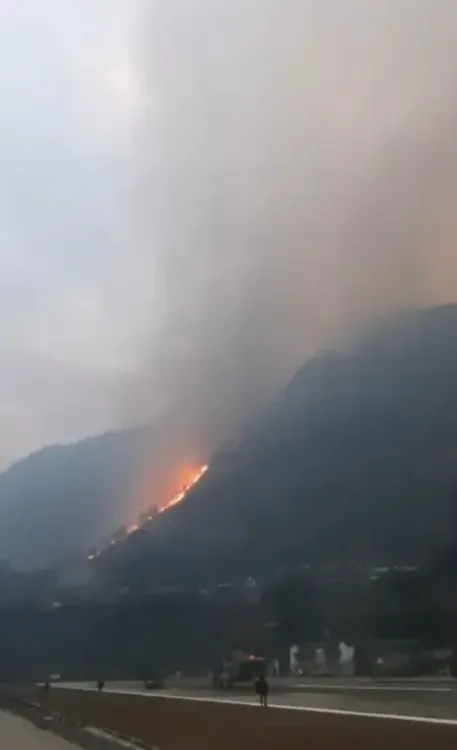
New Delhi, Feb 18 (NationPress) The Army and the Indian Air Force are tirelessly involved in operations aimed at controlling the extensive forest fires blazing in Arunachal Pradesh and Nagaland.
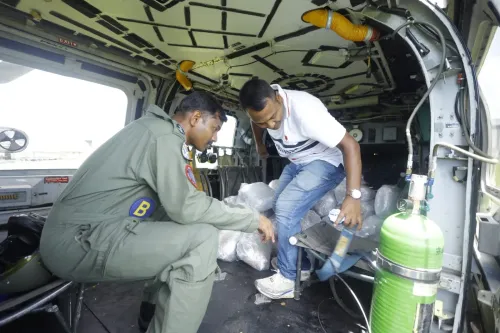
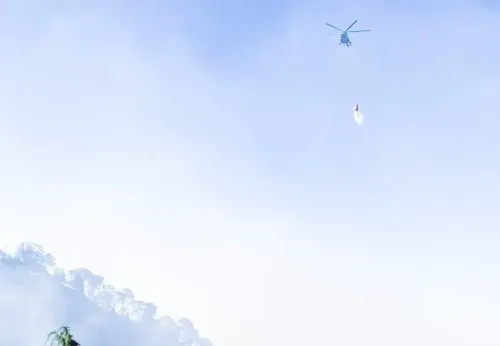
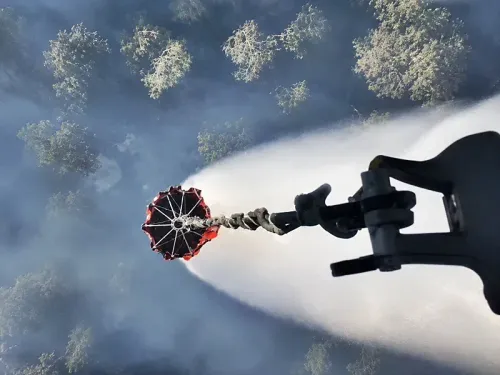
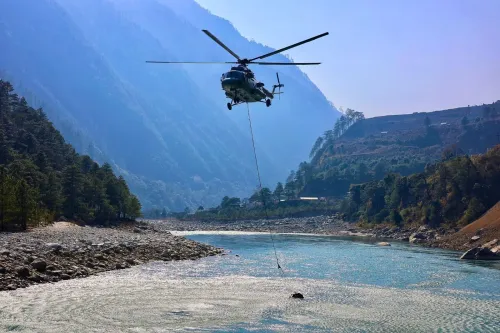
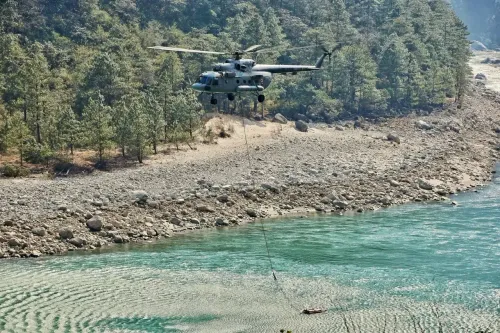
Helicopters are executing constant water-dropping missions in difficult terrains, while ground teams and specialized machinery back the firefighting initiatives.
On social media, the Indian Air Force remarked, “Our helicopters are engaged in a dual-front operation against wildfires, conducting unyielding aerial firefighting efforts in challenging landscapes. In Walong, Arunachal Pradesh, we have successfully dispensed 139,800 litres of water to extinguish the flames. Concurrently, operations are ongoing over Dzukou Valley in Nagaland, where Mi-17 V5 helicopters are sourcing water from Padumpokhiri Lake (Dimapur) to combat fires near Japfu Peak, despite steep inclines, limited visibility, and thin air.”
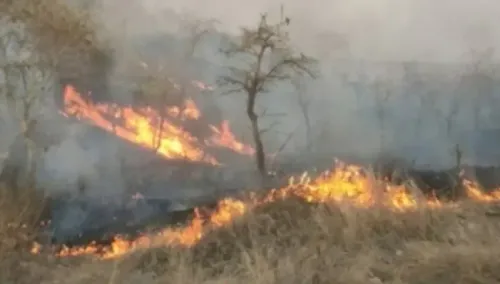
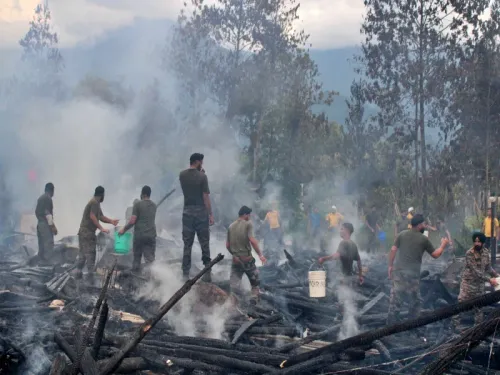
Army personnel, in collaboration with IAF helicopters, have been actively working to control a significant forest fire that erupted in Walong, a remote region situated at an altitude of approximately 3,000 to 3,500 feet in the Anjaw district of Arunachal Pradesh.
Footage shared previously by the Army displayed helicopters dousing flames that are consuming the hills, alongside other firefighting tools deployed to assist ground teams. The fire is reported to have started on February 13.
Earlier, the IAF posted, “Our helicopters are performing sustained aerial firefighting missions above 9,500 ft in the Lohit valley of Arunachal Pradesh. Over 12,000 litres of water have been delivered in multiple sorties, targeting hotspots along narrow ridgelines overlooking the Lohit Valley. Despite challenging weather conditions and thin air, our helicopters are executing precise drops to contain the fire and safeguard the delicate Himalayan ecosystem. The mission continues.”
A defense spokesperson in Guwahati stated that dry weather conditions and the practice of jhum cultivation, a traditional slash-and-burn technique employed by local hill tribes, are significant contributors to the forest fires in the Northeast.
The spokesperson noted that over the past five days, coordinated efforts involving manpower, advanced firefighting tools, heavy machinery, and helicopters providing aerial reconnaissance and water-dropping support have been executed around the clock. These operations are being conducted under extremely challenging terrain and weather conditions to ensure total fire extinguishment.
Officials stressed that the joint efforts of the Army and IAF have been vital in preventing the spread of the fires, underscoring the importance of continuous aerial support in steep and isolated regions where ground access is limited.
With ongoing dry conditions in the area, authorities are maintaining heightened vigilance, coordinating between ground teams and aerial units to mitigate any new flare-ups and protect the surrounding forested regions.
Point of View
The collaboration between the Army and Indian Air Force highlights the imperative need for a coordinated response to environmental challenges. This situation emphasizes the importance of sustaining our natural ecosystems while ensuring the safety of local communities.
NationPress
3 Oct 2026
Frequently Asked Questions
What are the main causes of forest fires in Northeast India?
The primary causes include dry weather conditions and traditional jhum cultivation methods used by local hill tribes.
How much water has been dropped by IAF helicopters?
IAF helicopters have dropped over 139,800 litres of water to combat the fires in Walong, Arunachal Pradesh.
What challenges are faced during firefighting operations?
Firefighting operations are challenged by difficult terrain, poor visibility, and altitude-related issues.
When did the forest fires start?
The forest fires reportedly began on February 13.
What is the ongoing response to the forest fires?
Authorities are maintaining heightened vigilance and coordinating ground and aerial units to tackle any new flare-ups.