Indian Army summits Mt Khangchengyao (6,889 m) in North Sikkim
Synopsis
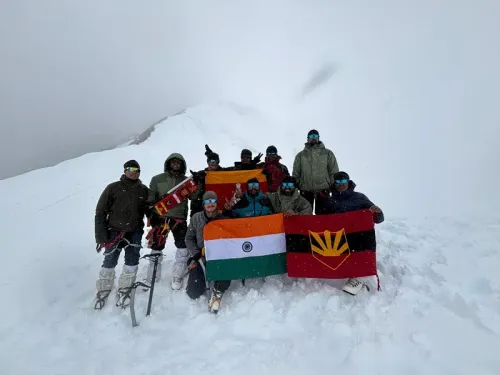
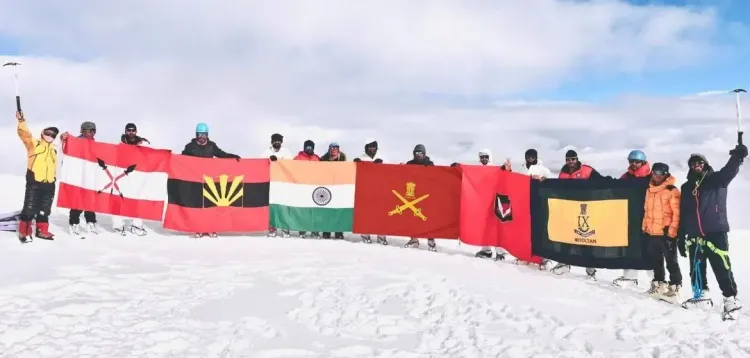
The Indian Army's Spear Corps has scaled Mt Khangchengyao — a 6,889-metre dome-shaped peak with 75–80-degree flanks and no pointed summit — becoming one of the rare teams to conquer what locals revere as an angry male deity of the Himalayas. The ascent, completed exactly a month after the expedition departed Arunachal Pradesh, is both a feat of physical endurance and a pointed signal of the Army's high-altitude operational capability along the LAC.
Key Takeaways
The Indian Army's Eastern Command Spear Corps expedition summited Mt Khangchengyao on 18 September 2026 .
Mt Khangchengyao stands at 6,889 metres — the fourth-highest peak in Sikkim and tenth-highest in India.
The expedition departed Rayang Military Station, Arunachal Pradesh , on 18 August 2026 .
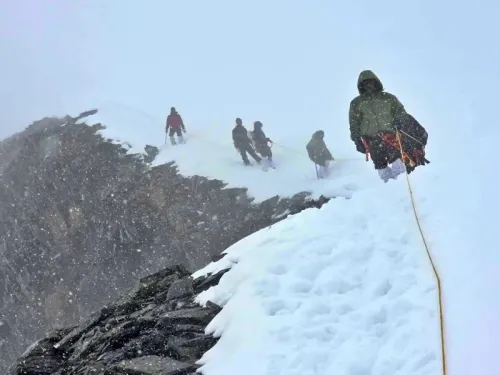
The mountain's dome-shaped summit and 75–80-degree flanking ice walls make it exceptionally difficult to climb.
The Spear Corps (III Corps) , headquartered in Dimapur, Nagaland , is trained for high-altitude operations and manages the LAC with China.
Local communities revere the peak as a male deity; folklore links deteriorating weather to female climbers approaching base camp.
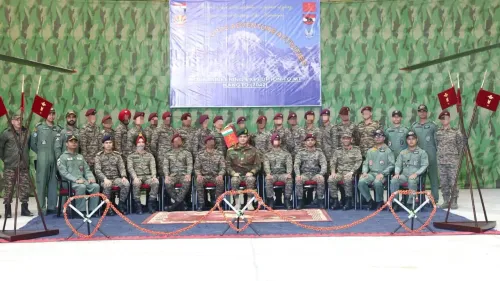
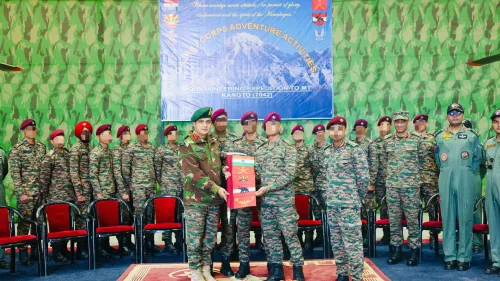
The Indian Army's mountaineering expedition, launched under the Eastern Command's Spear Corps, successfully reached the summit of Mt Khangchengyao in North Sikkim on Friday, 18 September 2026. The ascent of the 6,889-metre peak — the fourth-highest in Sikkim and the tenth-highest in India — marks a significant achievement given the mountain's notoriously treacherous terrain and unpredictable high-altitude weather.
Expedition Background
The expedition was flagged off on 18 August 2026 from Rayang Military Station in Arunachal Pradesh, giving the team exactly one month to acclimatise, advance through base camps, and mount a successful summit bid. The Spear Corps, formally designated III Corps and headquartered at Dimapur, Nagaland, is a Mountain (Holding) Corps whose troops are trained specifically for high-altitude operations — making the unit a natural choice for such an undertaking.
What Makes Mt Khangchengyao So Difficult
Mt Khangchengyao presents a distinctive set of challenges that set it apart from more frequently climbed Himalayan peaks. Unlike typical alpine summits, it has an unusual dome-shaped structure with no pointed peak; its near-rounded crown gives way to flanks that descend at angles of 75–80 degrees, leaving little room for error on descent. Steep ice walls and rapidly shifting weather conditions compound the difficulty at this altitude.
The mountain also carries deep cultural significance in the region. Local communities in this part of the Himalayan belt regard most high peaks as deities, differentiating them by gender. Mt Khangchengyao is revered as a male mountain, and local folklore holds that the weather deteriorates whenever a woman climber approaches the base camp — a tradition that underscores the spiritual weight the peak carries for communities living in its shadow.
Eastern Command's Statement
The Eastern Command acknowledged the feat in a post on X, saying: Under the aegis of Eastern Command, the Indian Army Mountaineering Expedition team under Spear Corps displayed exceptional courage and successfully summited Mt Khangchengyao (6,889 m), achieving a historic milestone. Defying sub-zero temperatures, treacherous terrain and punishing high altitudes, the team triumphed through sheer physical endurance and flawless camaraderie. This monumental ascent stands as a soaring testament to the indomitable spirit of the Indian Army, proving once again that no height is insurmountable when met with relentless resolve.
Strategic and Operational Significance
Beyond the physical achievement, officials noted that high-altitude mountaineering expeditions serve a clear operational purpose: they sharpen teamwork, build mental resilience, and prepare soldiers to function effectively in the extreme conditions they may encounter while managing India's borders. The Spear Corps plays a major role along the Line of Actual Control (LAC) with China and conducts counter-insurgency operations across the northeastern states. The corps also has a storied history, having participated in the Battle of Walong during the Indo-China War of 1962.
This successful summit reinforces the Indian Army's commitment to maintaining operational readiness and soldier capability in one of the world's most demanding high-altitude environments. Further details on the full expedition team composition are awaited from the Eastern Command.
Point of View
Which manages that very frontier, completing this ascent on a peak as technically demanding as Khangchengyao sends a quiet but clear message about troop readiness in North Sikkim. What mainstream coverage tends to underplay is the geographic symbolism: summiting a peak that local lore frames as a guardian deity, in a border region of active strategic sensitivity, carries political weight beyond the achievement itself. Whether the Army follows this with sustained high-altitude training cycles — rather than periodic expedition optics — will determine the real operational dividend.
NationPress
18 Sept 2026
Frequently Asked Questions
Which Indian Army unit summited Mt Khangchengyao in 2026?
The mountaineering expedition was conducted by the Indian Army's Eastern Command under the Spear Corps, formally known as III Corps, headquartered in Dimapur, Nagaland. The team reached the summit on 18 September 2026.
How high is Mt Khangchengyao and where is it located?
Mt Khangchengyao stands at 6,889 metres and is located in North Sikkim. It is the fourth-highest peak in Sikkim and the tenth-highest in India.
Why is Mt Khangchengyao considered so difficult to climb?
The mountain has an unusual dome-shaped structure without a pointed summit, and its sides descend at near-vertical angles of 75–80 degrees. Steep ice walls and unpredictable high-altitude weather make it one of the more technically demanding peaks in the Himalayan region.
What is the cultural significance of Mt Khangchengyao?
Local communities in the Himalayan region revere Mt Khangchengyao as a male deity. Folklore holds that the mountain grows angry — expressed through worsening weather — when a woman climber approaches the base camp, reflecting the deep spiritual reverence locals hold for high peaks in the area.
Why does the Indian Army conduct mountaineering expeditions?
According to officials, these expeditions build teamwork and camaraderie among troops while training them to operate in extreme conditions. For units like the Spear Corps, which manages the Line of Actual Control with China, high-altitude readiness has direct operational relevance.