Ahmedabad Rath Yatra 2025: Artist Zarna Panchal paints elephants for 4 years
Synopsis
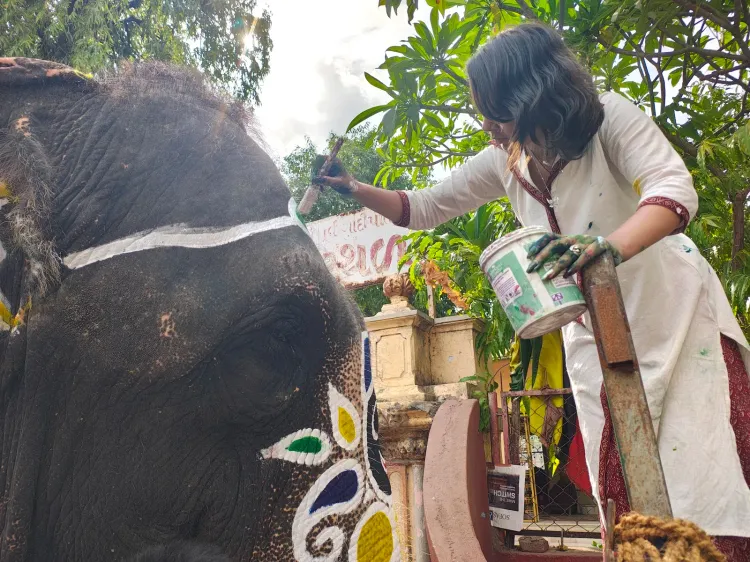
While lakhs watched Ahmedabad's 149th Rath Yatra, the real story walked on four legs — 21-year-old Zarna Panchal has spent four years hand-painting the ceremonial elephants of Jamalpur's Jagannath Temple, turning a Fine Arts degree into a form of seva. This year, all 18 elephants were also tracked by the 'Gaj Rakshak' system for the first time.
Key Takeaways
Zarna Panchal , 21 , has hand-painted ceremonial elephants at Ahmedabad's Jagannath Temple for four consecutive years .
She is a Fine Arts graduate from C.N.
Fine Arts College and a resident of Vasna , Ahmedabad.
Design preparation begins nearly a month before the procession; each elephant takes approximately one day to paint.
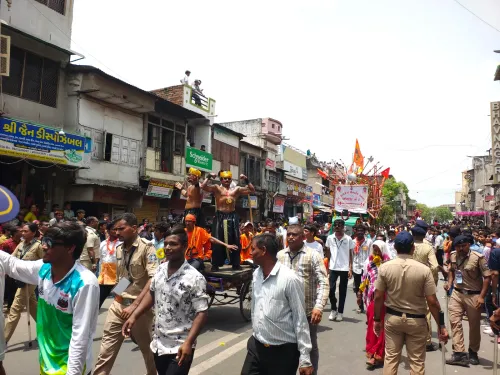
This year's 149th Rath Yatra on 16 July 2025 deployed more than 31,000 police personnel along the route.
For the first time, all 18 ceremonial elephants were monitored via the 'Gaj Rakshak' system using GPS, sound sensors, and movement detectors.
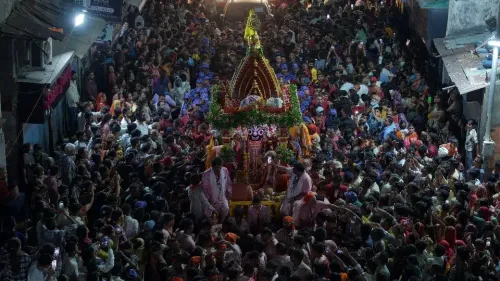
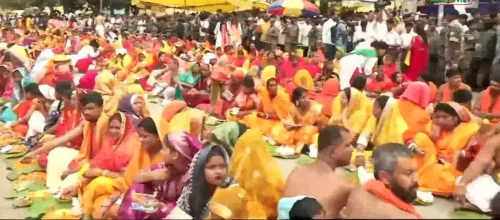
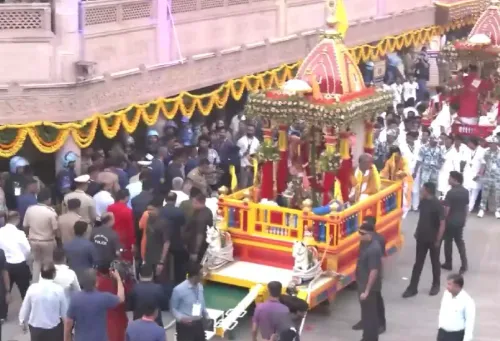
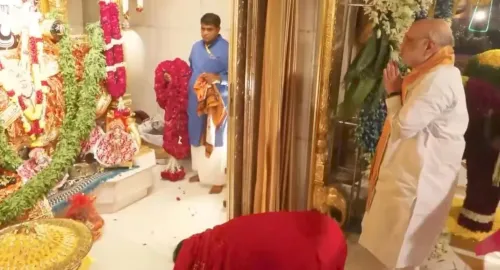
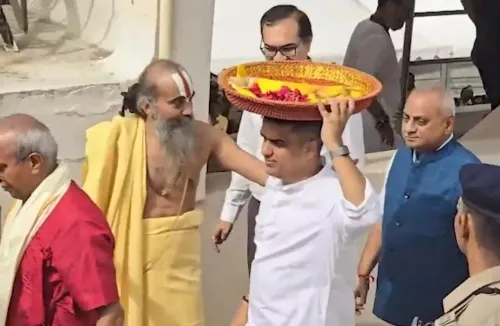
As lakhs of devotees lined the streets of Ahmedabad on Thursday, 16 July for the city's 149th Jagannath Rath Yatra, the ceremonial elephants accompanying the procession carried something beyond sacred adornment — the hand-painted artwork of Zarna Panchal, a 21-year-old Fine Arts graduate who has quietly made elephant painting her form of devotion. While the three chariots of Lord Jagannath, Lord Balram, and Goddess Subhadra rolled through the city's historic route, Panchal's intricate designs drew their own quiet admiration.
Four Years of Seva at Jamalpur Temple
Panchal has been volunteering — or, as she insists, serving as a sevak — at the historic Jagannath Temple in the Jamalpur area of Ahmedabad for the past four years. A resident of Vasna and a graduate of C.N. Fine Arts College, she initially contributed through flower garlands and rangoli before turning to elephant painting. 'I wanted my art to have its own identity and a place at the feet of Lord Jagannath. That's how I started painting for Lord Jagannath,' she said.
Over the years, she has worked on approximately five or six elephants, though the actual number may be higher. This year, she painted one elephant independently and assisted with two others, continuing a personal tradition she began at the age of 17.
The Craft: Designs Begin a Month Before the Procession
The artwork is far from spontaneous. Design selection begins nearly a month in advance, aligned with the rituals leading up to the Jal Yatra. The painting itself takes roughly one full day per elephant. Panchal's palette stays rooted in the festival's religious symbolism — chariots, the three deities, lotuses, and peacocks — rendered in red, yellow, and green, applied over white outlines. 'We first draw white outlines and then fill them with colour,' she explained.
Working on a living, moving canvas presents challenges that no Fine Arts curriculum anticipates. 'Sketching on paper depends on the mood of the artist; however, painting on an elephant depends on the elephant's mood,' she said. 'When they are playful, you have to play with them first, calm them down and then continue painting.'
From Fear to Familiarity: The Bond with the Elephants
Panchal admits her first encounters with the animals were intimidating. Over time, daily interaction transformed that fear into something closer to kinship. 'Initially, I was extremely scared. But I met them every day, and gradually we developed a bond. Now they recognise me and even recognise my voice. They are emotional with me. They are like my babies,' she said.
She has also become attuned to reading elephant behaviour — a skill she says comes only from sustained presence. 'Their eyes tell you a lot. Their sounds tell you whether they are happy. Even the way they move their tails gives you signs about their mood,' she noted. She urged festival-goers to be considerate: 'Thousands of people come close to the elephants throughout the day. They also get tired and irritated just as we do after a long day. Please listen to the mahouts.'
Security and the 'Gaj Rakshak' System at Rath Yatra 2025
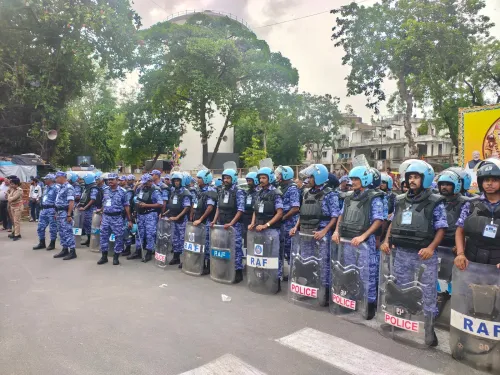
This year's 149th Rath Yatra was also one of the most closely monitored in the festival's history. Authorities deployed more than 31,000 police personnel along the route, supported by drones, AI-enabled surveillance, facial recognition systems, and a central command network.
In a first for the festival, all 18 ceremonial elephants were tracked using the 'Gaj Rakshak' elephant monitoring system, which integrates GPS trackers, sound-monitoring sensors, and movement detectors to enhance both public safety and animal welfare. Police also urged devotees to keep children close and avoid spreading unverified information on social media.
The procession followed its customary route through the old city before returning to the Jagannath Temple in Jamalpur later in the day. The annual festival, one of Gujarat's largest religious events, drew attendees from across the state — and, this year, renewed attention to the quiet artistry that walks alongside the divine chariots.
Point of View
Animal welfare, and the invisible labour that gives large public spectacles their texture. Most Rath Yatra coverage fixates on crowd counts and security deployments; the human (and animal) relationships that sustain a 149-year-old tradition rarely surface. The debut of the 'Gaj Rakshak' GPS monitoring system for all 18 elephants is also worth tracking: it signals a shift toward institutionalised animal welfare at religious events, a conversation Indian festival culture has been slow to have. Whether that system's data is ever made public — or used to inform mahout practices — will determine whether it is welfare or optics.
NationPress
15 Oct 2026
Frequently Asked Questions
Who is Zarna Panchal and what does she do at the Ahmedabad Rath Yatra?
Zarna Panchal is a 21-year-old Fine Arts graduate from C.N. Fine Arts College, Ahmedabad, who hand-paints the ceremonial elephants participating in the annual Jagannath Rath Yatra. She has been serving as a sevak at the Jagannath Temple in Jamalpur for four years, combining her artistic training with religious devotion.
How does Zarna Panchal paint the elephants and what designs does she use?
Panchal begins selecting designs nearly a month before the procession, drawing inspiration from Rath Yatra symbolism — chariots, Lord Jagannath, Lord Balram, Goddess Subhadra, lotuses, and peacocks. She applies white outlines first, then fills them with bright colours such as red, yellow, and green. Each elephant takes approximately one full day to paint.
What is the 'Gaj Rakshak' system used at Ahmedabad Rath Yatra 2025?
'Gaj Rakshak' is an elephant monitoring system deployed for the first time at the 149th Rath Yatra, tracking all 18 ceremonial elephants using GPS trackers, sound-monitoring sensors, and movement detectors. It is designed to enhance both public safety and animal welfare during the procession.
How many police were deployed for Ahmedabad Rath Yatra 2025?
More than 31,000 police personnel were deployed along the procession route for the 149th Jagannath Rath Yatra on 16 July 2025. The security operation also included drones, AI-enabled surveillance, facial recognition systems, and a central command network.
Why does Zarna Panchal call herself a sevak rather than a volunteer?
Panchal draws a deliberate distinction between volunteering and seva. 'At the temple, we don't use the word volunteer. We are sevaks. We are servants of God, and we are doing seva,' she has said. The term reflects a spiritual relationship with the temple rather than a transactional or civic one.