Arunachal, Assam hold ministerial meet to curb illicit liquor, boost excise revenue
Synopsis
Arunachal Pradesh and Assam convened a rare ministerial-level excise meeting in Itanagar on 17 June, targeting the illicit liquor trade that bleeds both states of revenue. With intelligence-sharing pacts and a joint enforcement roadmap on the table, this is the Northeast's most structured cross-border excise push in years.
Key Takeaways
Arunachal Pradesh Deputy CM Chowna Mein and Assam minister Atul Bora met in Itanagar on 17 June 2025 for a ministerial excise coordination meeting.
Talks focused on curbing the illicit liquor trade , intelligence-sharing , joint enforcement, and revenue mobilisation .
Both states agreed to develop a structured roadmap with periodic review meetings and institutional coordination mechanisms.
Mein holds the combined portfolios of Finance, Tax, Excise and Narcotics in Arunachal Pradesh.
Officials from Finance and Excise departments of both states presented ongoing initiatives and operational challenges.
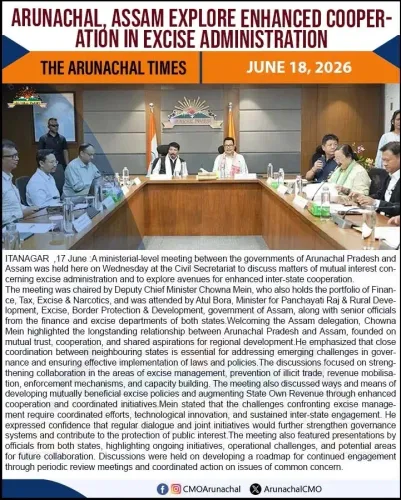
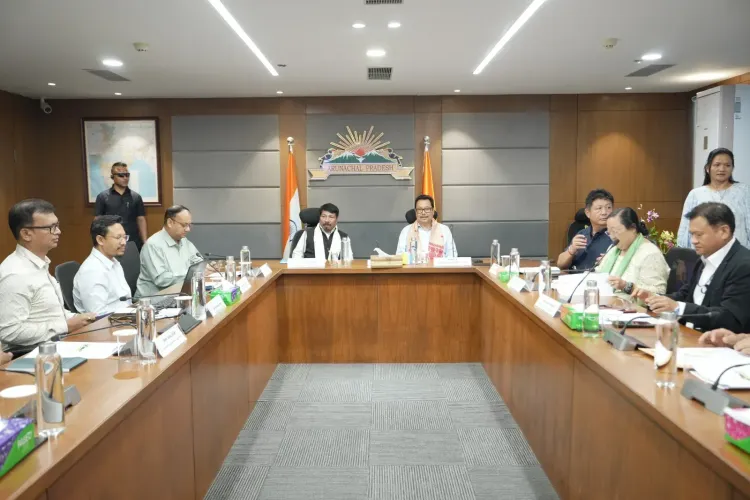
Arunachal Pradesh Deputy Chief Minister Chowna Mein and Assam minister Atul Bora met at the Civil Secretariat in Itanagar on Wednesday, 17 June for a ministerial-level excise coordination meeting, the first of its kind between the two states in recent memory. The talks centred on curbing the illicit liquor trade, improving revenue mobilisation, and establishing a structured inter-state enforcement framework.
What the Meeting Covered
Senior officials from the Finance and Excise departments of both states participated in detailed presentations on ongoing initiatives, operational challenges, and potential areas for collaboration. Key agenda items included intelligence-sharing, joint enforcement action, capacity-building among departmental personnel, and the development of mutually beneficial excise policies aimed at augmenting each state's own revenues.
The two sides also discussed creating a structured roadmap for continued engagement through periodic review meetings and institutional coordination mechanisms to address issues that cut across state boundaries.
What Chowna Mein Said
Chairing the meeting, Deputy Chief Minister Mein — who also holds the portfolios of Finance, Tax, Excise and Narcotics — said that excise management challenges 'require coordinated efforts, technological innovation and sustained engagement between neighbouring states.' He underscored that collaborative approaches are essential for strengthening enforcement systems and improving regulatory oversight.
Mein highlighted the longstanding relationship between Arunachal Pradesh and Assam, describing it as founded on 'mutual trust, cooperation and shared aspirations for regional development and prosperity.' He expressed confidence that regular dialogue and joint initiatives would strengthen governance and protect public interest.
Assam's Position
Assam's Minister for Panchayati Raj and Rural Development, Excise, Border Protection and Development, Atul Bora, attended alongside senior state officials. Both sides reaffirmed their commitment to transparency, efficiency, and accountability in excise administration, concluding the meeting with a shared resolve to deepen institutional partnerships.
Why This Matters
The border between Arunachal Pradesh and Assam has historically been a conduit for illicit liquor movement, undermining excise revenues and posing public health risks. This comes amid a broader push by northeastern states to tighten inter-state regulatory frameworks as part of wider governance reforms. Notably, both states stand to gain fiscally — excise duties are a significant component of state own-tax revenues in the Northeast, where alternative revenue streams remain limited.
The meeting concluded with both governments committing to joint action on shared enforcement concerns and a follow-up review mechanism. The next steps, including a formal roadmap and timeline for periodic inter-state meetings, are expected to be finalised in the coming weeks.
Point of View
Not just goodwill communiqués.
NationPress
17 Sept 2026
Frequently Asked Questions
What was the Arunachal-Assam excise meeting about?
The meeting, held at the Civil Secretariat in Itanagar on 17 June 2025, focused on curbing the illicit liquor trade, improving excise revenue mobilisation, and establishing joint enforcement and intelligence-sharing mechanisms between the two states.
Who attended the ministerial excise meeting?
Arunachal Pradesh Deputy Chief Minister Chowna Mein chaired the meeting, while Assam was represented by minister Atul Bora. Senior officials from the Finance and Excise departments of both states also participated.
Why is inter-state excise cooperation important for Arunachal and Assam?
The shared border between the two states has historically facilitated illicit liquor movement, eroding excise revenues and posing public health risks. Coordinated enforcement and intelligence-sharing are seen as essential to plugging these gaps.
What are the next steps after the Itanagar meeting?
Both governments agreed to develop a structured roadmap for continued engagement, including periodic review meetings and institutional coordination mechanisms. A formal timeline is expected to be finalised in the coming weeks.
What portfolios does Chowna Mein hold?
Chowna Mein serves as Deputy Chief Minister of Arunachal Pradesh and additionally holds the portfolios of Finance, Tax, Excise and Narcotics, making him the key figure on excise policy for the state.