Arunachal CMO marks a decade of development since 2016

Synopsis
On Independence Day eve 2026, Arunachal Pradesh's CMO highlighted a decade of progress since 2016 spanning infrastructure, electrification, tap water access, healthcare, and economic growth — gains anchored in central schemes like Saubhagya and Jal Jeevan Mission under CM Pema Khandu's tenure.
Key Takeaways
The Chief Minister's Office of Arunachal Pradesh posted a development review on 14 August 2026 , the eve of Independence Day.
Progress cited spans infrastructure, connectivity, healthcare, electrification, household tap connections, and economic growth since 2016.
2016 marks the start of Chief Minister Pema Khandu 's tenure in the state.
The Saubhagya scheme (2017) and Jal Jeevan Mission (2019) are the central programmes underpinning electrification and tap-water gains.
Arunachal's development sits within the strategic Act East Policy framework, where border-area infrastructure carries both civilian and geopolitical weight.
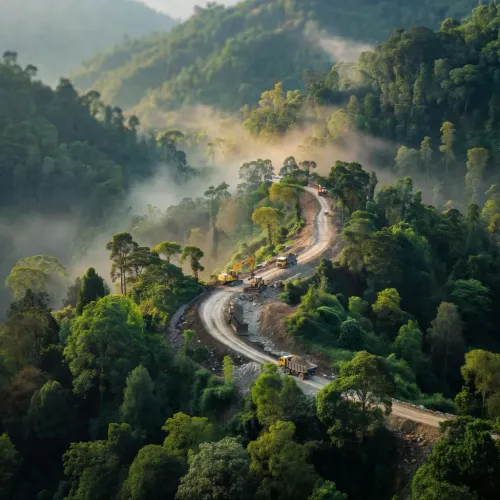
On the eve of Independence Day, the Chief Minister's Office of Arunachal Pradesh drew a decade-long arc of progress — roads carved through remote hills, taps running in villages that once went without, and lights reaching homes that had never known the grid.
The Chief Minister's Office of Arunachal Pradesh posted on 14 August 2026, stating that the state 'has made significant progress in key sectors since 2016, with substantial improvements in infrastructure, connectivity, healthcare, electrification, household tap connections and economic growth, strengthening the foundation for a more developed and prosperous State.'
A frontier state's long road to basic services
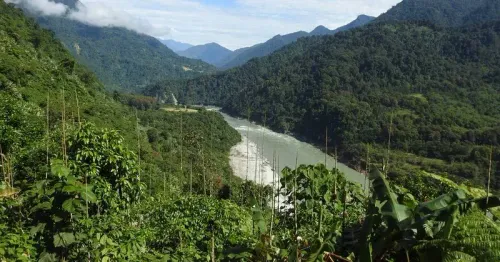
Arunachal Pradesh is India's northeasternmost state, sharing borders with China, Myanmar, and Bhutan — a geography that has historically made infrastructure delivery one of the country's most complex logistical challenges. Sparse population across difficult terrain, extreme weather, and limited road access meant that for decades, electrification and piped water remained aspirational rather than assured for many of its residents. The period cited in the post — 2016 onwards — coincides with the tenure of Chief Minister Pema Khandu, who assumed office in July 2016 following a period of political transition in the state.Central schemes that changed the arithmetic
Two centrally sponsored programmes have been central to the gains referenced. The Saubhagya scheme, launched in September 2017, targeted last-mile household electrification across India, with the Northeast receiving particular attention given its historically low coverage. The Jal Jeevan Mission, launched in 2019, set out to provide functional tap connections to every rural household — a transformative ambition in a state where village access often depends on seasonal roads and weather. Both schemes sit within a broader strategic frame: the central government's Act East Policy, articulated in 2014, which positioned northeastern connectivity as both a development and a geopolitical priority. For a frontier state that faces China across the McMahon Line, infrastructure is never purely civilian.What the Independence Day timing signals
Posting a development summary on the eve of Independence Day is a deliberate political choice — it anchors state-level progress within the national celebration and invites citizens to measure the decade against the promise of the tricolour. The timing also sets up a forward-looking frame: state budgets, NITI Aayog reviews, and central assistance packages for the Northeast are the next checkpoints where these claims will be tested against hard numbers. For Arunachal's rural households — the real stakeholders in every road laid and tap connected — the measure is simpler: whether the progress described has reached their village.Point of View
Tying state-level delivery to the broader BJP-led narrative of northeastern development. The reference to 2016 as the baseline is politically loaded: it marks both Khandu's assumption of power and the consolidation of the Act East Policy's implementation phase. The post's breadth — spanning infrastructure, health, water, and power — signals an intent to present a comprehensive governance record ahead of what could be an election or budget cycle. The real test, however, lies in granular data from NITI Aayog and state economic surveys, which will determine whether the gains are as wide and deep as the framing suggests.
NationPress
14 Aug 2026
Frequently Asked Questions
What progress has Arunachal Pradesh made since 2016?
The Chief Minister's Office of Arunachal Pradesh states that the state has made significant improvements in infrastructure, connectivity, healthcare, electrification, household tap connections, and economic growth since 2016, coinciding with CM Pema Khandu's tenure.
Who is the Chief Minister of Arunachal Pradesh?
Pema Khandu has been the Chief Minister of Arunachal Pradesh since July 2016 .
What is the Jal Jeevan Mission and how does it affect Arunachal Pradesh?
The Jal Jeevan Mission , launched in 2019 , is a central government scheme to provide functional household tap connections to all rural households in India, including in remote areas of Arunachal Pradesh where piped water access was historically limited.
What is the Saubhagya scheme?
The Saubhagya scheme was launched in September 2017 to achieve last-mile household electrification across India, with the northeastern states — including Arunachal Pradesh — among its priority targets.
Why is infrastructure development in Arunachal Pradesh strategically important?
Arunachal Pradesh shares borders with China, Myanmar, and Bhutan , making infrastructure development there a strategic priority under India's Act East Policy . Roads, power, and connectivity in border areas carry both civilian development and national security significance.