Arunachal Pradesh explores geothermal energy for border, remote areas
Synopsis
Arunachal Pradesh is quietly laying the groundwork for one of India's most strategically significant clean-energy projects — geothermal power in Tawang district, right on the China border. With a potential of 10–15 MW identified in the Mago-Thingbu belt and international expertise from Norway and Iceland already engaged, the state could soon demonstrate that India's most sensitive frontier can power itself.
Key Takeaways
Arunachal Pradesh has identified geothermal potential of 10–15 MW in the Mago-Thingbu belt of Tawang district .
Science and Technology Minister Dasanglu Pul visited the ONGC Geothermal Project at Puga Valley, Ladakh on 3 October 2026 to study high-altitude geothermal techniques.
In March 2024 , CESHS partnered with the Norwegian Geotechnical Institute and Iceland-based Geotropy for field investigations at Tawang hot-spring sites.
Oil India Limited and CESHS have initiated pre-feasibility studies at Mago, Thingbu, Damteng , and Tsechu in Tawang.
Geochemical samples have been collected from five geothermal sites in Tawang — Damteng, Grengkhar, Mago, Thingbu, and Tsechu.
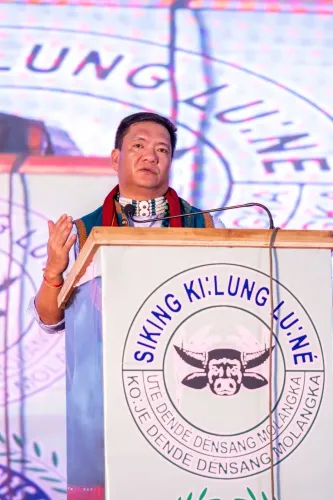
Arunachal Pradesh is actively exploring geothermal energy as a source of clean, reliable, and locally generated power for its remote and strategically sensitive border regions, Science and Technology Minister Dasanglu Pul said on Saturday, 3 October 2026. The state has identified geothermal potential of around 10–15 MW in the Mago-Thingbu belt of Tawang district, marking a significant step in the northeast's clean-energy ambitions.
Study Visit to Ladakh's Puga Valley
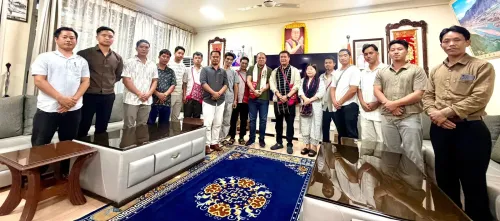
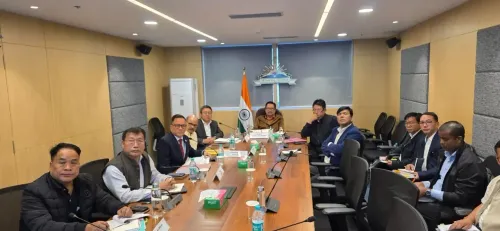
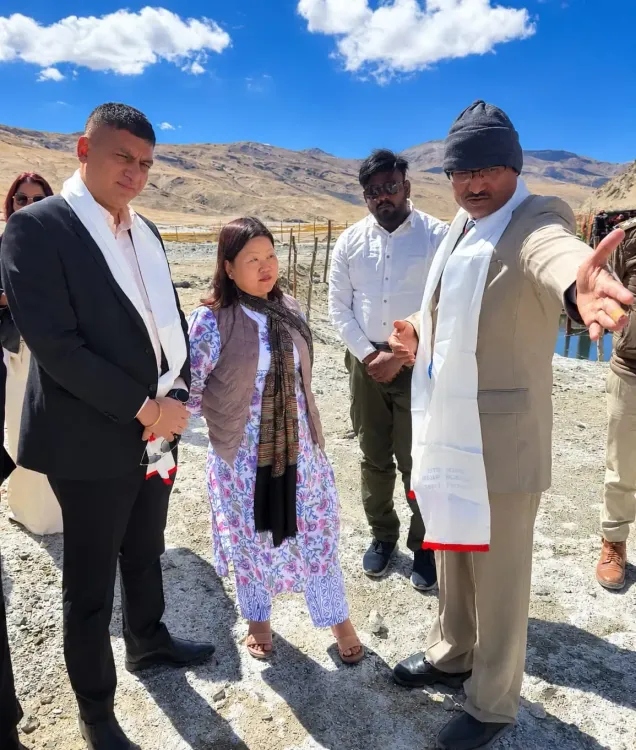
Minister Pul, accompanied by Centre for Earth Sciences and Himalayan Studies (CESHS) Director Tana Tage and departmental geologists, visited the ONGC Geothermal Project at Puga Valley in Ladakh to study geothermal exploration, drilling techniques, and clean-energy generation under high-altitude Himalayan conditions. The delegation sought to draw lessons directly applicable to Arunachal's terrain and climatic context.
'Arunachal Pradesh is blessed with immense natural resources, and our endeavour is to harness this potential responsibly for a sustainable future,' Pul said. She added that insights from the Puga project would directly strengthen the state's geothermal exploration efforts, particularly for border areas where grid connectivity remains a persistent challenge.
Scientific Investigations Already Underway
Scientific groundwork for this initiative has been building for several years. In March 2024, CESHS — in collaboration with the Norwegian Geotechnical Institute and Iceland-based Geotropy — conducted field investigations and geological structural mapping of hot-spring sites at Mago, Thingbu, and nearby locations. The studies assessed geothermal resources for multiple applications, including electricity generation, heating and cooling, agricultural produce drying, and other locally suited clean-energy uses.
Subsequently, CESHS and government-owned Oil India Limited moved towards pre-feasibility studies covering surface and subsurface investigations at Mago, Thingbu, Damteng, and Tsechu in Tawang district. Field investigations have also been reported at five geothermal sites in Tawang — Damteng, Grengkhar, Mago, Thingbu, and Tsechu — where samples were collected for geochemical analysis.
Strategic Significance for Border Areas
The geothermal push carries clear strategic weight. Tawang district shares a sensitive border with China, and energy self-sufficiency in such regions reduces dependence on supply chains that remain vulnerable to geography and weather. Decentralised geothermal generation could power remote military outposts, villages, and infrastructure without the grid-extension costs that have historically plagued high-altitude areas in the northeast.
This comes amid a broader national push to develop border infrastructure in Arunachal Pradesh, where the Centre has accelerated road, tunnel, and connectivity projects in recent years.
International Expertise and Next Steps
The involvement of international partners — Norway's Norwegian Geotechnical Institute and Iceland's Geotropy — underscores the technical complexity of high-altitude geothermal development. Iceland, which generates nearly 30% of its electricity from geothermal sources, is widely regarded as the global benchmark for this technology. Minister Pul also acknowledged ONGC and its execution partner SEROS for sharing technical expertise and field experience during the visit.
With pre-feasibility studies progressing and international collaboration in place, Arunachal Pradesh's geothermal programme is expected to move towards detailed project reports in the coming months — potentially making Tawang district the site of one of India's first operational high-altitude geothermal installations.
Point of View
But the gap between pre-feasibility studies and an operational plant remains wide in India's institutional context. The real test will be whether CESHS and Oil India can translate years of promising field data into a commissioned project before the window of political attention closes.
NationPress
4 Oct 2026
Frequently Asked Questions
What is the geothermal energy potential identified in Arunachal Pradesh?
Arunachal Pradesh has estimated a geothermal energy potential of around 10–15 MW in the Mago-Thingbu belt of Tawang district. Scientific field investigations, including geological mapping and geochemical sampling, have been conducted at five hot-spring sites in the district.
Why did Arunachal's Science Minister visit Ladakh's Puga Valley?
Minister Dasanglu Pul visited the ONGC Geothermal Project at Puga Valley in Ladakh on 3 October 2026 to study geothermal exploration, drilling, and clean-energy generation under high-altitude Himalayan conditions similar to those in Tawang. The insights are intended to guide Arunachal's own geothermal development plans.
Which international organisations are involved in Arunachal's geothermal research?
The Norwegian Geotechnical Institute and Iceland-based Geotropy partnered with CESHS in March 2024 for field investigations and geological structural mapping at hot-spring sites in Tawang. Iceland, which generates around 30% of its electricity from geothermal energy, is considered a global leader in this technology.
Why is geothermal energy important for Arunachal Pradesh's border areas?
Geothermal energy can provide decentralised, off-grid power to remote high-altitude areas where conventional grid extension is prohibitively expensive and logistically difficult. For strategically sensitive border areas like Tawang, local energy generation also reduces dependence on supply chains vulnerable to terrain and weather disruptions.
What are the next steps in Arunachal Pradesh's geothermal programme?
CESHS and Oil India Limited are progressing pre-feasibility studies involving surface and subsurface investigations at Mago, Thingbu, Damteng, and Tsechu in Tawang district. Following the Puga Valley study visit, detailed project reports are expected to be the next milestone as the state moves towards potential development.