Is Arunachal Pradesh the Key to India's Clean Energy Future with a Major Hydropower Initiative?

Synopsis
Arunachal Pradesh emerges as a cornerstone in India's clean energy strategy, with significant hydropower initiatives underway. Governor K.T. Parnaik emphasizes the state's commitment to sustainable energy and infrastructure development, marking a pivotal moment in the country's renewable energy landscape.
Key Takeaways
Arunachal Pradesh plays a crucial role in India's clean energy future with significant hydropower initiatives.
The state aims to achieve 150 MW of rooftop solar capacity by 2030.
Infrastructure development includes improvements in air connectivity and road networks.
Women’s empowerment initiatives are strengthening community support through Self-Help Groups.
Healthcare services are being enhanced with the establishment of new facilities and support programs.
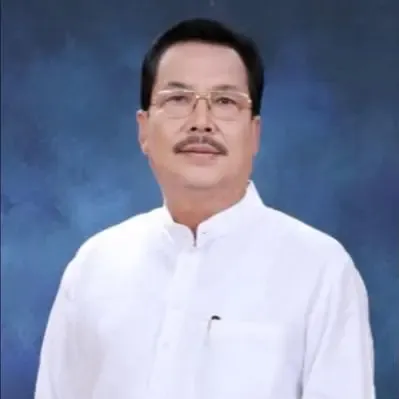
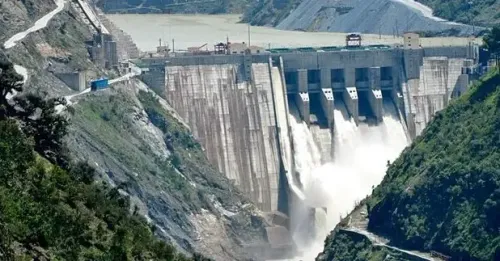
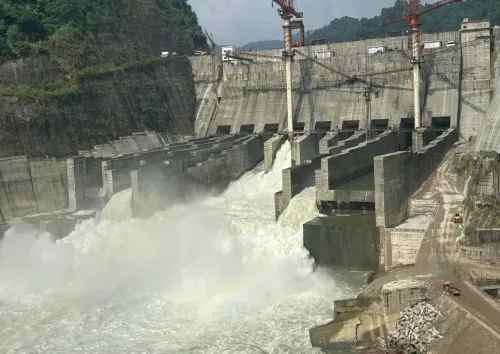
Itanagar, Jan 26 (NationPress) The Governor of Arunachal Pradesh, Lt. General K.T. Parnaik (retd), emphasized on Monday that this state is crucial for India's clean energy aspirations, boasting 1.2 GW of operational hydropower capacity, alongside an additional 4.8 GW currently under development.
During the national flag-raising ceremony for the 77th Republic Day at Indira Gandhi Park, the Governor proclaimed the period from 2025 to 2035 as the “Decade of Hydropower.” He also mentioned that the Arunachal Pradesh Energy Vision 2047 is being crafted to ensure sustainable, community-focused progress.
A significant achievement was highlighted with the initiation of commercial operations for a 250 MW unit of the 2,000 MW Lower Subansiri Hydropower Project, with further units expected to come online by the year's end, thereby boosting the state's hydropower capacity.
The Governor noted that on September 22, 2025, Prime Minister Narendra Modi laid the groundwork for the 186 MW Tato-I and 240 MW Heo hydropower projects, emphasizing Arunachal Pradesh's pivotal role in advancing India's renewable energy transition.
Additionally, the state government is targeting 150 MW of rooftop solar capacity by 2030 as part of the ‘PM Surya Ghar: Muft Bijli Yojana’, prioritizing schools and government buildings to lessen reliance on traditional energy sources.
On the infrastructure front, Lt. General Parnaik (retd) noted significant advancements in air connectivity, highlighted by the opening of a new terminal at Donyi Polo Airport and the introduction of daily direct flights between Itanagar and Delhi, along with regular flights to Kolkata.
He also pointed out that Arunachal Pradesh celebrated 50 years of its Legislative Assembly in August 2025, reaffirming its democratic heritage.
Judicial infrastructure has seen enhancements with the inauguration of the Gauhati High Court’s Itanagar Permanent Bench, marking 25 years of the judiciary in the state, along with the establishment of a modern Forensic Science Laboratory to ensure prompt and trustworthy justice.
In terms of surface connectivity, major projects such as the Rs 55,000 crore Frontier Highway and the Vibrant Villages Programme, which encompasses over 1,000 km of roads linking more than 125 border villages, are enhancing last-mile connectivity, border security, and national unity.
Phase II of the Vibrant Villages Programme has been expanded to include villages along the India-Myanmar and India-Bhutan borders.
Highlighting the importance of investment, the Governor revealed that at the Rising North East Investors Summit 2025, memoranda of understanding totaling Rs 6,375 crore were signed, primarily focused on green industries. He added that 29 industries have been registered under the UNNATI (Uttar Poorva Transformative Industrialisation) scheme.
Women’s empowerment and the protection of vulnerable groups remain at the forefront of the state’s inclusive growth strategy, with over 1.4 lakh women involved in more than 14,000 Self-Help Groups (SHGs). Support has been provided to over 3,400 SHGs through fixed deposits, and more than 10,600 ‘Lakhpati Didis’ have been registered.
In the realm of healthcare, the Chief Minister’s Organ Transplant Scheme successfully facilitated 51 life-saving transplants last year. The construction of a state cancer institute in Itanagar is ongoing, while patient support services have been bolstered through upgrades to the Arunachal Cancer Home in Mumbai and the inauguration of the Arunachal Patients’ Guest House in Vellore.
Over the last decade, Arunachal Pradesh has achieved noteworthy economic advancements, with the Gross State Domestic Product (GSDP) expanding 2.6 times and a 17 percent increase in its own revenue for FY 2024-25. He stated that citizen-centric governance is a key reform priority, with initiatives like ‘Sarkar Aapke Dwar’ and ‘Seva Aapke Dwar 2.0’ that deliver services directly to the populace through over 1,100 outreach camps, benefiting more than 15 lakh citizens, especially in remote and border regions.
Point of View
It is evident that the state is positioning itself as a leader in clean energy within India. The initiatives outlined by Governor Parnaik reflect a strategic vision aimed at harnessing natural resources for sustainable growth, while also addressing infrastructure needs and social empowerment. This comprehensive approach promises to elevate Arunachal's status on the national stage, reinforcing its integral role in India's energy transition.
NationPress
17 Sept 2026
Frequently Asked Questions
What is the current hydropower capacity of Arunachal Pradesh?
Arunachal Pradesh currently has 1.2 GW of hydropower capacity operational, with 4.8 GW under construction.
What initiatives are being taken to promote renewable energy in Arunachal Pradesh?
The state government has declared 2025-2035 as the 'Decade of Hydropower' and is working towards achieving 150 MW of rooftop solar capacity by 2030 .
How is the state improving its infrastructure?
Significant improvements include the inauguration of a new terminal at Donyi Polo Airport and enhanced road connectivity through major projects like the Rs 55,000 crore Frontier Highway.
What measures are being taken for women’s empowerment in Arunachal Pradesh?
Over 1.4 lakh women are associated with 14,000 Self-Help Groups (SHGs) , reflecting the state's commitment to inclusive growth.
What healthcare initiatives are in place in Arunachal Pradesh?
The Chief Minister’s Organ Transplant Scheme facilitated 51 life-saving transplants last year, along with ongoing construction of a state cancer institute.