Does Arunachal Pradesh Hold 40% of India's Hydropower Potential?
Synopsis
Arunachal Pradesh is on the verge of becoming India's leading hydropower hub, leveraging its vast natural resources to generate significant energy and economic growth. With numerous projects underway, this northeastern state is set to transform its energy landscape and provide substantial benefits to its communities.
Key Takeaways
Arunachal Pradesh possesses 40% of India's hydropower potential.
The state is developing projects worth nearly 19,000 MW of capacity.
Local communities will receive benefits from hydropower projects.
Grassroots governance initiatives are enhancing citizen engagement.
Major hydropower projects in collaboration with NEEPCO are underway.
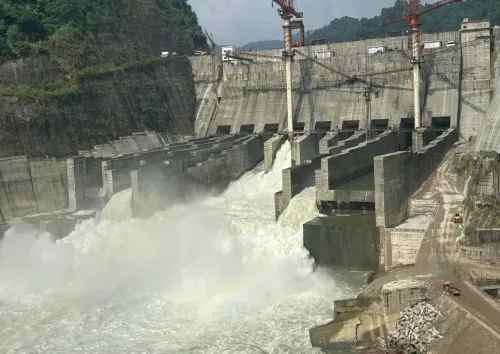
Itanagar, Feb 10 (NationPress) Arunachal Pradesh, blessed with eight significant river basins, contributes nearly 40% of India's overall hydropower potential and over 9% of the nation's small hydropower capacity, officials stated here on Tuesday.
A senior official from the state Power Department informed IANS that Arunachal Pradesh's total hydropower potential is estimated to exceed 58,160 MW, positioning it among the most power-abundant states in India regarding hydro energy resources.
Covering an area of 83,743 square kilometers, this northeastern state is geographically segmented into five primary river valleys—Kameng, Subansiri, Siang, Lohit, and Tirap—providing extensive opportunities for the development of both large and small hydropower projects.
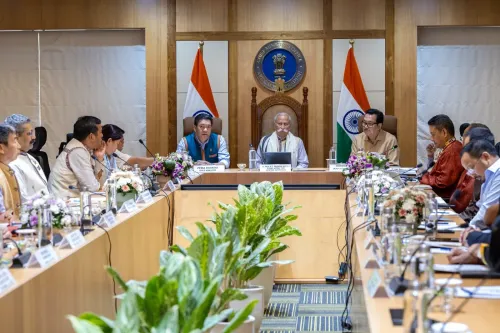
State Chief Minister Pema Khandu remarked on Arunachal Pradesh's hydropower capabilities, indicating that the state is evolving into India's foremost hydropower hub, with nearly 19,000 MW of capacity at various development stages.
He noted that initiatives like the 2,000-MW Lower Subansiri project are approaching completion, while other significant projects will further bolster the state's economy.
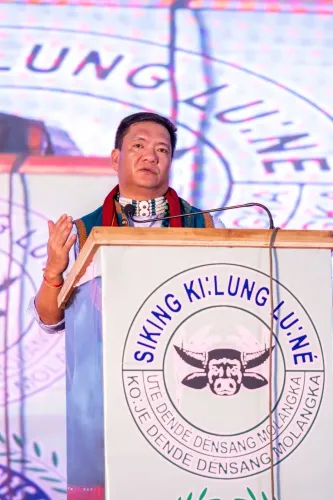
During a government event in the Upper Subansiri district, the Chief Minister encouraged local communities to back hydropower advancements, emphasizing the benefits of job creation, land compensation, and a newly introduced policy that allocates 1% of power sale revenue directly to affected families through Direct Benefit Transfer (DBT), alongside allocations from the Local Area Development Fund.
Additionally, the Chief Minister assured that concerns raised in a six-point memorandum from the Nah Welfare Society—including issues related to road connectivity, water supply, and tourism infrastructure—would be reviewed and resolved through a dedicated project for the Taksing and Kodoka regions.
Reaffirming the government's commitment to grassroots governance, Khandu stated that initiatives like Seva Aapke Dwar, Sarkar Aapke Dwar, and Cabinet Aapke Dwar have brought governance closer to citizens, positively impacting over 15 lakh individuals thus far.
He announced that once fundamental infrastructure improves, a Cabinet Aapke Dwar meeting will also take place in Taksing.
Calling on newly elected Panchayati Raj representatives to engage actively, the Chief Minister highlighted the necessity for transparency, scheme convergence, and people-centric planning under initiatives like Viksit Bharat Gram Yojana, focusing on water security, infrastructure, livelihoods, agriculture, tourism, and job creation.
He expressed optimism that Upper Subansiri district, through collective efforts and public involvement, will become a model for development, tourism, and resilience in border areas in the years ahead.
On September 22 of the prior year, Prime Minister Narendra Modi laid the foundation stones for 13 development projects, including two major hydropower initiatives valued at over Rs 5,127 crore in Itanagar.
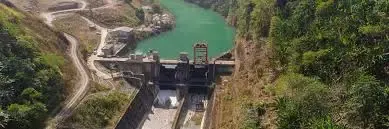
The Prime Minister virtually inaugurated two significant hydropower projects with a combined generation capacity of 426 MW, both to be commissioned by the state-owned North Eastern Electric Power Corporation (NEEPCO).
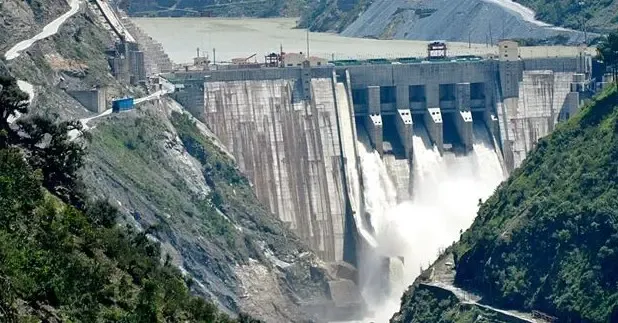
The projects include the Heo Hydro Electric Project (240 MW) and the Tato-I Hydro Electric Project (186 MW) by NEEPCO, a wholly-owned subsidiary of National Thermal Power Corporation (NTPC) Limited.
According to the official, these two power projects, estimated to cost over Rs 3,700 crore, are being developed by NEEPCO in partnership with the government of Arunachal Pradesh.
The Heo Hydro Electric Project (3x80 MW), situated in the Siyom sub-basin of Shi Yomi district, is projected to produce about 1,000 MUs annually, while the Tato-I Hydro Electric Project (3x62 MW) is expected to generate approximately 803 MUs each year.
Point of View
It reflects a strategic move towards sustainable growth. As national editors, we recognize the importance of balancing economic development with environmental concerns while ensuring that local communities benefit from these initiatives.
NationPress
26 Sept 2026
Frequently Asked Questions
What is the total hydropower potential of Arunachal Pradesh?
Arunachal Pradesh has a total hydropower potential estimated at over 58,160 MW.
How much of India's hydropower potential does Arunachal Pradesh hold?
Arunachal Pradesh accounts for nearly 40% of India's total hydropower potential.
What are some of the major hydropower projects in Arunachal Pradesh?
Notable projects include the Lower Subansiri project and the Heo Hydro Electric Project, among others.
How does hydropower development benefit local communities?
It provides employment, land compensation, and a share of power sale revenue to affected families.
What is the government's approach to grassroots governance?
The government promotes initiatives like Seva Aapke Dwar to enhance governance and community engagement.