Will Arunachal Pradesh Receive a Major Power Boost from Two Mega Hydroelectric Projects?
Synopsis
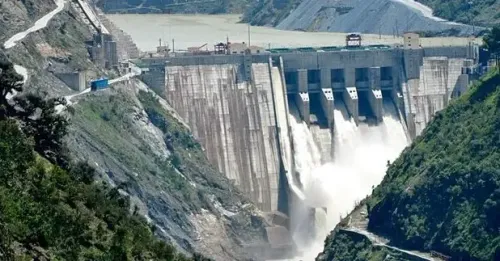
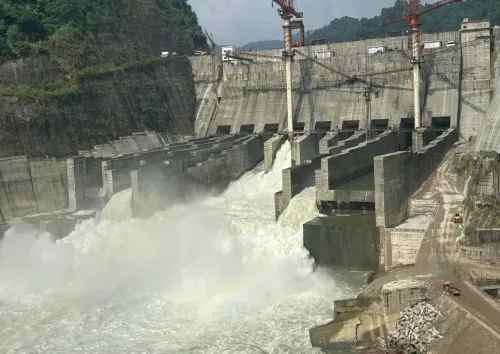
Arunachal Pradesh is on the brink of a significant power revolution as it gears up for two mega hydroelectric projects worth Rs 21,700 crore. These developments promise not only enhanced electricity generation but also a boost in regional growth and energy security, making it a pivotal moment for the state's future.
Key Takeaways
Investment of Rs 21,700 crore for two major hydroelectric projects.
Kalai II Project : 1,200 MW capacity, Attunli Project : 680 MW capacity.
Joint ventures with a 26% equity stake from the Arunachal Pradesh government.
Significant annual returns in free power and local development funds.
Job reservations for local tribal communities to ensure inclusive growth.
Itanagar, Jan 31 (NationPress) Arunachal Pradesh is poised to enhance its power infrastructure through two significant hydroelectric projects, with a total investment estimated at around Rs 21,700 crore, officials announced on Saturday.
The initiatives are anticipated to greatly improve electricity generation capacity while fostering regional development and ensuring energy security within the state.
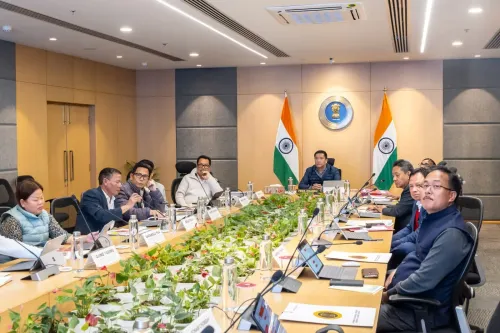
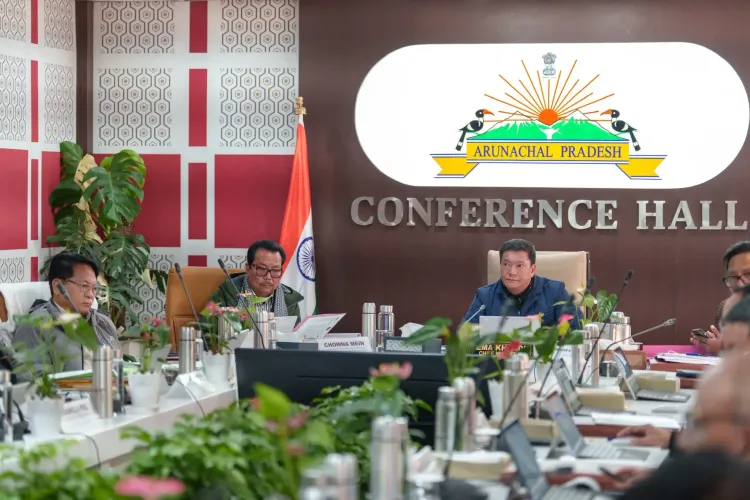
An official from the Chief Minister’s Office (CMO) indicated that the state cabinet, led by Chief Minister Pema Khandu, approved concessions on State Goods and Services Tax (SGST) reimbursement for both power initiatives on Saturday.
To bolster the financial feasibility of large hydropower projects revived by Memoranda of Agreement (MoA) signed with Central Public Sector Undertakings in 2023, the Cabinet sanctioned SGST reimbursement concessions for the Kalai II Hydroelectric Project (1,200 MW) and the Attunli Hydroelectric Project (680 MW). The Kalai II project is being executed by THDC India Limited, whereas the Attunli project is developed by Satluj Jal Vidyut Nigam (SJVN) Limited.
THDC India Limited was registered as a Public Limited Company in July 1988 under the Companies Act, 1956, with equity participation from the Government of India and the Government of Uttar Pradesh, while SJVN is a joint venture between the Government of India and the Government of Himachal Pradesh.
The Kalai II project is situated on the Lohit River in Anjaw district, and the Attunli project is located on the Tangon (Talo) River in the Dibang Valley district. According to the official, both power projects will be executed via joint venture companies, with the Arunachal Pradesh government owning a 26 percent equity stake.
These two projects entail a combined investment of about Rs 21,700 crore and are expected to yield approximately Rs 458 crore annually in free power and Rs 84 crore annually under the Local Area Development Fund after commissioning, as stated by the official.
Alongside considerable employment and self-employment prospects, these initiatives are projected to make a substantial contribution to long-term socio-economic growth in the areas impacted by the projects.
In accordance with the MoAs, the joint venture companies will prioritize employment opportunities for local tribal communities, ensuring 25 percent of Group A and B positions, 50 percent of Group C and D positions, and 25 percent of skilled and unskilled jobs are reserved for them, guaranteeing inclusive participation from local populations.
The Cabinet also sanctioned annuity grants for the lifetime of hydropower projects to families affected by these developments through the Local Area Development Fund, in addition to land and property compensation and resettlement and rehabilitation packages.
This decision aims to establish long-term partnerships between project-affected families and the commissioning and operation of hydropower projects.
To enhance technical leadership, the Cabinet has approved a one-time relaxation of the Superintending Engineer (SE) Common Recruitment Rules, 2014, to facilitate promotions to the position of Superintending Engineer (Civil) within the Department of Hydro Power Development.
The move is designed to ensure the continuity and timely execution of ongoing and future hydropower projects. The official noted that the cabinet further endorsed the Renovate–Own–Operate–Transfer (ROOT) Policy for Small Hydropower Projects, 2026, aimed at revitalizing underperforming small hydropower projects by attracting private investment, improving operational efficiency, and bolstering renewable energy production in line with the State’s Decade of Hydropower (2025–2035) vision.
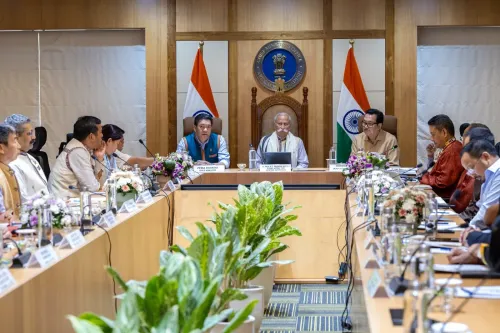
The state cabinet, led by the Chief Minister, convened in Anini, the district headquarters of Dibang Valley, under the government of Arunachal Pradesh’s flagship 'Cabinet Aapke Dwar' initiative. The meeting represents another significant stride towards decentralized governance by bringing key policy decisions closer to the populace.
The cabinet discussed a broad spectrum of developmental, administrative, and institutional reforms, approving several pivotal decisions aimed at fortifying governance systems, enhancing transparency, improving service delivery, and promoting inclusive growth across various sectors.
The Chief Minister also declared that a detailed feasibility study for the development of an Advanced Landing Ground (ALG) at Anini will be conducted by an expert team to evaluate technical and operational viability, considering the district’s strategic location and connectivity needs.
The announcements made at Anini illustrate the Government’s commitment to ensuring balanced regional development, fortifying border districts, and promptly addressing local aspirations through direct engagement and decentralized decision-making under the 'Cabinet Aapke Dwar' framework.
Point of View
The initiatives in Arunachal Pradesh represent a crucial step towards sustainable energy development. By focusing on hydropower, the state aligns with national goals of enhancing energy security and promoting regional development. This investment not only boosts local economies but also sets a precedent for future renewable energy projects across India.
NationPress
21 Oct 2026
Frequently Asked Questions
What is the investment amount for the hydroelectric projects in Arunachal Pradesh?
The total investment for the two hydroelectric projects in Arunachal Pradesh is approximately Rs 21,700 crore.
Who is developing the Kalai II and Attunli Hydroelectric Projects?
The Kalai II Hydroelectric Project is developed by THDC India Limited, and the Attunli Hydroelectric Project is being developed by Satluj Jal Vidyut Nigam (SJVN) Limited.
What benefits will these projects bring to local communities?
The projects are expected to generate significant employment opportunities, provide free power, and contribute to local socio-economic development through the Local Area Development Fund.
How will local communities be involved in these projects?
The joint venture companies will reserve a portion of jobs for local tribal communities, ensuring inclusive participation in the projects.
What is the significance of the 'Cabinet Aapke Dwar' initiative?
The 'Cabinet Aapke Dwar' initiative aims to bring governance closer to the people, facilitating key policy decisions in local areas.