Arunachal's 58,000 MW hydropower can power India's clean energy future: Dy CM Mein
Synopsis
Arunachal Pradesh holds 40% of India's entire hydropower potential — nearly 58,000 MW — yet most of it remains untapped. Deputy CM Chowna Mein's pitch at the Viksit Bharat finance conference, backed by a ₹1.9 lakh crore investment pipeline and a 40 GW target by 2047, frames the state not as a peripheral region but as the centrepiece of India's clean energy future.
Key Takeaways
Arunachal Pradesh holds nearly 58,000 MW of hydropower potential — about 40% of India's total.
Installed capacity has grown from 405 MW (2016) to 2,270 MW after commissioning of the Subansiri Lower Project .
The state's 'Decade of Hydropower 2025–35' targets 19 GW of new capacity backed by a ₹1.9 lakh crore investment pipeline.
Around 19,000 MW is under development, including 4,880 MW under active construction.
The sector is expected to create over 30,000 direct and 16,000 indirect jobs.
Dy CM Chowna Mein called for greater private investment, integrated transmission planning, and stronger Union government support.
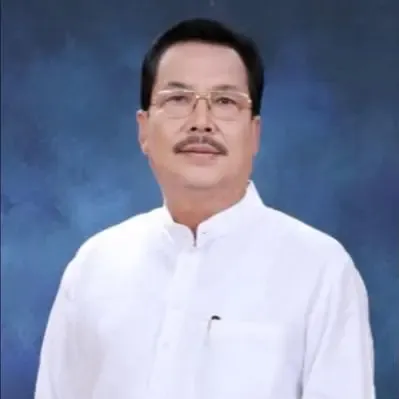
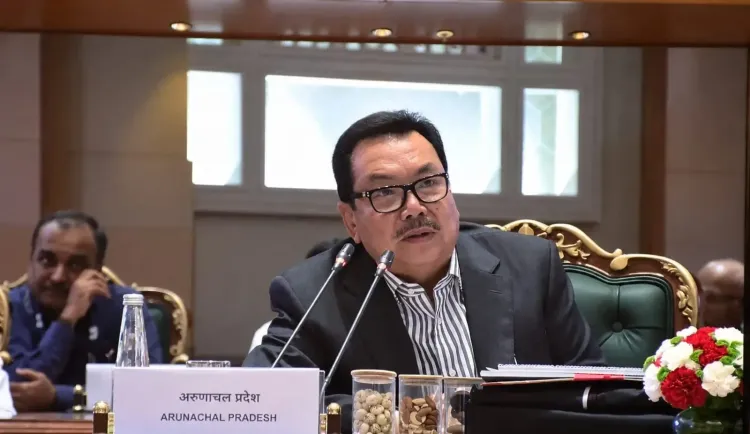
Arunachal Pradesh Deputy Chief Minister Chowna Mein on 19 September 2025 asserted that the northeastern state — holding an assessed hydropower potential of nearly 58,000 MW, or roughly 40% of India's total hydropower potential — is uniquely placed to anchor the country's energy security and accelerate its shift away from fossil fuels. He made the remarks at a national conference in New Delhi, calling responsible development of the state's water resources a strategic national priority, not merely a regional one.
Key Remarks at the Viksit Bharat Finance Conference
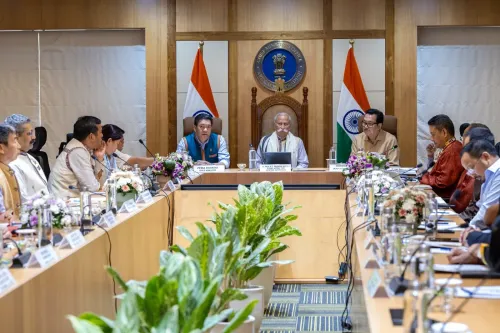
Mein, who also holds the Power and Non-Conventional Energy Resources portfolios in the Arunachal government, was speaking on the second day of the two-day conference titled 'Financing India's Journey Towards a Viksit Bharat', organised by the Union Ministry of Finance at Bharat Mandapam, New Delhi. The session he addressed was focused on 'Financing the Energy Transition', also attended by Union Finance and Corporate Affairs Minister Nirmala Sitharaman.
Mein argued that hydropower offers something solar and wind energy cannot: stability and reliability. 'Hydropower is critical to achieving India's clean energy goals, providing stable and dependable renewable power while complementing solar and wind energy,' he said, underlining the base-load advantage of large hydro projects.
Installed Capacity Growth and the Subansiri Milestone
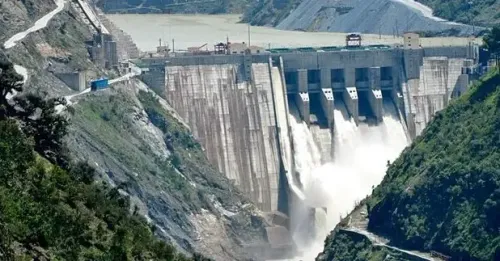
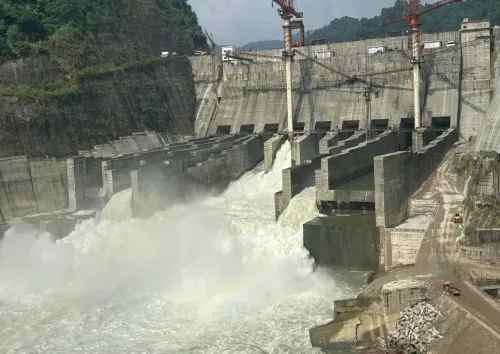
The Deputy Chief Minister highlighted substantial progress in the sector. Arunachal Pradesh's installed hydropower capacity has grown from 405 MW in 2016 to around 1,200 MW, and has since climbed to 2,270 MW following the recent commissioning of the Subansiri Lower Project — a landmark development for a state whose hydro story has long been marked by delays and environmental disputes.
Notably, around 19,000 MW is already at various stages of development, with 4,880 MW currently under active construction. This positions Arunachal as one of the most active hydropower development zones in South Asia.
Decade of Hydropower 2025–35: Targets and Investment
Mein outlined an ambitious state roadmap under the 'Decade of Hydropower 2025–35', which envisions commissioning 19 GW of new hydropower capacity over the decade, backed by an investment pipeline of approximately ₹1.9 lakh crore. The broader target is to harness 40 GW of hydropower capacity by 2047, aligned with India's centenary independence goals.
The sector is projected to generate more than 30,000 direct and 16,000 indirect employment opportunities, making it a significant driver of inclusive economic growth in a state where large-scale employment options remain limited.
Transmission, Private Sector, and Centre's Role
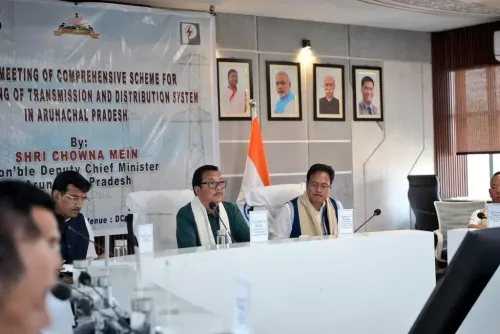
Mein stressed that power generation alone is insufficient — transmission infrastructure must advance in parallel. Given Arunachal Pradesh's remote and challenging terrain, he called for integrated planning that links hydropower projects with high-capacity transmission systems and renewable energy aggregation infrastructure, ensuring efficient evacuation of power to both the state grid and the national interstate network.
He also pushed for greater private sector participation in unlocking the state's untapped potential and sought continued Union government support through targeted incentives and facilitation mechanisms. This comes amid a broader national debate on whether large hydro — often mired in environmental clearance delays and displacement concerns — can be fast-tracked without compromising ecological and community safeguards.
India's Clean Energy Transition: What This Means
India has committed to achieving 500 GW of non-fossil fuel capacity by 2030. Large hydropower, reclassified as a renewable source under Indian policy in 2019, is increasingly seen as an essential balancing element alongside variable renewables. Arunachal's untapped potential — most of it on the Brahmaputra and its tributaries — represents one of the largest undeveloped hydro reserves in the world. If the state's targets are met, it could add tens of gigawatts of dispatchable clean power to the national grid before 2047, significantly reducing India's dependence on thermal capacity.
The pace of private investment and the resolution of transmission bottlenecks will likely determine whether the 'Decade of Hydropower' vision translates into grid-connected reality or remains a planning document.
Point of View
But the real question is whether private capital will actually flow into a state whose terrain, land-acquisition complexity, and downstream sensitivities have historically scared off investors. India's 500 GW renewable target by 2030 is in serious need of dispatchable base-load, and large hydro is the most viable answer — yet clearance bottlenecks and community displacement concerns remain structurally unresolved. Without a credible fast-track mechanism for both environmental clearances and transmission build-out, the 'Decade of Hydropower' risks becoming the latest well-intentioned plan that Arunachal's rivers outlast.
NationPress
20 Sept 2026
Frequently Asked Questions
What is Arunachal Pradesh's total hydropower potential?
Arunachal Pradesh has an assessed hydropower potential of nearly 58,000 MW, which accounts for approximately 40% of India's total hydropower potential. The state's rivers — primarily tributaries of the Brahmaputra — make it one of the most hydro-rich regions in the world.
What is the 'Decade of Hydropower 2025–35' plan?
It is Arunachal Pradesh's ten-year roadmap to commission 19 GW of new hydropower capacity between 2025 and 2035, supported by an investment pipeline of around ₹1.9 lakh crore. The broader state goal is to reach 40 GW of total installed hydropower capacity by 2047.
What is the current installed hydropower capacity in Arunachal Pradesh?
As of the latest update, Arunachal Pradesh's installed hydropower capacity stands at 2,270 MW, up from 405 MW in 2016. The jump to 2,270 MW followed the recent commissioning of the Subansiri Lower Project.
How many jobs will hydropower development create in Arunachal Pradesh?
The hydropower sector in Arunachal Pradesh is projected to generate more than 30,000 direct and 16,000 indirect employment opportunities as new projects come online under the 'Decade of Hydropower' plan.
Why is Arunachal Pradesh's hydropower important for India's energy security?
India has pledged to reach 500 GW of non-fossil fuel capacity by 2030, and large hydro — which provides stable, dispatchable power unlike solar and wind — is critical to balancing the grid. Arunachal's 58,000 MW potential, largely untapped, represents a decisive lever for India's clean energy transition and reduces dependence on coal-based thermal capacity.