Outbreak of African Swine Fever in Chhattisgarh: 300 Pigs Culled to Contain Spread
Synopsis
A severe outbreak of African Swine Fever has struck Mudpar village in Chhattisgarh, resulting in the death of over 250 pigs. Authorities are taking urgent measures, including the culling of an additional 82 pigs, to prevent further spread of this highly contagious disease.
Key Takeaways
African Swine Fever outbreak confirmed in Chhattisgarh.
Over 250 pigs have died, with 82 more culled.
The disease is fatal to pigs but does not affect humans.
Local authorities are taking strict measures to contain the outbreak.
Farmers must report any unusual pig deaths immediately.
Raipur, April 7 (NationPress) The village of Mudpar in the Durg district of Chhattisgarh is in a state of alarm following the emergence of the highly infectious African Swine Fever (ASF), which has resulted in the demise of over 250 pigs. To curb the spread, an additional 82 pigs were humanely culled.
The alarming situation unfolded on April 1 when unexpected pig deaths were noted at a local private farm. The number of fatalities increased swiftly within a few days, prompting the farm owner to alert the district's Veterinary Department.
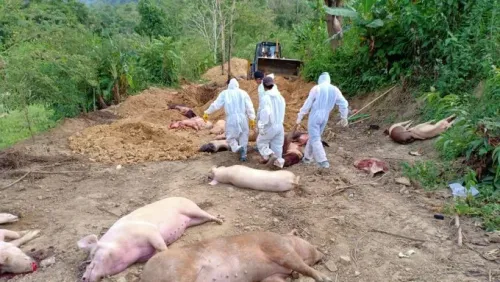
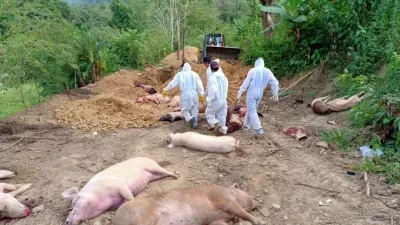
A team of officials donned in full PPE kits was dispatched to the site for inspection and sample collection.
On April 2, the samples were forwarded to the ICAR-National Institute of High Security Animal Diseases (NIHSAD) in Bhopal. The results, received on April 6, confirmed the presence of the African Swine Fever virus in all samples tested.
In compliance with the Government of India's Standard Operating Procedures (SOPs), the remaining 82 pigs were euthanized under professional guidance. All carcasses, both naturally deceased and culled, were buried in deep pits using a JCB excavator.
Local officials reported that the deaths originated from a farm in Mudpar village. Samples were promptly collected and sent for laboratory analysis, which confirmed the ASF presence.
In accordance with government protocols, all pigs on the premises were culled. It is important to note that this disease is non-transmissible to humans and solely affects pigs. The district collector has designated a one-kilometer radius around the affected farm as an "Infected Zone," while a ten-kilometer radius is marked as a "Surveillance Zone."
The farm area has been secured by district authorities.
Officials have initiated an extensive investigation to identify the source of the pigs, their procurement processes, and any previous transport routes.
African Swine Fever is a devastating viral disease that targets only domestic and wild pigs, with a mortality rate nearing 100% among infected animals, and currently, no cure or vaccine exists globally.
The disease does not pose a risk to human health. Nonetheless, as a precaution, the public is strongly discouraged from consuming meat from any infected or exposed pigs.
The Veterinary Department and local administration are vigilantly monitoring the surveillance zone to prevent further outbreaks.
Pig farmers in nearby regions have been warned to report any unusual pig deaths without delay.
Frequently Asked Questions
What is African Swine Fever?
African Swine Fever (ASF) is a highly contagious viral disease that affects domestic and wild pigs, with a near 100% mortality rate. It poses no risk to human health.
How is ASF transmitted?
ASF is primarily spread through direct contact between infected pigs, contaminated feed, and equipment. It does not transmit to humans.
What measures are being taken to control the outbreak?
Local authorities have culled infected pigs, sealed the affected farm, and established surveillance zones to monitor and prevent the disease from spreading.
What should pig farmers do if they observe unusual deaths?
They should report any unusual pig deaths to the Veterinary Department immediately to facilitate prompt investigation and action.
Can humans eat pork from infected pigs?
No, it is strongly advised that the public refrain from consuming meat from infected or potentially exposed pigs.