CM Himanta Plans 7 Assam Spaces in Delhi, Barak Bhawan Next

Synopsis
Assam CM Himanta Biswa Sarma announced seven dedicated state facilities in New Delhi, including new complexes in Central Delhi and Dwarka featuring a Naamghar, Convention Hall, Karbi Bhawan and Dimasa Bhawan, with a Barak Bhawan likely next.
Key Takeaways
Assam will soon have 7 dedicated spaces in New Delhi , up from the single existing Assam House .
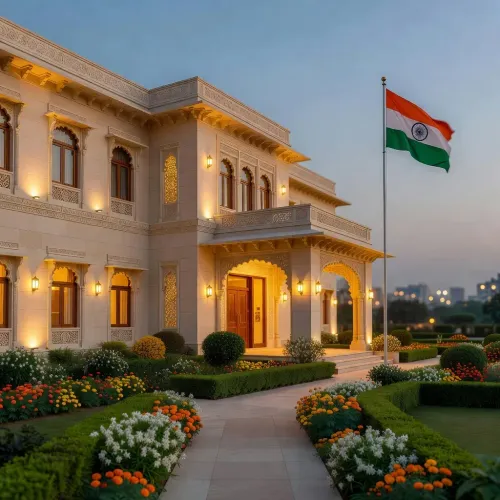
Three new complexes are under development in Central Delhi and Dwarka , one of which will include a Naamghar and a Convention Hall .
A Karbi Bhawan and a Dimasa Bhawan are under construction in Dwarka , recognising two of Assam's major tribal communities.
CM Himanta Biswa Sarma indicated a Barak Bhawan is the most likely next addition, catering to Barak Valley's Bengali-speaking population.
The expansion reflects Assam's ethnic and linguistic diversity, with community-specific facilities going beyond the traditional single-state-bhawan model.
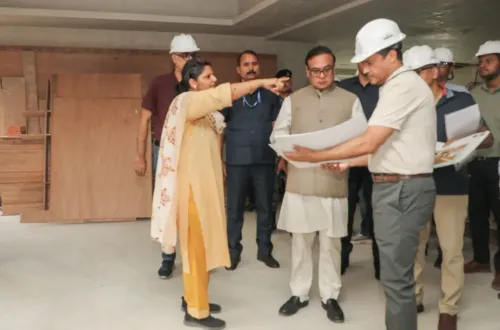
Assam Chief Minister Himanta Biswa Sarma announced on Sunday, 19 July 2026 that the state will soon have seven dedicated facilities in New Delhi to serve Assamese visitors to the national capital, signalling a significant expansion of the state's institutional footprint in the city.
What Was Announced
In a post on X, CM Sarma outlined that alongside the existing Assam House, three new complexes are coming up in Central Delhi and Dwarka. One of these new facilities will feature a Naamghar — a traditional Assamese Vaishnavite prayer hall — and a Convention Hall, reflecting both cultural and functional priorities. He added that a Karbi Bhawan and a Dimasa Bhawan are also under construction in Dwarka, with the next likely addition being a Barak Bhawan for the Barak Valley community.
Context
Indian states have maintained dedicated bhawans in Delhi since a practice institutionalised after the States Reorganisation Act, 1956, using them for official accommodation, inter-governmental coordination and cultural outreach. Assam House has long served as the primary such facility for the state, but growing visitor numbers and the state's considerable ethnic and linguistic diversity have driven demand for more specialised spaces.
The inclusion of community-specific bhawans — for the Karbi and Dimasa communities — marks a deliberate recognition of Assam's tribal identity landscape. Both communities have historically sought greater institutional representation, and dedicated facilities in the national capital carry symbolic as well as practical weight.
Policy Backdrop
State governments across India periodically expand their Delhi presence to ease access to central ministries and host cultural events. For northeastern states, proximity to central government offices is particularly important given the region's dependence on centrally sponsored schemes and special-category funding. CM Sarma, who also serves as convenor of the North-East Democratic Alliance (NEDA), has positioned Assam as a regional anchor, and a robust Delhi infrastructure reinforces that role.
The planned Naamghar within one of the new complexes is a culturally significant addition. Naamghars are central to Assamese Vaishnavite tradition — community prayer and assembly spaces introduced by the saint-scholar Srimanta Sankardeva in the 15th–16th century. Their inclusion in a state facility in Delhi signals an effort to preserve cultural identity for the Assamese diaspora in the capital.
Stakeholders and Impact
The primary beneficiaries are Assamese citizens — government officials, students, patients and general visitors — who travel to New Delhi for administrative or personal needs. Community-specific bhawans will give the Karbi and Dimasa communities, as well as residents of the Barak Valley (if the proposed Barak Bhawan materialises), a dedicated point of contact and accommodation in the capital.
The Dwarka sub-city in southwest Delhi has emerged as a hub for these new constructions, likely reflecting land availability and the area's growing connectivity. Multiple facilities in one zone could also enable shared administrative oversight.
What's Next
CM Sarma indicated that a Barak Bhawan is 'most likely' the next project in the pipeline, which would serve the Bengali-speaking population of Assam's Barak Valley — a community with distinct linguistic and cultural needs. Formal inauguration timelines for the complexes already under construction have not yet been announced, and project completion dates will be closely watched by stakeholders across Assam's diverse communities.
Point of View
Dimasa and Barak Valley communities, he signals that the BJP-led state government views institutional recognition as a tool of political consolidation in a state with a history of ethnic assertion. The inclusion of a Naamghar ties cultural-religious Assamese identity to state infrastructure, a move that resonates with the broader BJP approach of weaving heritage into governance. Taken together, the seven-facility plan positions Assam — and by extension its CM — as a state that punches above its weight in the national capital.
NationPress
18 Oct 2026
Frequently Asked Questions
How many Assam facilities will be in New Delhi after the expansion?
Assam will have 7 dedicated spaces in New Delhi, including the existing Assam House and multiple new complexes in Central Delhi and Dwarka.
What is a Naamghar and why is it being built in Delhi?
A Naamghar is a traditional Assamese Vaishnavite prayer and community assembly hall rooted in the tradition of saint-scholar Srimanta Sankardeva. Its inclusion in a new Delhi complex is intended to serve the cultural and spiritual needs of Assamese visitors and residents in the capital.
Where are the new Assam bhawans being built in Delhi?
New complexes are coming up in Central Delhi and Dwarka , with the Karbi Bhawan and Dimasa Bhawan specifically located in Dwarka , a sub-city in southwest Delhi.
What is Karbi Bhawan and who will it serve?
Karbi Bhawan is a dedicated facility under construction in Dwarka for members of Assam's Karbi community , one of the state's significant tribal groups, visiting or residing in New Delhi.
Will there be a Barak Bhawan in Delhi?
CM Himanta Biswa Sarma has indicated that a Barak Bhawan is 'most likely' the next project, which would serve the Bengali-speaking population of Assam's Barak Valley . No formal announcement or timeline has been made yet.