CM Himanta adds 403 sq km to Assam's Protected Forests

Synopsis
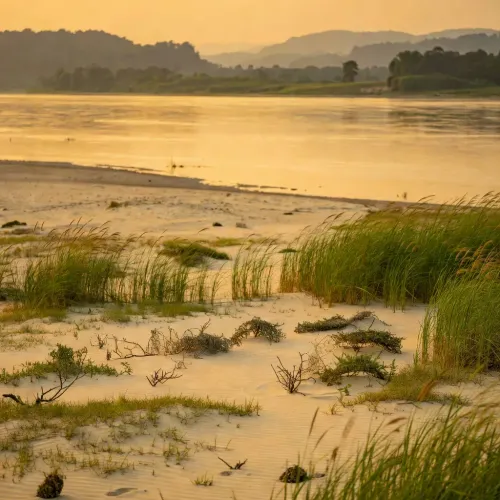
Assam CM Himanta Biswa Sarma has added 403.62 sq. km — roughly the size of Jaipur — to the state's Protected Forest network, marking the single largest such conservation addition in India's history.
Key Takeaways
403.62 sq. km of land has been added to Assam's Protected Forest network in a single move.
This is described as the largest such green addition anywhere in India .
The area is roughly equivalent to the size of Jaipur city .
Protected Forest status legally bars encroachment, commercial felling, and land-use conversion.
Assam sits within the Indo-Burma biodiversity hotspot , making forest additions of outsized global ecological significance.
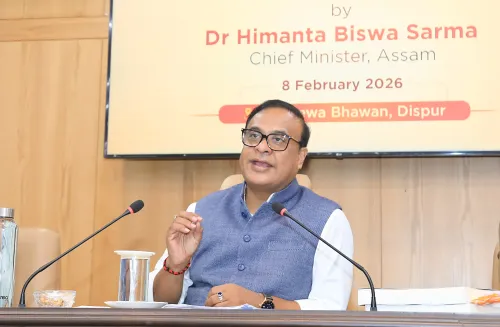
The announcement was made by Chief Minister Himanta Biswa Sarma on August 18, 2026 .
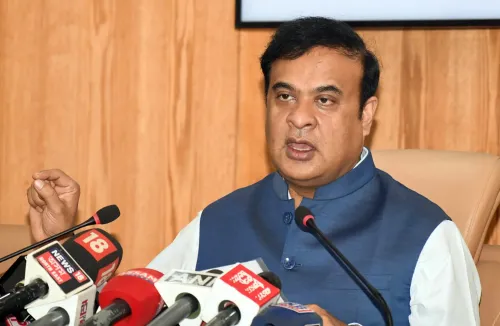
A forest the size of Jaipur city just got a permanent shield. Assam Chief Minister Himanta Biswa Sarma announced on Tuesday, August 18, 2026 that 403.62 sq. km of land has been added to the state's Protected Forest network — the single largest such green addition recorded anywhere in India.
403 sq km: What this number actually means
To put the scale in perspective, 403.62 sq. km is roughly the footprint of Jaipur city. Protected Forest status under the Indian Forest Act grants the land a legal shield against encroachment, commercial felling, and conversion for non-forest use. Adding a Jaipur-sized tract in a single move is not incremental conservation — it is a structural shift in how much of Assam sits behind a legal firewall.
Assam already anchors some of India's most ecologically critical landscapes, including Kaziranga National Park, home to the world's largest population of the one-horned rhinoceros, and Manas National Park, a UNESCO World Heritage Site. The new addition expands the buffer of legally protected green cover that surrounds and connects these flagship reserves.
Why 'biggest in India' is a significant benchmark
India's forest governance operates on a tiered system — National Parks, Wildlife Sanctuaries, and Protected Forests — each carrying different levels of restriction. Protected Forests, while the least restrictive tier, still bar activities that degrade forest character, making mass additions consequential for biodiversity corridors and watershed integrity. CM Sarma's claim that this is the biggest such addition anywhere in India positions Assam ahead of larger states in a single conservation move, at a time when India is under international scrutiny over deforestation rates in its northeastern biodiversity hotspot.
The Northeast sits within the Indo-Burma biodiversity hotspot, one of the world's 36 most species-rich and threatened regions. Every sq. km of legal protection in this zone carries outsized global ecological value.
Sarma's conservation record and the political calculus
The announcement fits a pattern the Assam government has cultivated: high-visibility conservation action paired with aggressive anti-encroachment drives in forest land. The state has previously drawn attention — and controversy — for evictions from forest areas, framing them as necessary to restore ecological integrity. This latest addition reframes that narrative: Assam is not just clearing forests of people, it argues, but actively expanding the forests themselves.
For BJP and NEDA politics in the Northeast, strong environmental credentials also serve a strategic purpose — they resonate with both domestic tribal communities whose livelihoods depend on forest health and international climate commitments India has made under the Paris Agreement, including restoring 26 million hectares of degraded land by 2030.
Assam just moved that needle — by a Jaipur.
Point of View
It serves a dual purpose: reinforcing Assam's environmental credentials on a national stage while providing a counter-narrative to criticism over forest evictions. More broadly, it aligns Assam with India's international land-restoration commitments under the Paris Agreement, lending the move a diplomatic dimension beyond state politics. The real test will be enforcement: Protected Forest status is only as strong as the ground-level machinery that defends it.
NationPress
3 Oct 2026
Frequently Asked Questions
How much land has been added to Assam's Protected Forest?
403.62 sq. km has been added to Assam's Protected Forest network, an area roughly the size of Jaipur city.
Is this the largest forest addition in India?
Yes, according to Chief Minister Himanta Biswa Sarma , this is the biggest single addition to a Protected Forest network anywhere in India.
What is a Protected Forest in India?
A Protected Forest is a legal category under the Indian Forest Act that restricts activities such as encroachment, commercial logging, and land conversion, providing a statutory shield for the land.
Why is forest conservation important in Assam?
Assam sits within the Indo-Burma biodiversity hotspot and hosts globally significant wildlife habitats like Kaziranga and Manas national parks, making every sq. km of protected land ecologically critical.
When did Assam announce this forest expansion?
The announcement was made by CM Himanta Biswa Sarma on Tuesday, August 18, 2026 .