Assam Budget 2026: Doloo Airport, Rupsi Expansion to Boost Connectivity
Synopsis
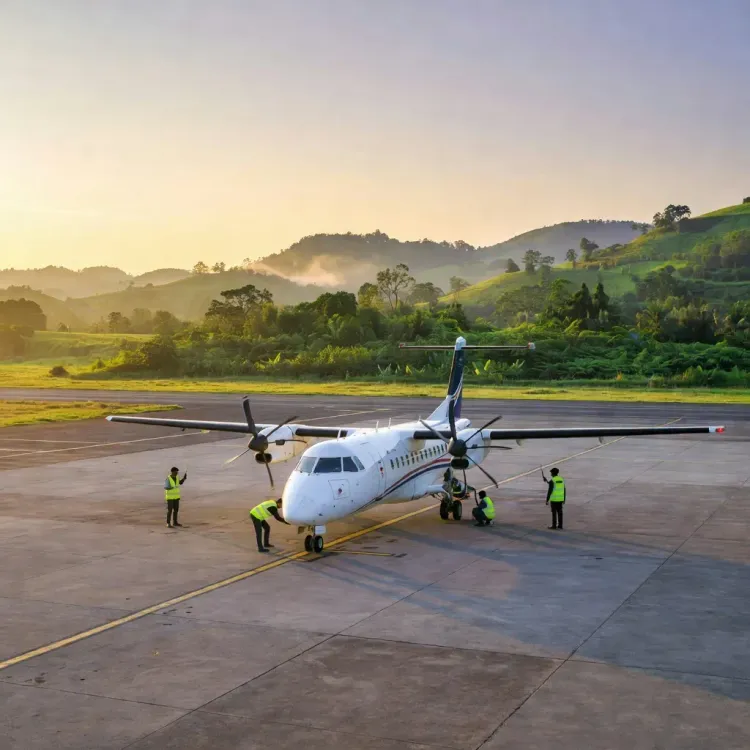
Assam's 2026 budget highlights a ₹2,134 crore greenfield airport at Doloo, Silchar and the expansion of Rupsi Airport, aiming to transform air connectivity in southern and western Assam while opening regional routes to Bhutan and Bangladesh.
Key Takeaways
The Assam Budget 2026 announced a ₹2,134 crore greenfield airport at Doloo, Silchar to serve the Barak Valley region.
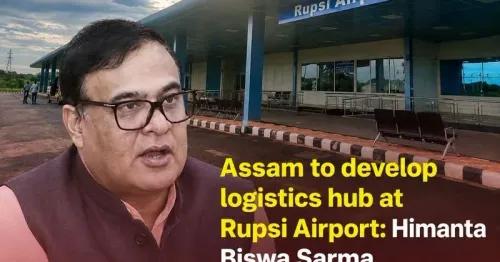
Rupsi Airport in western Assam is set for expansion, with the government positioning it as a 'key gateway' to Bhutan and Bangladesh .
Both projects align with the Centre's UDAN regional connectivity scheme , which has been active in Assam since 2017 .
Silchar's Barak Valley has a population of over 35 lakh across three districts that stand to benefit from improved air access.
Rupsi has been largely non-operational for decades despite its strategic border location near Bhutan and Bangladesh.
Land acquisition, environmental clearances and tendering are the next critical steps before either project breaks ground.
The Chief Minister's Office of Assam, in a series of budget highlights shared on 10 July 2026, announced two major aviation infrastructure projects: a greenfield airport at Doloo, Silchar worth ₹2,134 crore and the expansion of Rupsi Airport in western Assam, positioning the latter as a regional gateway to Bhutan and Bangladesh.
Context
The Assam Budget 2026 earmarked the greenfield airport at Doloo, on the outskirts of Silchar, as one of its headline infrastructure commitments. Silchar is the principal city of the Barak Valley in southern Assam and serves as an administrative, educational and commercial hub for the region. The existing airport at Silchar has long faced capacity and connectivity constraints, making a greenfield facility a long-standing demand of residents and businesses in the valley.
Alongside the Doloo project, the budget highlighted the expansion of Rupsi Airport in western Assam. Rupsi has remained largely non-operational for decades despite its strategic location near the borders of Bhutan and Bangladesh. The CMO's post described Rupsi as 'a key gateway for western Assam and neighbouring Bhutan and Bangladesh,' signalling an intent to activate the airport for both domestic and cross-border regional routes.
Policy Backdrop
Both projects sit within India's broader push to improve aviation infrastructure in the Northeast. The Centre's UDAN regional connectivity scheme, launched in 2016 and extended to Assam airports from 2017, has progressively sought to operationalise smaller airstrips across the region and reduce dependence on Guwahati's Lokpriya Gopinath Bordoloi International Airport. Successive Assam budgets have aligned with this framework, prioritising secondary airports to open the state to wider domestic and international air traffic.
India has also articulated a broader connectivity agenda with its immediate neighbours. Airport upgrades in border states like Assam form part of a stated goal to deepen physical links with Bangladesh and Bhutan through road, rail and air corridors. Rupsi's revival, if realised, could complement existing land and river transit arrangements with both countries.
Stakeholders and Impact
The Doloo greenfield airport, if completed, would directly benefit Barak Valley's estimated population of over 35 lakh people across Cachar, Hailakandi and Karimganj districts, offering improved access to domestic air travel and reducing the region's isolation. Business communities in Silchar, which rely on air freight and passenger connectivity for commerce, stand to gain significantly.
For western Assam, the Rupsi expansion could ease travel for cross-border traders, students and workers who currently face long surface journeys to reach functional airports. It could also open possibilities for chartered or scheduled regional flights with Bhutan, which shares a border with the Kokrajhar-Bongaigaon belt, and Bangladesh, which maintains active trade and transit ties with Assam.
What's Next
The announcements mark a budget commitment, but the path to operationalisation involves several regulatory and logistical steps. Land acquisition, environmental clearances and competitive tendering for the Doloo project will be closely watched as indicators of implementation pace. For Rupsi, any joint working-group discussions with Bhutanese or Bangladeshi aviation authorities on cross-border flight permissions would be a significant milestone. The funding split between the state government and the Centre under schemes such as UDAN remains to be formally confirmed. Progress on both projects will be a key metric for the Assam government's infrastructure delivery record heading into the next electoral cycle.
Point of View
The Assam government is also signalling participation in India's sub-regional connectivity diplomacy under frameworks such as BBIN (Bangladesh, Bhutan, India, Nepal). The ₹2,134 crore Doloo figure, if backed by firm central co-funding, would represent one of the largest single aviation investments in the Northeast in recent years. Whether these commitments translate into ground-level progress will depend on the speed of land acquisition and inter-ministerial coordination — historically the two biggest bottlenecks for greenfield airport projects in the region.
NationPress
10 Jul 2026
Frequently Asked Questions
What is the Doloo airport project in Assam?
The Doloo airport is a proposed greenfield airport near Silchar in southern Assam's Barak Valley, announced in the Assam Budget 2026 with an estimated outlay of ₹2,134 crore . It is intended to replace and upgrade air connectivity for the region, which currently has limited and constrained aviation access.
Where is Rupsi Airport and why is it being expanded?
Rupsi Airport is located in western Assam and has been largely non-operational for decades. The Assam government's 2026 budget proposes its expansion to serve as a regional gateway to Bhutan and Bangladesh , capitalising on its strategic position near both international borders.
How does the UDAN scheme relate to Assam's airport projects?
The UDAN (Ude Desh ka Aam Naagrik) scheme, launched by the Central government in 2016 , promotes affordable regional air connectivity. It was extended to Assam airports from 2017 and provides a policy and funding framework within which projects like Doloo and Rupsi can seek central support for operationalising new routes.
Which districts will benefit from the Doloo greenfield airport?
The Doloo airport is expected to primarily benefit residents and businesses across Cachar, Hailakandi and Karimganj districts in the Barak Valley , a region with a combined population of over 35 lakh that has historically lacked robust air connectivity.
What are the next steps for these Assam airport projects?
Following the budget announcement, the key next steps include land acquisition, environmental clearances and competitive tendering for the Doloo project. For Rupsi , coordination with Bhutanese and Bangladeshi aviation authorities on cross-border flight permissions will be a critical milestone before scheduled international or regional services can begin.