Valley of Flowers draws 7,294 tourists in June alone: Uttarakhand CMO
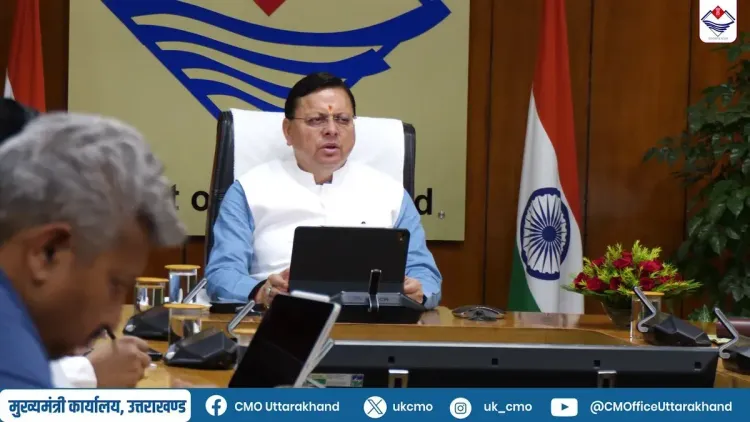
Synopsis
The Uttarakhand Chief Minister's Office reported 7,294 tourists visited the UNESCO-listed Valley of Flowers in Chamoli in June 2026 alone, crediting favourable weather and better facilities for the strong early-season footfall — a positive signal for the state's Himalayan eco-tourism strategy.
Key Takeaways
7,294 tourists visited the Valley of Flowers in Chamoli district during June 2026 , according to the Uttarakhand CMO.
Authorities cited favourable weather and improved on-ground arrangements as key drivers of the early-season surge.
The Valley of Flowers National Park was notified in 1982 and inscribed as a UNESCO World Heritage Site in 2005 alongside Nanda Devi National Park.
June marks only the opening of the trekking season; July and August typically see peak bloom and higher visitor volumes.
Strong footfall benefits local communities — guides, porters, and homestay operators — dependent on the narrow seasonal window in Chamoli.
Full-season 2026 statistics and any revised carrying-capacity norms for the protected park remain to be released.
The Chief Minister's Office of Uttarakhand announced on Friday, 10 July 2026 that the world-renowned Valley of Flowers in Chamoli district recorded 7,294 tourist arrivals in June 2026, attributing the strong early-season footfall to favourable weather conditions and improved on-ground arrangements.
Context
The official post stated: 'चमोली जिले में स्थित विश्व प्रसिद्ध फूलों की घाटी में इस साल अनुकूल मौसम और बेहतर इंतजामों के चलते जून माह में ही 7,294 पर्यटक प्रकृति का दीदार करने पहुंचे' — ('In the world-famous Valley of Flowers located in Chamoli district, owing to favourable weather and better arrangements this year, as many as 7,294 tourists arrived to behold nature in the month of June itself'). The emphasis on June being an early benchmark — 'in June itself' — signals that authorities view this as a notable uptick before the peak trekking window.
The Valley of Flowers National Park, nestled in the Zanskar range of the western Himalayas, typically draws visitors between June and October, when its meadows burst into bloom with hundreds of species of alpine wildflowers. The site sits at altitudes ranging roughly between 3,500 and 6,675 metres.
Policy Backdrop
The Valley of Flowers was notified as a national park in 1982 to protect its rare and endemic alpine flora. It gained global recognition when it was inscribed as a UNESCO World Heritage Site in 2005, jointly with Nanda Devi National Park, forming the Nanda Devi and Valley of Flowers National Parks cluster.
Uttarakhand, carved out as a separate Himalayan state in 2000, has consistently pursued managed eco-tourism as a revenue strategy for high-altitude protected zones. Seasonal infrastructure upgrades — including trail maintenance, rest facilities, and visitor registration systems — are central to the state's conservation-tourism model. Monthly footfall data released by the government serves as a key metric for evaluating how well these investments translate into visitor confidence.
Stakeholders and Impact
The 7,294 June arrivals carry direct economic implications for local communities in Chamoli district — including guides, porters, homestay operators, and small vendors — whose livelihoods are tightly coupled to the trekking season. A strong opening month reduces financial pressure on households that depend on a narrow seasonal window.
For conservationists, the data presents a dual lens: healthy footfall validates the state's eco-tourism infrastructure investments, but it also renews scrutiny of carrying-capacity norms in a UNESCO-protected biodiversity hotspot. The Valley of Flowers hosts a fragile ecosystem of rare medicinal and ornamental plants, many of them endemic to the region, making visitor management a perennial concern for forest and wildlife authorities.
What's Next
The trekking season for the Valley of Flowers typically extends through October, meaning July and August — the peak bloom months — are expected to drive the bulk of annual arrivals. If June's pace holds or accelerates, the 2026 season could post a significant headline number when full-season statistics are compiled.
Observers will watch whether the state government follows up with revised visitor protocols or carrying-capacity notifications, particularly as domestic eco-tourism demand in Himalayan corridors continues to grow. The Chamoli data may also inform similar disclosures for other protected parks across Uttarakhand, setting a broader benchmark for the state's conservation-tourism balance this year.
Point of View
The same data will invite closer scrutiny from ecologists who monitor visitor pressure on a UNESCO-protected site whose carrying capacity has long been a point of debate. The broader pattern — Himalayan states leveraging domestic tourism as a post-pandemic economic pillar — means Uttarakhand's Valley of Flowers numbers will be watched as a bellwether for how India balances biodiversity protection with the growing middle-class appetite for nature tourism.
NationPress
10 Jul 2026
Frequently Asked Questions
How many tourists visited the Valley of Flowers in June 2026?
According to the Uttarakhand Chief Minister's Office, 7,294 tourists visited the Valley of Flowers in Chamoli district during June 2026, driven by favourable weather and improved facilities.
When is the Valley of Flowers open for tourists?
The Valley of Flowers National Park generally opens for visitors in June and remains accessible through October , with July and August being the peak bloom months when alpine wildflowers are most abundant.
Is the Valley of Flowers a UNESCO World Heritage Site?
Yes. The Valley of Flowers National Park was inscribed as a UNESCO World Heritage Site in 2005 , together with Nanda Devi National Park, forming a jointly recognised Himalayan biodiversity cluster.
Where is the Valley of Flowers located?
The Valley of Flowers is located in Chamoli district of Uttarakhand , in the western Himalayas. It was notified as a national park in 1982 to protect its rare and endemic alpine flora.
How does tourism at Valley of Flowers benefit local communities?
Tourist arrivals directly support local livelihoods in Chamoli — including trekking guides, porters, homestay operators, and small vendors — who depend on the seasonal window between June and October for the bulk of their annual income.