Assam Cabinet clears 24x7 integrated 112 emergency framework
Synopsis
The Assam Cabinet on July 6, 2026 approved a 24x7 Integrated Emergency Response Framework unifying police, fire, health and disaster services under the single helpline 112, promising faster coordinated emergency assistance and new employment opportunities for residents of the northeastern state.
Key Takeaways
The Assam Cabinet approved a 24x7 Integrated Emergency Response Framework on July 6, 2026 .
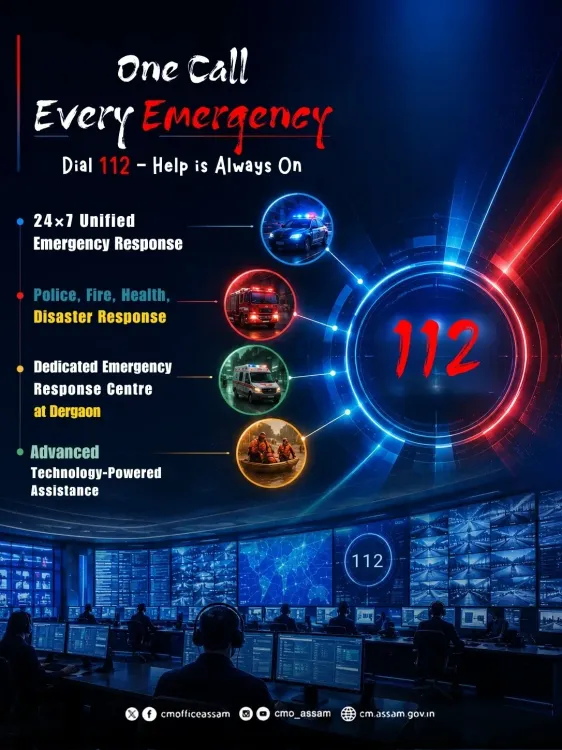
A single call to 112 will connect citizens to Police, Fire, Health and Disaster Response services simultaneously.
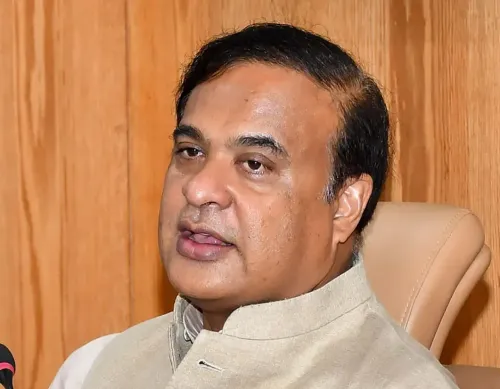
The meeting was chaired by Chief Minister Dr.
Himanta Biswa Sarma .
The framework is described as a 'unified, technology-driven platform' aimed at ensuring faster and more coordinated emergency assistance.
The cabinet noted the initiative will also generate new employment opportunities in the state.
The decision aligns Assam with the national Emergency Response Support System (ERSS) standards established under the Nirbhaya Fund from 2015 onward.
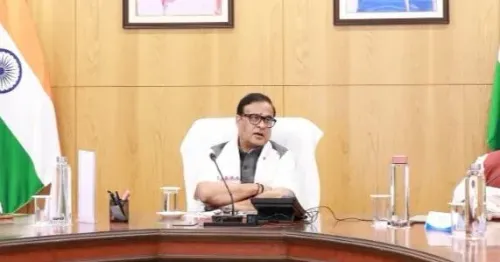
The Chief Minister's Office of Assam announced on Monday, July 6, 2026 that the Assam Cabinet, chaired by Chief Minister Dr. Himanta Biswa Sarma, has approved a state-of-the-art 24x7 Integrated Emergency Response Framework designed to unify police, fire, health and disaster response services under a single helpline number — 112.
Context
The cabinet decision establishes a technology-driven, unified command platform that will allow any resident of Assam to reach all four categories of emergency services — Police, Fire, Health, and Disaster Response — through a single call to 112. The official announcement described the system as ensuring 'faster, coordinated assistance during emergencies' while simultaneously 'creating new employment opportunities' in the state.
The approval was made during a full cabinet meeting chaired by Dr. Himanta Biswa Sarma, who has led Assam since May 2021 and has consistently positioned digital infrastructure as a pillar of his administration's governance agenda.
Policy Backdrop
The framework builds on the Emergency Response Support System (ERSS), a national project initiated by the Ministry of Home Affairs in 2015 and funded through the Nirbhaya Fund, which mandated state-level 112 command centres linking previously fragmented helplines — 100 (police), 101 (fire), 102/108 (health). Between 2019 and 2021, several states operationalised integrated centres under central ERSS guidelines.
Assam, a northeastern state exposed to recurring floods and natural disasters, had pursued police modernisation and digital governance measures in prior years. The new integrated framework represents a significant upgrade to legacy emergency infrastructure, aligning the state with ERSS standards that have already been adopted across much of peninsular and northern India.
Stakeholders and Impact
The most immediate beneficiaries are the citizens of Assam, who will no longer need to remember separate helpline numbers for different emergency categories. First responders — police personnel, fire brigade staff, health workers and disaster management teams — will operate from a unified, technology-driven platform, reducing coordination delays that can prove fatal in time-sensitive situations.
The cabinet's explicit mention of 'new employment opportunities' signals that the framework will require a significant operational workforce — likely spanning call-centre staff, dispatch coordinators, technology support personnel and field response teams. Assam's persistent challenge of youth unemployment in the northeast gives this aspect of the announcement particular political and economic weight.
The state's vulnerability to annual Brahmaputra floods and seismic activity makes a coordinated disaster response channel especially critical. A unified 112 system could substantially reduce the time between a distress call and the deployment of the appropriate response agency during such recurring crises.
What's Next
The cabinet approval is the formal policy green light; the implementation roadmap will depend on the notification of a detailed project timeline, the tendering process for the command centre infrastructure, and any supplementary funding arrangements with the Ministry of Home Affairs. Observers will watch for the operational start date and the scale of the employment drive attached to the project.
If executed as announced, Assam will join a growing list of Indian states that have fully integrated their emergency response ecosystem under the national 112 umbrella — a benchmark that carries both governance credibility and direct public-safety dividends for the state's more than 3.5 crore residents.
Point of View
From annual Brahmaputra flooding to seismic vulnerability. By anchoring the announcement in both public-safety outcomes and job creation, Chief Minister Himanta Biswa Sarma is threading a politically useful needle — addressing a genuine infrastructure gap while signalling economic intent to a young electorate. The move also brings Assam into alignment with a decade-old national ERSS mandate, suggesting that prior implementation had lagged and that the 2026 cabinet decision represents a course correction as much as fresh initiative. The real test will be the speed and quality of execution: command-centre tendering, staff recruitment and inter-agency coordination protocols will determine whether the framework delivers on its promise or remains a well-intentioned policy approval.
NationPress
6 Jul 2026
Frequently Asked Questions
What is the Assam 112 Integrated Emergency Response Framework?
It is a cabinet-approved, technology-driven platform that routes calls to a single number — 112 — and connects callers simultaneously to Police, Fire, Health and Disaster Response services across Assam , replacing the need to remember separate helpline numbers.
When did the Assam Cabinet approve the 112 emergency framework?
The Assam Cabinet approved the framework on Monday, July 6, 2026 , during a meeting chaired by Chief Minister Dr. Himanta Biswa Sarma .
What is the ERSS and how does it relate to Assam's new framework?
The Emergency Response Support System (ERSS) is a national project launched by the Ministry of Home Affairs in 2015 , funded through the Nirbhaya Fund , to create state-level 112 command centres. Assam's newly approved framework aligns the state with these central ERSS standards.
Will the Assam 112 framework create jobs?
Yes, the cabinet announcement explicitly stated that the framework will create 'new employment opportunities,' likely covering call-centre staff, dispatch coordinators, technology support personnel and field response roles, though specific numbers have not yet been disclosed.
Which services will be available on Assam's 112 helpline?
Callers to 112 in Assam will be connected to four emergency services: Police, Fire, Health and Disaster Response , all operating through a single unified, technology-driven platform.