Assam Cabinet clears 6 new municipal boards, startup land rules
Synopsis
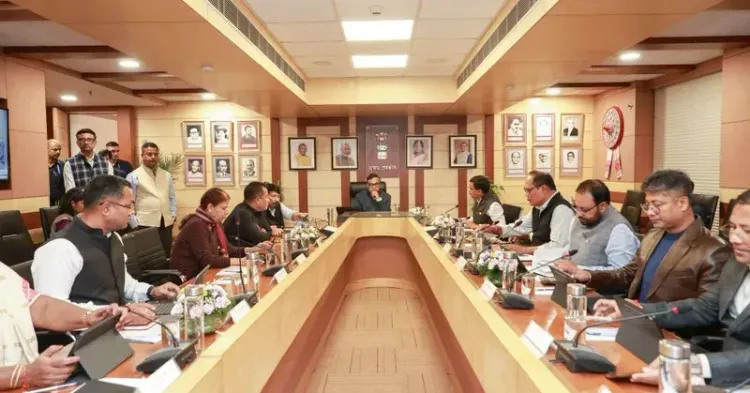
The Assam Cabinet on 20 November 2026 cleared six new municipal boards and amended land rules under the state's startup policy, extending urban governance coverage and easing land access for entrepreneurs, CM Himanta Biswa Sarma announced.
Key Takeaways
The Assam Cabinet approved six new municipal boards on 20 November 2026 .
The move extends formal urban local body governance to fast-growing towns across Assam.
The cabinet also cleared amendments to land rules under the state's startup policy .
The land-rule changes are aimed at reducing barriers for startup enterprises seeking land allocation.
Official gazette notification of the boards and revised rules is the next procedural step before they become operational.
Both decisions align with CM Himanta Biswa Sarma 's broader administrative and economic modernisation agenda for Assam.
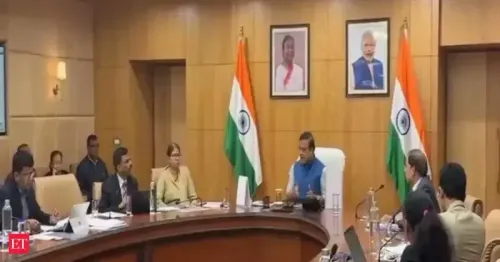
Assam's urban map just got a little wider. The Assam Cabinet, chaired by Chief Minister Dr. Himanta Biswa Sarma, on Friday, 20 November 2026, approved the creation of six new municipal boards and cleared amendments to land rules under the state's startup policy — twin moves that signal the government's push to extend formal urban governance while lowering barriers for new businesses.
Six new boards and what they mean for Assam's towns
Municipal boards are the first tier of elected urban local body governance in Assam, responsible for civic services — roads, drainage, sanitation, street lighting — in towns that have outgrown panchayat administration but are not yet large enough for a municipality. By notifying six new boards, the cabinet is effectively acknowledging that several fast-growing towns now need that formal urban infrastructure layer. The exact names and locations of the six boards are yet to be published in the Assam Gazette; that official notification will mark the moment they become operational entities.
Assam has periodically expanded its network of urban local bodies as population centres along the Brahmaputra valley and hill districts mature. Each new board also unlocks access to centrally-sponsored urban scheme funding — a practical fiscal dividend that goes beyond mere administrative tidiness.
The startup policy land-rule tweak
The cabinet also cleared changes to land rules under Assam's startup policy. While the precise text of the amendments awaits official publication, the broader intent is clear: land acquisition and allocation for startup enterprises — often the single most cumbersome regulatory bottleneck for young companies outside major metros — is being made easier. Chief Minister Sarma has repeatedly positioned Assam as a startup-friendly destination in Northeast India, and rule-level changes carry more durable weight than headline announcements because they alter what investors and founders actually encounter on the ground.
Taken together, Friday's cabinet decisions fit a consistent pattern under the current Assam government: incremental but concrete steps toward administrative modernisation and investment-readiness, rather than sweeping single-event reforms. The devil, as always, will be in the gazette notifications that follow.
Point of View
Modest as it sounds, addresses a real on-the-ground friction point: in India's Northeast, land tenure complexity has historically been the quiet killer of investment. Together, these decisions reflect CM Sarma's governing style — incremental, process-oriented reforms that accumulate into a larger pitch for Assam as a governable, investable state. The test will be execution speed: how quickly the gazette notifications appear and whether the new boards get functional councils rather than remaining paper entities.
NationPress
20 Nov 2026
Frequently Asked Questions
What did the Assam Cabinet decide on 20 November 2026?
The Assam Cabinet cleared the creation of six new municipal boards and approved amendments to land rules under the state's startup policy on 20 November 2026.
What is a municipal board in Assam?
A municipal board is the first tier of urban local body governance in Assam, providing civic services such as roads, drainage, and sanitation to towns that have grown beyond panchayat administration but are smaller than a full municipality.
How do the new municipal boards become operational?
The six new municipal boards must be officially notified in the Assam Gazette before they become legally operational and can access government funding or conduct elections.
What changes were made to Assam's startup policy land rules?
The cabinet approved amendments to land rules under Assam's startup policy to ease land acquisition and allocation for startup enterprises; the precise text of the changes will be published in the official gazette.
Who is the Chief Minister of Assam?
Dr. Himanta Biswa Sarma has served as Chief Minister of Assam since May 2021 and presides over cabinet meetings where such policy decisions are taken.