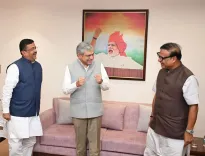
CM Himanta's Assam Cabinet Clears 5 Key Governance Moves
Synopsis
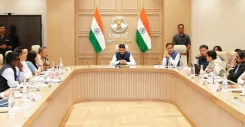
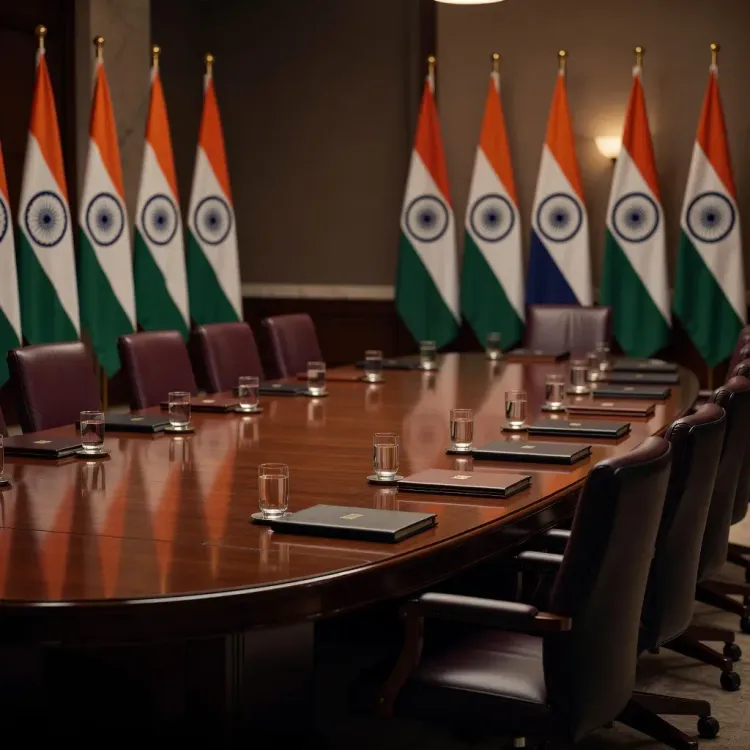
Assam Chief Minister Himanta Biswa Sarma chaired a Cabinet meeting in New Delhi on November 19, 2026, approving five governance decisions: higher pay for Panchayati Raj representatives, new Municipal Boards, non-party Autonomous Council elections, education innovation, and agriculture strengthening.
Key Takeaways
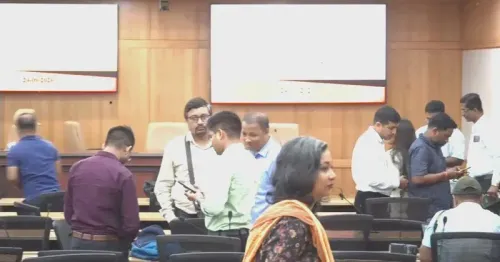
Assam Cabinet met in New Delhi on November 19, 2026 , chaired by CM Himanta Biswa Sarma .
Enhanced remuneration approved for Panchayati Raj elected representatives across the state.
New Municipal Boards cleared to improve urban governance in Assam's growing towns.
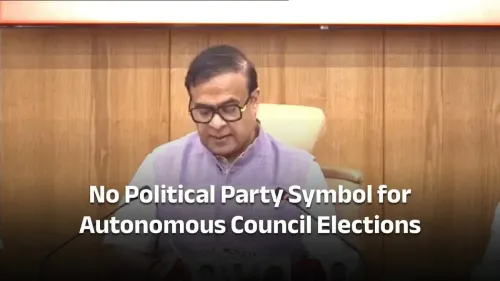
Elections to Autonomous Councils (Sixth Schedule bodies) will be conducted on a non-political party basis .
Approvals also cover innovation in educational institutions and measures to strengthen agriculture.
The meeting reflects CM Sarma's pattern of bundling multi-sector decisions into single Cabinet sessions for faster implementation.
Five decisions, one meeting, and a governing philosophy on full display — Assam Chief Minister Himanta Biswa Sarma chaired a Cabinet meeting in New Delhi on Thursday, November 19, 2026, pushing through approvals that touch everything from a village panchayat representative's pay packet to the future of tribal self-governance in the state's autonomous council areas.
Better pay for Panchayat reps, new Municipal Boards for towns
At the top of the agenda: enhanced remuneration for Panchayati Raj representatives — the elected grassroots functionaries who sit at the base of India's decentralised governance pyramid, anchored in the 73rd Constitutional Amendment of 1992. These are the sarpanches, ward members, and block-level leaders who often run on negligible honoraria; revising their pay is a direct signal about how seriously the state treats the bottom tier of its administration.
Alongside that, the Cabinet approved improved urban governance through the creation of new Municipal Boards, the town-level bodies mandated by the 74th Constitutional Amendment to deliver civic services and local planning. As Assam's secondary towns grow, formalising governance structures for them is less optional and more urgent.
Autonomous Council elections — without party flags
Perhaps the most consequential decision in the list: elections to Autonomous Councils will be held on a non-political party basis. These Sixth Schedule bodies — which include the Bodoland Territorial Council and the Karbi Anglong Autonomous Council — were specifically designed to protect tribal self-governance. Conducting their elections outside the formal party machinery could reduce the intensity of partisan interference in institutions meant to serve community, not coalition, interests. It is a move that will be watched closely by tribal leaders and civil society across the Northeast.
Education innovation and an agriculture push round out the agenda
The Cabinet also cleared measures on innovation in educational institutions and steps to strengthen agriculture — two sectors that cut directly into Assam's long-term economic potential. No specific programme names or funding figures were disclosed in the CM's post, but the breadth of the agenda reflects a pattern that has become familiar under Sarma's leadership: bundling multiple sector approvals into a single Cabinet session to maintain implementation momentum.
What comes next matters as much as what was decided today. The timelines for disbursing the revised panchayat remuneration, the notification of new municipal board jurisdictions, and the scheduling of autonomous council elections will determine whether Thursday's approvals translate into on-ground change — or stay as Cabinet minutes.
Assam's Cabinet just moved on five fronts at once. The delivery clock starts now.
Point of View
A move that tests the BJP's willingness to separate ethnic self-governance from electoral politics in the Northeast. Revising Panchayati Raj honoraria, meanwhile, is classic pre-cycle grassroots consolidation: visible, tangible, and hard to argue against. Taken together, the five decisions reinforce CM Sarma's brand of high-cadence governance — frequent Cabinet outputs across diverse sectors that keep the administrative and political narrative moving simultaneously.
NationPress
19 Nov 2026
Frequently Asked Questions
What decisions did the Assam Cabinet take on November 19 2026?
The Assam Cabinet approved five measures: enhanced remuneration for Panchayati Raj representatives, new Municipal Boards for urban governance, Autonomous Council elections on a non-party basis, innovation in educational institutions, and steps to strengthen agriculture.
Why were Autonomous Council elections made non-party based in Assam?
The Cabinet approved conducting elections to Sixth Schedule Autonomous Councils — such as the Bodoland Territorial Council and Karbi Anglong Autonomous Council — on a non-political party basis to protect tribal self-governance institutions from partisan influence.
What are Autonomous Councils in Assam?
Autonomous Councils in Assam are Sixth Schedule bodies established under the Indian Constitution to provide self-governance rights to tribal communities; examples include the Bodoland Territorial Council and the Karbi Anglong Autonomous Council.
Where was the Assam Cabinet meeting held on November 19 2026?
The Assam Cabinet meeting was held in New Delhi, chaired by Chief Minister Himanta Biswa Sarma.
What is the significance of enhanced remuneration for Panchayati Raj representatives?
Panchayati Raj representatives — sarpanches, ward members, and block-level elected leaders — typically receive modest honoraria; revising their pay strengthens grassroots governance as mandated by India's 73rd Constitutional Amendment of 1992.