Assam Cabinet simplifies homestay registration process

Synopsis
The Assam Cabinet has approved amendments to simplify homestay registration and renewal, signalling a push to expand the state's rural tourism ecosystem under Chief Minister Himanta Biswa Sarma. The move is expected to lower compliance barriers for operators and boost formal participation in Assam's growing hospitality sector.
Key Takeaways
The Assam Cabinet approved amendments on 26 June 2026 to simplify homestay registration and renewal procedures.
The decision was taken under the leadership of Chief Minister Dr.
Himanta Biswa Sarma .
Assam had first notified homestay guidelines prior to 2021 to formalise rural tourism and generate household income.
The reform is expected to benefit homestay operators and rural tourism entrepreneurs by reducing paperwork and compliance costs.
The move aligns with a broader Northeast India pattern of ease-of-doing-business reforms in the tourism sector.
Rollout details — including portal development and operator training — are awaited as the next implementation step.
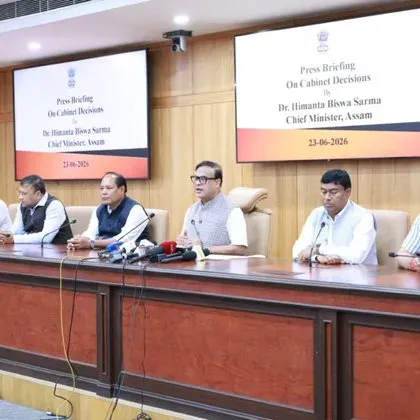
The Chief Minister's Office of Assam announced on Friday, 26 June 2026 that the Assam Cabinet, under the leadership of Chief Minister Dr. Himanta Biswa Sarma, has approved amendments to streamline the registration and renewal process for homestays across the state.
Context
The cabinet decision, shared via the official CMO account, described the move as 'a boost for Assam's homestay ecosystem.' The approved amendments are aimed at reducing procedural complexity for homestay operators, making it easier for households — particularly in rural and semi-urban areas — to register and maintain their status under the state's tourism framework.
Assam has long positioned itself as a destination rich in biodiversity, wildlife corridors, and cultural heritage, with homestays serving as a critical bridge between travellers and local communities. Simplifying compliance requirements is expected to lower the entry barrier for first-time operators and reduce renewal attrition among existing ones.
Policy Backdrop
The Assam government first notified homestay guidelines prior to 2021 to formalise rural tourism participation and generate supplementary income for local households. Since Chief Minister Himanta Biswa Sarma took office in May 2021, the administration has pursued a series of regulatory simplification measures across sectors, with tourism identified as a priority growth area for the northeastern state.
Assam's move fits a broader national pattern in which state governments have periodically revised tourism-related regulations to ease compliance burdens and encourage private participation. Several states have undertaken similar reforms as part of post-pandemic hospitality sector recovery and ease-of-doing-business initiatives, with the Northeast emerging as a particular focus given its largely untapped natural and cultural assets.
Stakeholders and Impact
The primary beneficiaries of the amended framework are homestay operators and rural tourism entrepreneurs across Assam. For households that rely on seasonal tourism income, a simplified registration and renewal process can translate directly into reduced paperwork, lower compliance costs, and faster turnaround times for approvals.
The reform is also significant for inbound travellers seeking authentic, community-based accommodation experiences. A larger, formally registered pool of homestays improves visibility on tourism platforms and raises the overall quality benchmark for the sector.
What's Next
Attention will now turn to the rollout of the simplified registration mechanism — whether through an online portal, district-level facilitation centres, or both — and any accompanying operator guidelines or training modules. Subsequent data on new homestay registrations and their contribution to district-level tourism statistics will be closely watched as indicators of on-ground impact.
If uptake is strong, the Assam Cabinet's move could serve as a template for further regulatory relaxation in allied hospitality segments, reinforcing the state's ambition to become a leading tourism destination in Northeast India.
Point of View
The reform could meaningfully expand Assam's registered homestay base and improve state revenue visibility. The move also carries political logic: rural tourism entrepreneurship aligns with the government's broader narrative of Northeast development and community empowerment. Whether the reform delivers measurable growth will depend on how swiftly and accessibly the new procedures are operationalised at the district level.
NationPress
26 Jun 2026
Frequently Asked Questions
What did the Assam Cabinet decide about homestays?
The Assam Cabinet approved amendments to simplify the registration and renewal process for homestays in Assam, reducing procedural complexity for operators.
Who approved the Assam homestay registration changes?
The decision was taken by the Assam Cabinet under the leadership of Chief Minister Dr. Himanta Biswa Sarma and announced on 26 June 2026 .
How will the Assam homestay amendment benefit operators?
The simplified process is expected to lower paperwork, reduce compliance costs, and speed up approvals for both new registrations and renewals, making it easier for households to participate in rural tourism.
What is the background of Assam's homestay policy?
Assam first notified homestay guidelines before 2021 to formalise rural tourism and provide supplementary income to local households. The latest amendment builds on that framework.
What happens next after the Assam Cabinet's homestay decision?
The focus shifts to rollout details such as an online registration portal, district-level facilitation, and operator training modules, with new registration numbers expected to reflect the reform's impact over time.