Assam CM Himanta Directs IMCT Briefing on Upper Assam Floods
Synopsis
An Inter-Ministerial Central Team assessed rapid-onset flood damage across Sivasagar, Charaideo, Jorhat and Golaghat in Upper Assam on 29 July 2026. CM Himanta Biswa Sarma directed the Chief Secretary to brief the team on multi-agency relief efforts and Assam's demand for dedicated central funding and Build Back Better reconstruction.
Key Takeaways
Four Upper Assam districts — Sivasagar, Charaideo, Jorhat and Golaghat — suffered rapid-onset floods triggered by heavy upstream rainfall in Nagaland and high localised rainfall.
An Inter-Ministerial Central Team (IMCT) visited the flood-affected districts on 29 July 2026 , a formal step toward unlocking National Disaster Response Fund support.
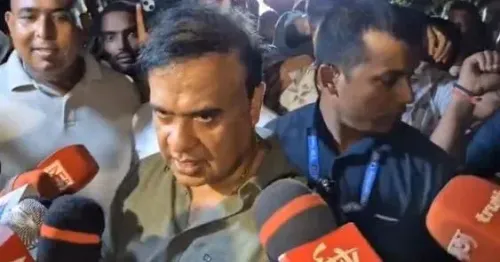
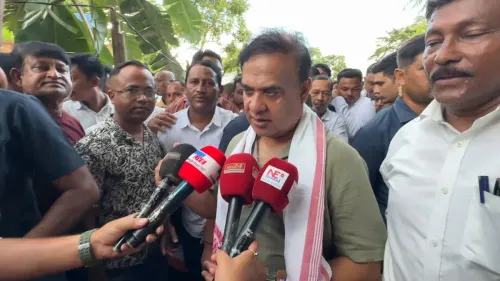
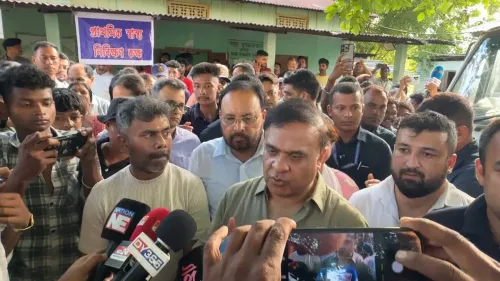
CM Himanta Biswa Sarma directed the Chief Secretary of Assam to present a comprehensive overview of damage and relief operations to the IMCT.
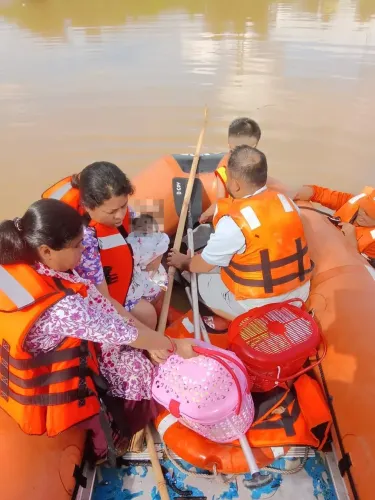
Rescue operations involved SDRF, NDRF, Fire and Emergency Services, the Indian Army and the Indian Air Force , reflecting the scale of inaccessibility on the ground.
Assam has requested a district-wise reconstruction plan , dedicated central assistance for the four worst-hit districts, and adoption of Build Back Better principles for embankment and infrastructure restoration.
Damage spans embankments, bridges, roads, houses and agricultural land across all four districts.
Four districts of Upper Assam — Sivasagar, Charaideo, Jorhat and Golaghat — are reeling from rapid-onset floods that overwhelmed embankments, submerged agricultural land and triggered a coordinated multi-agency rescue operation. On Wednesday, 29 July 2026, an Inter-Ministerial Central Team (IMCT) — constituted by the central government to assess disaster damage and recommend federal assistance — completed a ground visit to the worst-hit zones, with the Chief Minister's Office of Assam confirming that Chief Minister Dr. Himanta Biswa Sarma had personally directed the state's top bureaucrat to lead the briefing.
What the IMCT Heard: Upstream Rain, Downstream Ruin
The Chief Secretary of Assam presented the team with a comprehensive account of what the state described as 'unprecedented rapid-onset floods' — a distinction that matters. These were not the slow, seasonal inundations Assam braces for each monsoon. Heavy rainfall in the upstream catchments of Nagaland, compounded by exceptionally high localised rainfall, sent floodwaters surging into Upper Assam faster than early-warning systems and embankments could contain them.
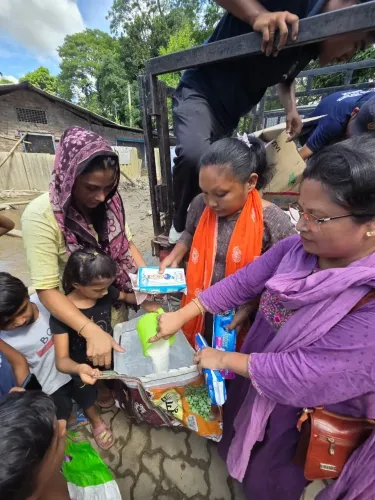
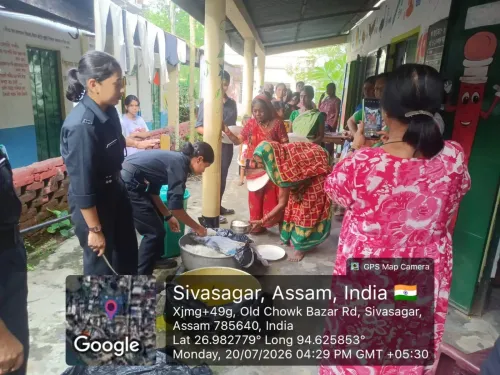
The damage inventory is extensive: breached embankments, collapsed bridges, damaged roads, destroyed houses and waterlogged agricultural land across all four districts. Sivasagar, which sits along the Brahmaputra's tributary network, is among Assam's most flood-exposed districts and has seen recurrent embankment failures in successive monsoon seasons.
The Multi-Agency Response on the Ground
The IMCT was briefed on a response that drew in SDRF (State Disaster Response Force), NDRF (National Disaster Response Force), Fire and Emergency Services, the Indian Army and the Indian Air Force, alongside district administrations. The deployment of both the Army and Air Force signals the scale of inaccessibility — areas cut off by floodwaters where boats and helicopters become the only lifeline.
Under the Disaster Management Act, 2005, an IMCT visit is the formal mechanism that precedes the release of funds from the National Disaster Response Fund (NDRF) — making this visit not just a fact-finding exercise but a critical step toward unlocking central financial support.
Assam's Ask: District-Wise Plans and Build Back Better
The state's demands, placed before the IMCT, go beyond immediate relief. Discussions centred on a district-wise reconstruction plan with dedicated assistance for the four worst-hit districts, restoration and structural strengthening of breached embankments, and — crucially — the adoption of Build Back Better principles to ensure that rebuilt infrastructure improves long-term flood resilience rather than merely restoring the status quo.
That last demand reflects a hard lesson Assam has learned across decades: rebuilding embankments to pre-flood specifications means they breach again. 'Build Back Better' is an internationally recognised disaster-recovery framework that demands upgraded standards — wider embankments, stronger materials, better drainage — so the next flood hits a more resilient system.
Whether the Centre approves a dedicated reconstruction package for Sivasagar, Charaideo, Jorhat and Golaghat — and on what timeline — will determine how quickly Upper Assam can move from survival to recovery.
Point of View
Assam cannot access central disaster funds at scale, making CM Himanta's decision to personally direct the Chief Secretary's briefing a calculated political and administrative move. Assam's push for 'Build Back Better' norms signals a shift from the state's historically reactive flood posture toward demanding structural investment from New Delhi, a demand that will test Centre-state relations in the run-up to the next budget cycle. The upstream-downstream dynamic with Nagaland also quietly raises the question of inter-state water governance — a conversation that never quite gets the political traction the annual damage toll demands. Watch for whether the Centre's response includes a dedicated package or merely routes funds through existing disaster-relief formulae.
NationPress
29 Jul 2026
Frequently Asked Questions
What is an Inter-Ministerial Central Team (IMCT) and why does it visit flood-affected states?
An IMCT is a team constituted by the central government under the Disaster Management Act, 2005, to assess damage caused by natural disasters and recommend the release of funds from the National Disaster Response Fund (NDRF). A state must receive an IMCT visit before it can access large-scale central financial assistance for disaster relief and reconstruction.
Which districts in Assam were worst affected by the July 2026 floods?
The four worst-affected districts identified by the state government are Sivasagar, Charaideo, Jorhat and Golaghat, all in Upper Assam. These districts experienced rapid-onset flooding driven by heavy rainfall in upstream Nagaland catchments and high localised rainfall.
What is the 'Build Back Better' principle that Assam is requesting?
'Build Back Better' is an internationally recognised post-disaster recovery framework that requires rebuilt infrastructure to meet higher standards than before the disaster — for example, constructing stronger, wider embankments rather than simply restoring them to their pre-flood state, thereby improving long-term resilience against future floods.
Which agencies were involved in flood rescue operations in Upper Assam?
The coordinated response involved the State Disaster Response Force (SDRF), National Disaster Response Force (NDRF), Fire and Emergency Services, the Indian Army, the Indian Air Force and district administrations across the affected areas.
Why do floods in Nagaland affect Assam?
Assam lies downstream of Nagaland in the Brahmaputra river basin. Heavy rainfall in Nagaland's upstream catchments rapidly increases water flow into Assam's rivers and tributaries, often overwhelming embankments and causing rapid-onset flooding in districts like Sivasagar and Jorhat before local early-warning systems can respond.