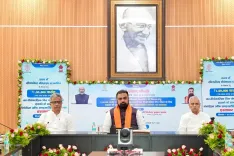
Assam CM Himanta launches Granthabarsha 2025 Fellowship for 49 writers
Synopsis
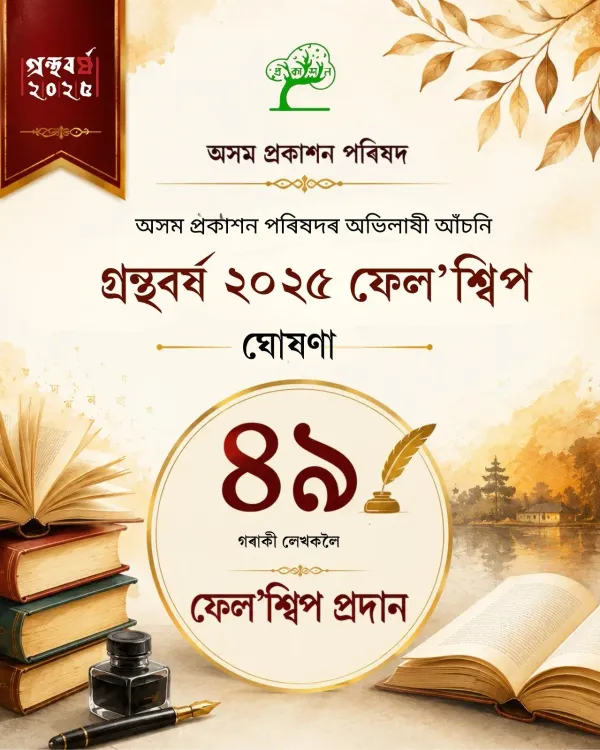
The Assam government has launched the Granthabarsha 2025 Fellowship, selecting 49 emerging writers from Assamese, Bengali, Bodo and other indigenous languages. Each fellow receives a ₹50,000 grant and a certificate, in a move aimed at strengthening the state's multilingual literary culture under CM Himanta Biswa Sarma.
Key Takeaways
The Government of Assam launched the Granthabarsha 2025 Fellowship under CM Himanta Biswa Sarma .
49 writers were selected through a rigorous process across Assamese, Bengali, Bodo and other indigenous languages.
Each fellow receives a ₹50,000 grant and a certificate of recognition, totalling ₹24.5 lakh in combined outlay.
The fellowship targets emerging writers , not established literary figures, to build a next-generation pipeline.
The programme reflects Assam's multilingual policy approach in a state with one of Northeast India's most diverse ethnolinguistic landscapes.
Disbursement timelines and publication expectations for fellows have not yet been publicly detailed.
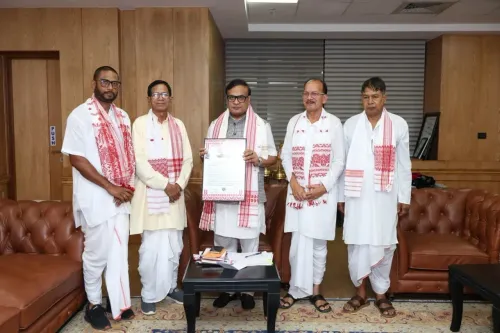
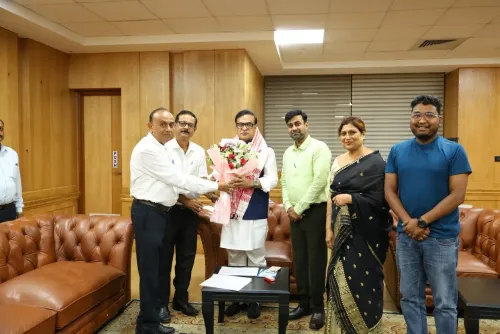
The Chief Minister's Office of Assam announced on 3 July 2026 that the Government of Assam has launched the Granthabarsha 2025 Fellowship, selecting 49 writers from Assamese, Bengali, Bodo and other indigenous languages of the state, each to receive a ₹50,000 grant and a certificate of recognition.
Context
The fellowship was launched under the leadership of Chief Minister Dr. Himanta Biswa Sarma, who has helmed the state since May 2021. The government stated that fellows were chosen through a 'rigorous selection process', though specific criteria have not been made public. The programme targets emerging writers rather than established literary figures, positioning itself as a pipeline for the next generation of regional authors.
The announcement explicitly covers multiple language communities — Assamese, Bengali, Bodo and unnamed other indigenous languages — reflecting the state's acknowledged linguistic plurality. Assam is home to one of the most diverse ethnolinguistic landscapes in Northeast India, making multilingual recognition a politically and culturally significant design choice.
Policy Backdrop
Assam's engagement with literary promotion has institutional roots stretching back over a century. The Assam Sahitya Sabha, established in 1917, remains the apex body for Assamese literature and has long been a partner in state-level cultural policy. The Granthabarsha Fellowship represents a more direct government intervention — a cash grant disbursed by the state administration rather than channelled through an autonomous body.
Comparable writer-support schemes exist across several Indian states, where governments use fellowships and stipends to sustain vernacular literary production. The ₹50,000 per-fellow outlay places Granthabarsha within the mid-range of such programmes nationally. The total committed outlay across all 49 fellows amounts to ₹24.5 lakh.
Stakeholders and Impact
The immediate beneficiaries are the 49 selected writers, whose identities have not been publicly disclosed. Beyond individual recipients, the fellowship signals state intent to sustain writing in Bodo and other indigenous languages that face demographic and publishing pressures compared with the more commercially viable Assamese and Bengali markets.
Indigenous-language literary communities in Assam have historically relied on community organisations and small presses with limited resources. A government-backed fellowship with a formal certificate component adds institutional legitimacy alongside financial support, which can matter for writers seeking publishers or academic recognition.
What's Next
The immediate milestone to watch is the actual disbursement of the ₹50,000 grants to each of the 49 fellows. Publication outcomes — whether fellows produce books, manuscripts or other literary work within a defined period — will determine the programme's longer-term credibility. The government has not yet announced whether Granthabarsha will become an annual cycle or a one-time initiative.
If the fellowship is institutionalised as a recurring programme, it could become a meaningful plank in Assam's broader cultural policy architecture, particularly as the state navigates questions of language preservation and ethnic identity in the Northeast.
Point of View
Arriving at a time when language politics in Northeast India carry significant electoral and identity dimensions. By explicitly including Bodo and other indigenous languages alongside Assamese and Bengali, the scheme signals an inclusive framing that goes beyond the dominant linguistic community — a deliberate broadening that mirrors the BJP-led government's outreach to tribal and minority ethnic constituencies in the state. The ₹50,000 grant is not transformative income, but the institutional imprimatur of a state fellowship can open doors for writers in languages with thin publishing markets. Whether the programme becomes a durable annual cycle or a one-off announcement will be the real test of its policy seriousness.
NationPress
3 Jul 2026
Frequently Asked Questions
What is the Granthabarsha 2025 Fellowship in Assam?
The Granthabarsha 2025 Fellowship is a state government scheme launched by the Government of Assam to support emerging writers. It provides each selected fellow with a ₹50,000 grant and a certificate of recognition.
How many writers were selected for the Granthabarsha 2025 Fellowship?
49 writers were selected for the Granthabarsha 2025 Fellowship following a rigorous selection process.
Which languages are covered under the Granthabarsha 2025 Fellowship?
The fellowship covers writers working in Assamese, Bengali, Bodo and other indigenous languages of Assam.
Who launched the Granthabarsha 2025 Fellowship?
The fellowship was launched by the Government of Assam under the leadership of Chief Minister Dr. Himanta Biswa Sarma.
What is the total government outlay for the Granthabarsha 2025 Fellowship?
With 49 fellows each receiving ₹50,000, the total committed outlay is ₹24.5 lakh, excluding administrative costs.