Assam CM's Office Monitors Kolkata–Sairang Express Derailment at Digaru

Synopsis
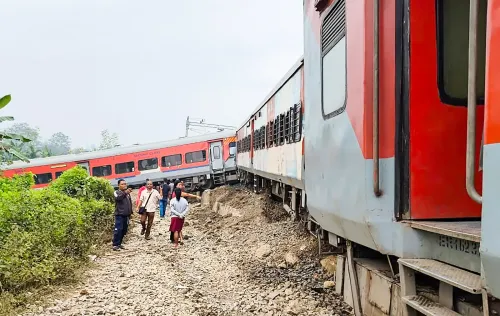
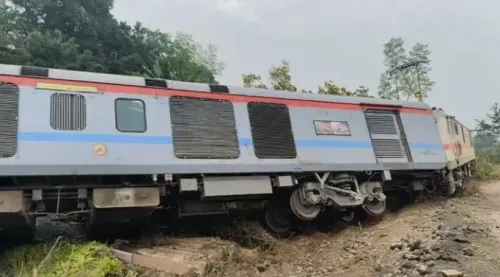
The Kolkata–Sairang Express derailed at Digaru in Assam's Kamrup district on November 11, 2026. Assam's Chief Minister's Office confirmed it is in constant contact with Northeast Frontier Railway and the district administration to ensure passenger safety and facilitate onward travel.
Key Takeaways
The Kolkata–Sairang Express derailed at Digaru station in Kamrup district, Assam on November 11, 2026 .
The Chief Minister's Office of Assam and district administration are in 'constant touch' with Northeast Frontier Railway .
Authorities are prioritising passenger safety and arranging onward travel for affected passengers.
Digaru is located near Guwahati , on a key rail corridor linking Kolkata to Sairang, Mizoram .
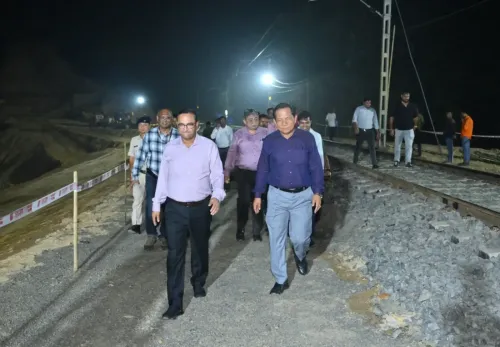
The Northeast Frontier Railway is leading technical response, track inspection, and the derailment investigation.
Railway investigation findings and track restoration timelines remain awaited.
A passenger train has derailed — and the Assam government is already on the line. The Chief Minister's Office of Assam confirmed on Wednesday, November 11, 2026 that the Kolkata–Sairang Express has derailed at Digaru in Kamrup district, and that it is in constant coordination with the Northeast Frontier Railway (NFR) and the district administration to ensure passenger safety and restore onward travel.
The CMO's post stated: 'The CM's Office and district administration are in constant touch with Northeast Frontier Railway and closely monitoring the situation. We're coordinating to keep passengers safe and get them on their onward journey.'
Digaru on the map — and in the crosshairs
Digaru is a railway station situated near Guwahati in Kamrup district, placing the derailment squarely within the most densely connected rail corridor of northeastern India. The Kolkata–Sairang Express is a long-haul intercity service linking Kolkata with Sairang in Mizoram, making it a critical artery for passengers travelling deep into the Northeast — many of whom have no ready alternative route.
The timing matters. Any disruption on this corridor ripples outward fast: stranded passengers, missed connections, freight hold-ups. The administration's immediate public communication signals that it understands the pressure the clock is putting on affected travellers.
State-railway coordination kicks in
India's constitutional framework places railways under central jurisdiction, but state governments routinely serve as first responders on the ground during incidents — mobilising district machinery, medical teams, and local logistics while the zonal railway manages the technical response. The Northeast Frontier Railway, headquartered in Maligaon, Guwahati, oversees rail operations across the entire northeastern region and would lead the track inspection, restoration, and investigation effort.
The CMO's framing — 'constant touch' and 'closely monitoring' — signals that this is an active, real-time coordination rather than a standard notification. The two stated priorities are clear: passenger welfare now, and onward journey logistics as soon as the track situation permits.
What investigators will look for
Railway derailment investigations in India typically examine track condition, signalling status, train speed, and maintenance records. The findings will determine whether this is an isolated incident or part of a pattern requiring wider inspection of the Digaru stretch. The timeline for track restoration — and the alternative travel arrangements being made for stranded passengers — will be the most watched metrics in the hours ahead.
Until the tracks are cleared, every update from the CM's Office and NFR carries real weight for the passengers still waiting at Digaru.
Point of View
A region where rail is often the only viable long-distance transport. The post's emphasis on 'constant touch' and 'onward journey' also hints at the government's awareness that stranded passengers on a Kolkata–Mizoram corridor represent a cross-state political and humanitarian pressure point. How quickly NFR restores the track will ultimately test whether this coordination translates into relief on the ground.
NationPress
11 Nov 2026
Frequently Asked Questions
Which train derailed at Digaru in Assam?
The Kolkata–Sairang Express derailed at Digaru station in Kamrup district, Assam, as confirmed by the Chief Minister's Office on November 11, 2026 .
Where is Digaru station located?
Digaru is a railway station in Kamrup district, Assam , situated near Guwahati along the rail corridor connecting Kolkata with northeastern states.
What is Northeast Frontier Railway?
The Northeast Frontier Railway (NFR) is a zonal railway under Indian Railways, headquartered in Maligaon, Guwahati , responsible for rail operations across the northeastern states including Assam.
What is the Kolkata–Sairang Express?
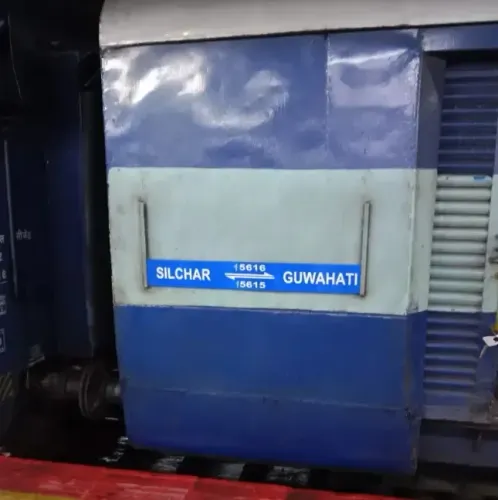
The Kolkata–Sairang Express is a long-haul intercity train service connecting Kolkata with Sairang in Mizoram , serving as a key passenger corridor for travel into the Northeast.
What action is the Assam government taking after the derailment?
The Assam CM's Office and district administration are in continuous coordination with Northeast Frontier Railway to monitor the situation, ensure passenger safety, and facilitate onward travel for affected passengers.