CM Himanta backs bullet train through Chicken's Neck to Guwahati

Synopsis
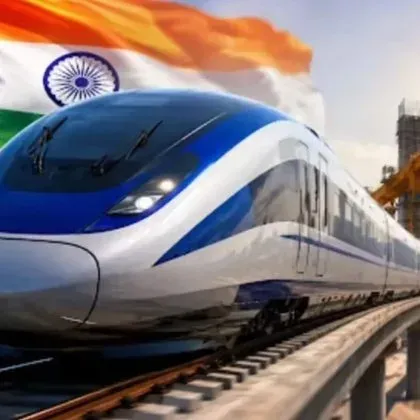
Assam Chief Minister Himanta Biswa Sarma announced on 3 November 2026 that PM Narendra Modi has approved a bullet train corridor to Guwahati, passing through the Siliguri Corridor — a breakthrough in Northeast India's infrastructure connectivity.
Key Takeaways
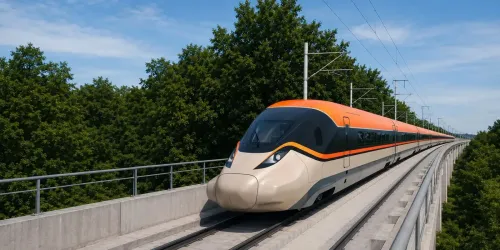
PM Narendra Modi has approved a bullet train corridor extending to Guwahati , the Northeast's largest city, as confirmed by Assam CM Himanta Biswa Sarma on 3 November 2026 .
The corridor will pass through the Siliguri Corridor (Chicken's Neck), a strategically critical strip of land linking mainland India to the eight northeastern states.
Union Railway Minister Ashwini Vaishnaw is credited by CM Sarma for championing the state's proposal within the central government.
India's high-speed rail programme began with the Mumbai–Ahmedabad corridor launched in 2015 ; a Guwahati extension would be the programme's most ambitious geographic leap.
Next steps include the detailed project report, environmental clearances, and land acquisition — all substantial tasks given the sensitive terrain.
The project fits within the broader Act East Policy framework that has driven Northeast infrastructure investment since 2014 .
A high-speed rail line threading through one of India's most strategically sensitive chokepoints — the Siliguri Corridor, popularly called the Chicken's Neck — has moved from ambition to approval, with Assam Chief Minister Himanta Biswa Sarma confirming on Tuesday, 3 November 2026 that Prime Minister Narendra Modi has greenlighted a bullet train corridor extending all the way to Guwahati.
The Corridor That Connects — and Constricts — the Northeast
The Siliguri Corridor is a strip of land barely 20 to 22 kilometres wide at its narrowest point, wedged between Nepal, Bangladesh, and Bhutan, and serving as the only overland link between mainland India and its eight northeastern states. For decades, this geographic bottleneck has throttled freight movement, slowed passenger travel, and amplified the Northeast's sense of physical distance from the rest of the country. Running a bullet train through it — with the engineering demands of high-speed alignment, gradient control, and seismic sensitivity in a floodplain-adjacent zone — is exactly the kind of challenge that makes the approval significant.
CM Sarma credited Union Railway Minister Ashwini Vaishnaw for championing Assam's case within the central government. 'Honouring Assam's request,' Sarma wrote, Modi approved the project up to Guwahati, the Northeast's largest city and commercial hub.
From Mumbai-Ahmedabad to the Brahmaputra Valley
India's high-speed rail ambitions began in earnest in 2015, when the National High Speed Rail Corporation was established to execute the Mumbai–Ahmedabad bullet train corridor — the country's first. That project set the technical and institutional template. Extending high-speed rail to the Northeast represents a qualitative leap: longer distance, more complex terrain, and a region that has historically been underserved by trunk infrastructure.
The connectivity push is not new in spirit. The Bogibeel Bridge, India's longest rail-road bridge, was inaugurated in 2018, cutting travel time between Dibrugarh and Itanagar significantly. The Act East Policy, a framework prioritising physical and economic integration of the Northeast, has driven airport upgrades, expressways, and inland waterway projects across the region since 2014. A bullet train corridor would be the most dramatic single addition to that architecture.
What Comes Next for the Guwahati Corridor
Approval is the starting gun, not the finish line. The detailed project report, land acquisition framework, environmental impact assessments, and alignment surveys still lie ahead — each a significant undertaking given the terrain. The corridor will pass through ecologically sensitive areas, densely farmed plains, and river deltas that flood seasonally.
But the political signal is unmistakable: the Northeast is no longer a footnote in India's infrastructure narrative. If the Guwahati bullet train moves from blueprint to steel and concrete, it will rewrite what it means — in time, in cost, in aspiration — to live and do business east of the Chicken's Neck.
Point of View
Publicly crediting both Modi and Vaishnaw reinforces his role as the Northeast's most effective advocate within the BJP ecosystem. The project's actual trajectory will depend heavily on whether the detailed project report can resolve the formidable engineering and ecological challenges of routing high-speed rail through the Siliguri Corridor. If it does, it would be the single most consequential upgrade to Northeast India's physical integration since the Bogibeel Bridge.
NationPress
3 Nov 2026
Frequently Asked Questions
What is the bullet train to Guwahati project?
It is a proposed high-speed rail corridor extending to Guwahati, Assam's largest city, approved by Prime Minister Narendra Modi as announced by Assam CM Himanta Biswa Sarma in November 2026. The line would pass through the Siliguri Corridor, the narrow land strip linking mainland India to the Northeast.
What is the Chicken's Neck or Siliguri Corridor?
The Siliguri Corridor, nicknamed the Chicken's Neck, is a strip of land in West Bengal roughly 20-22 km wide at its narrowest point, bordered by Nepal, Bangladesh, and Bhutan. It is the only overland route connecting mainland India to the eight northeastern states.
Which is India's first bullet train project?
India's first bullet train corridor runs between Mumbai and Ahmedabad. It was approved in 2015 and is being executed by the National High Speed Rail Corporation.
Who approved the Guwahati bullet train?
Prime Minister Narendra Modi approved the project, according to Assam CM Himanta Biswa Sarma. Union Railway Minister Ashwini Vaishnaw is credited for supporting the state's proposal.
What are the next steps for the Guwahati bullet train corridor?
The approval initiates a process that still requires a detailed project report, land acquisition plans, environmental impact assessments, and alignment surveys — all complex given the ecologically sensitive and flood-prone terrain along the route.