BRICS Summit outcome questioned by Assam Congress leader on India-China ties
Synopsis
Assam Congress leader Aminul Islam has put the government on the spot over the BRICS Summit, raising pointed questions about what India actually secured — on Galwan, the Brahmaputra's 40% water-level decline, and the Strait of Hormuz. His remarks signal the opposition's intent to challenge the government's diplomatic optics with hard strategic questions.
Key Takeaways
Aminul Islam , Assam Congress leader, questioned the BRICS Summit outcomes on 13 September 2026 in Guwahati .
He asked whether the summit addressed India-China relations and the 2020 Galwan Valley clash .
Islam claimed the Brahmaputra river water level has dropped by 40 per cent since 2022 and questioned whether it was raised at the summit.
He also questioned whether India held substantive talks with Iranian President Masoud Pezeshkian on the Strait of Hormuz .
Islam alleged that India's foreign policy is 'gradually deteriorating' under Prime Minister Narendra Modi .
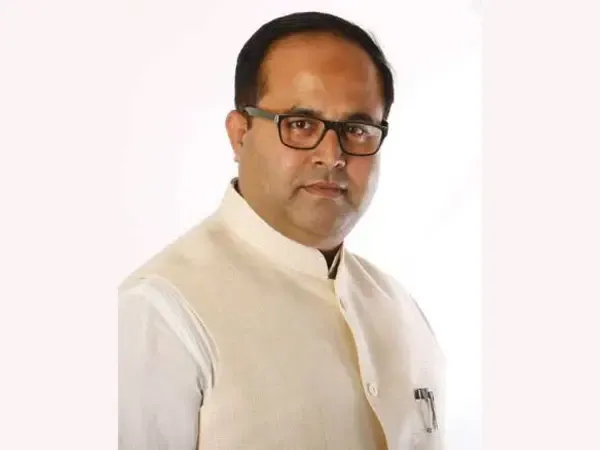
Assam Congress leader Aminul Islam on Sunday, 13 September 2026, publicly questioned the outcomes of the BRICS Summit hosted by India, asking whether the high-level gathering had produced any tangible progress on critical strategic concerns — including the state of India-China relations, the fallout from the 2020 Galwan Valley clash, and developments around the Strait of Hormuz. Speaking to reporters in Guwahati, Islam called on the Union government to clarify what the summit had concretely delivered for India's national and strategic interests.
Key Questions Raised
Islam pressed the government on whether substantive dialogue had taken place regarding the ongoing tensions in India-China relations and whether the Galwan Valley situation had featured in any bilateral or multilateral deliberations at the summit. He specifically questioned whether the meeting had gone beyond broad declarations to address issues with a direct bearing on India's security and economy.
'Are there any better situations in Indo-China relations? Is there any discussion on the Galwan situation, or how the water level in the Brahmaputra has dropped by 40 per cent since 2022?' Islam said.
Brahmaputra Water Levels and China Link
The Congress leader also raised the issue of the Brahmaputra river, claiming its water levels had declined by 40 per cent since 2022 — a concern he linked to India's broader strategic challenges involving China upstream. He argued that such matters, which affect millions of people in northeast India, deserved explicit attention at a summit of this scale. Notably, concerns over China's dam-building activity on the upper reaches of the Brahmaputra — known as the Yarlung Tsangpo inside China — have been a long-standing point of diplomatic friction between the two countries.
Strait of Hormuz and Iran at the Summit
Referring to the participation of Iranian President Masoud Pezeshkian at the BRICS Summit, Islam questioned whether India had engaged in substantive discussions with Tehran on developments concerning the Strait of Hormuz — a chokepoint through which a significant share of the world's oil and liquefied natural gas transits. He argued that any disruption in that corridor carries direct implications for India's energy security and import costs.
Broader Attack on India's Foreign Policy
Islam used the occasion to launch a wider critique of the Union government's foreign policy record, alleging that India's international standing had weakened in recent years. 'Our Prime Minister Narendra Modi is just taking photos. India's international relations are basically very bad now. Foreign policy is gradually deteriorating,' he said. The remarks represent the Congress's broader line of attack ahead of a period of heightened geopolitical activity, seeking to frame the BRICS Summit as optics-heavy rather than outcomes-driven.
Context: India-Hosted BRICS Summit
The summit brought together leaders of the expanded BRICS grouping — which now includes several new member states — amid a complex geopolitical environment marked by ongoing conflicts, shifting trade alliances, and evolving multilateral frameworks. India's hosting of the summit was widely seen as an assertion of its rising global profile. Critics, however, including opposition voices like Islam, have argued that headline diplomacy must translate into verifiable gains on bilateral and regional issues before it can be judged a success. Whether the summit produces follow-through on any of the specific concerns raised remains to be seen.
Point of View
The Brahmaputra, the Strait of Hormuz are not rhetorical abstractions but live bilateral and regional pressure points. The BRICS format, by design, produces consensus declarations that rarely name bilateral disputes, so the Congress's demand for tangible India-specific outcomes tests the limits of what multilateral summits can deliver. More substantively, the Brahmaputra water-level claim — if verified — would represent a significant data point in the long-running debate about China's upstream hydrological influence. The government's silence or response on that specific figure will be more revealing than any summit communiqué.
NationPress
13 Sept 2026
Frequently Asked Questions
What did Assam Congress leader Aminul Islam say about the BRICS Summit?
Aminul Islam questioned whether the BRICS Summit hosted by India produced any concrete outcomes on strategic concerns, including India-China relations, the 2020 Galwan Valley situation, Brahmaputra water levels, and discussions with Iran on the Strait of Hormuz. He called on the Union government to clarify what the summit delivered for India's national interests.
What is the Galwan Valley issue Islam raised?
The Galwan Valley clash in June 2020 resulted in casualties on both sides and a prolonged standoff between Indian and Chinese troops along the Line of Actual Control. Islam questioned whether the state of India-China relations following that incident was addressed in any substantive manner at the BRICS Summit.
Why did Islam raise the Brahmaputra river water level?
Islam claimed the Brahmaputra's water level has declined by 40 per cent since 2022, linking the concern to China's upstream activities. The Brahmaputra originates in Tibet and China's dam-building on its upper reaches has been a long-standing point of bilateral tension, with downstream implications for northeast India.
What did Islam say about India's engagement with Iran at BRICS?
Islam questioned whether India held substantive talks with Iranian President Masoud Pezeshkian on the Strait of Hormuz — a critical global energy and shipping route. He argued that developments in that corridor have direct implications for India's energy security.
How does this fit into the broader Congress critique of the government's foreign policy?
Islam's remarks are part of a wider Congress narrative alleging that India's international standing has weakened under Prime Minister Narendra Modi. The Congress has consistently sought to reframe high-profile diplomatic engagements as photo opportunities unless they produce verifiable bilateral or strategic outcomes.