CM Himanta Earmarks ₹6,000 Cr for Assam Welfare Schemes
Synopsis
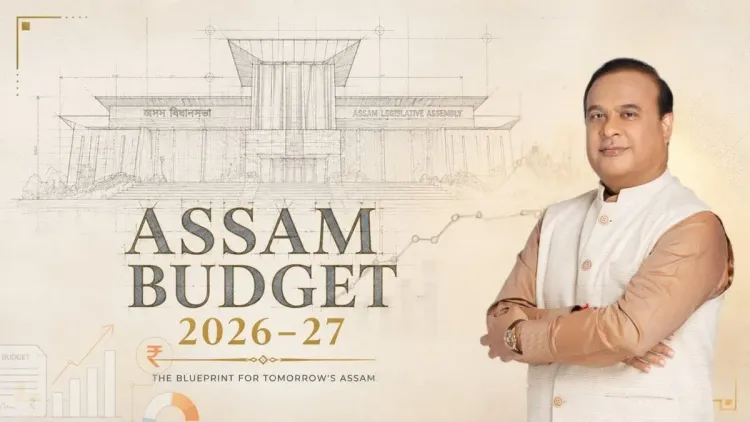
Assam CM Himanta Biswa Sarma has announced a record ₹6,000 crore earmark for flagship welfare schemes in Budget 2026, while introducing new eligibility bars against individuals involved in polygamy or criminal activities.
Key Takeaways
₹6,000 crore has been earmarked for flagship welfare schemes in the Assam Budget 2026 — described as a first-ever allocation of this scale.
CM Himanta Biswa Sarma made the announcement, signalling a major step up in the state's welfare spending commitment.
Individuals involved in polygamy or criminal activities will no longer be eligible to receive benefits under these schemes.
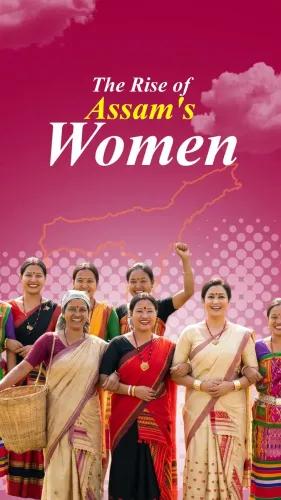
The Orunodoi Yojana , which provides monthly cash assistance to women from low-income households, is among the flagship schemes expected to benefit.
The new eligibility conditions will require the state to develop or upgrade beneficiary verification mechanisms.
A detailed scheme-wise breakup is expected during the full Assam Legislative Assembly budget session.
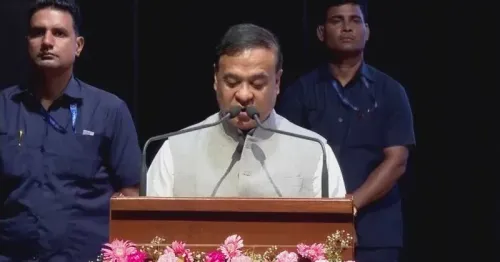
The Chief Minister's Office of Assam announced on Friday, 10 July 2026 that Chief Minister Dr. Himanta Biswa Sarma has, for the first time, earmarked ₹6,000 crore for the state's flagship welfare schemes in the Assam Budget 2026. The announcement also introduced a significant eligibility condition: individuals involved in polygamy or criminal activities will be barred from receiving benefits under these schemes.
Context
Assam has been progressively expanding its direct-benefit transfer architecture since the BJP government came to power in the state in 2016. The ₹6,000 crore allocation — described by the Chief Minister's Office as a first-ever dedicated earmark of this scale — signals a substantial step up in the state's commitment to welfare spending. The funds are intended for the government's 'flagship welfare schemes', though a scheme-wise breakup is expected to emerge from the full budget presentation.
Policy Backdrop
The most prominent among Assam's welfare programmes is the Orunodoi Yojana, launched in 2020-21, which provides monthly cash assistance directly to women from economically weaker households. The scheme has become a cornerstone of the state's social safety net and is among the programmes expected to benefit from the enlarged budgetary allocation. Assam's approach of pairing higher outlays with tighter eligibility norms mirrors a broader pattern seen across Indian states, where direct-benefit transfers are being conditioned on legal and demographic compliance by beneficiaries.
CM Himanta Biswa Sarma stated that, going forward, individuals involved in polygamy or criminal activities will not be eligible to receive benefits under these welfare schemes. This conditionality introduces a behavioural and legal compliance layer to the eligibility framework — a move that is likely to require new verification mechanisms at the administrative level.
Stakeholders and Impact
The primary beneficiaries of Assam's flagship welfare schemes are women from low-income households, who receive monthly financial assistance under programmes such as Orunodoi Yojana. The ₹6,000 crore commitment, if sustained across the budget cycle, would represent a meaningful increase in the per-beneficiary resource envelope available to the state government. However, the new exclusion clauses on polygamy and criminal records will require the state to build or upgrade beneficiary verification systems to enforce the conditions.
For households currently enrolled in welfare schemes, the announcement introduces an element of eligibility scrutiny that did not previously exist in the same explicit form. Civil society groups and opposition parties are likely to closely watch how the exclusion criteria are defined, verified, and applied in practice — particularly the polygamy clause, which intersects with questions of personal law and community-specific practices in a diverse state like Assam.
What's Next
The detailed scheme-wise breakup of the ₹6,000 crore allocation is expected to be presented during the full Assam Budget 2026 proceedings in the Assam Legislative Assembly. Subsequent government orders will likely spell out the eligibility verification mechanisms for the polygamy and criminal-record exclusion rules. How the state operationalises these conditions — and whether they withstand legal scrutiny — will determine the practical reach and political reception of the policy.
Point of View
Combining welfare expansion with a law-and-order signal to the electorate. The polygamy exclusion clause is particularly pointed in the context of Assam's demographic politics, where the BJP has consistently framed population and personal-law issues as governance concerns. Nationally, the move fits a pattern of states using welfare conditionalities to enforce social-policy objectives that might otherwise require legislative action. Whether the exclusion clauses survive administrative and judicial scrutiny will be the real test of the policy's durability.
NationPress
9 Oct 2026
Frequently Asked Questions
What is the ₹6,000 crore welfare allocation in Assam Budget 2026?
For the first time, the Assam government has earmarked ₹6,000 crore specifically for its flagship welfare schemes in Budget 2026 , as announced by CM Himanta Biswa Sarma . This is described as the largest dedicated welfare allocation of its kind in the state's budget history.
Who will be excluded from Assam welfare schemes under the new rules?
CM Himanta Biswa Sarma announced that individuals involved in polygamy or criminal activities will not be eligible to receive benefits under the state's flagship welfare schemes going forward. The verification mechanism for these exclusions is yet to be detailed.
What is the Orunodoi Yojana and will it benefit from the new allocation?
The Orunodoi Yojana is Assam 's flagship direct-benefit scheme launched in 2020-21 , providing monthly cash assistance to women from economically weaker households. It is among the programmes expected to receive funding from the newly earmarked ₹6,000 crore welfare pool.
Why is Assam barring people in polygamy from welfare benefits?
CM Himanta Biswa Sarma has positioned the exclusion as a legal and behavioural compliance condition tied to welfare eligibility. The move is part of a broader pattern in Assam of linking direct-benefit transfers to demographic and legal norms, though detailed implementation rules are yet to be issued.
When will the full Assam Budget 2026 details be available?
The scheme-wise breakup of the ₹6,000 crore allocation and further details are expected to be presented during the Assam Budget 2026 session in the Assam Legislative Assembly . Subsequent government orders will outline the eligibility verification process.