Assam mandates School Management Committees in all govt schools under NEP 2020

Synopsis
Assam has scrapped its School Management Development Committees and replaced them with a unified SMC structure covering all schools up to Class 12 — a significant governance overhaul aligned with NEP 2020. The move mandates community representation at every school level and sets a one-month formation deadline each academic year, marking one of the state's most sweeping education administration reforms in recent years.
Key Takeaways
Assam's School Education Department issued a notification on 4 August mandating School Management Committees (SMCs) in all government and provincialised schools.
SMCs must be constituted within one month of the start of every academic year.
The order replaces School Management Development Committees (SMDCs) , which previously governed secondary schools.
The directive covers Lower Primary, Upper Primary, Secondary, and Higher Secondary schools up to Class 12 .
Committee size ranges from 12–15 members (up to 100 students) to 20–25 members (500+ students).
The notification is issued under Section 21 of the RTE Act, 2009 and incorporates NEP 2020 and Samagra Shiksha 2.0 provisions.
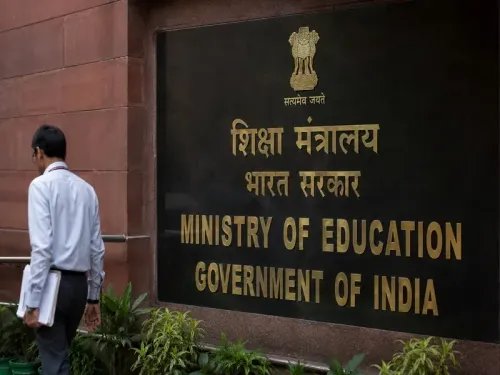
Assam's School Education Department has issued a fresh notification directing all government and provincialised schools across the state to constitute School Management Committees (SMCs) within one month of the commencement of every academic year. The directive, issued on 4 August, replaces the existing School Management Development Committees (SMDCs) and aligns Assam's school governance framework with the National Education Policy (NEP) 2020.
What the Notification Mandates
The order, issued under Section 21 of the Right of Children to Free and Compulsory Education (RTE) Act, 2009, supersedes all earlier government notifications, instructions, and guidelines related to school management committees. It incorporates provisions of NEP 2020 and the Samagra Shiksha 2.0 framework, officials confirmed.
Crucially, the notification extends the SMC structure to all levels — Lower Primary, Upper Primary, Secondary, and Higher Secondary schools up to Class 12. SMDCs, which previously governed secondary schools, will no longer be constituted going forward.
Committee Composition and Size
According to the notification, SMCs will include government officials, parents or guardians of students, representatives of local authorities, academicians, subject experts, alumni, and representatives of disadvantaged groups. Committee size will be calibrated to student enrolment:
Schools with up to 100 students will have 12 to 15 members; those enrolling between 100 and 500 students will have 15 to 20 members; and institutions with more than 500 students will constitute committees of 20 to 25 members.
Why the State is Restructuring School Governance
The department stated the move is aimed at strengthening community participation in school education through a unified governance structure. SMCs are designated as the primary institutional mechanism for decentralised school governance, with a mandate to involve local communities in planning, monitoring, and improving educational outcomes.
This comes amid a broader national push under NEP 2020 to democratise school administration and make it more accountable to local stakeholders. Assam's notification explicitly frames the revised guidelines as an effort to harmonise local rules with the national vision of inclusive, participatory, and accountable education.
Scope and Implementation Timeline
All schools are required to form their SMCs within one month of the start of each academic year. The notification lays down norms for constitution, roles, and responsibilities across all school categories, providing a uniform framework for school-level governance statewide. Officials noted that the notification has immediate effect and replaces the entire body of earlier orders on the subject.
With Assam setting a defined timeline and a clear structural blueprint, the coming academic cycle will be the first real test of whether this unified governance model can deliver measurable improvements in school-level accountability across the state.
Point of View
But the real question is enforcement. Past school committee mandates across Indian states have often existed on paper while remaining dormant in practice — particularly in remote and tribal areas where community mobilisation is hardest. The inclusion of disadvantaged group representatives is a positive signal, but without a monitoring mechanism to verify timely formation and active functioning of SMCs, this notification risks becoming another well-intentioned directive that fades in implementation. The one-month formation deadline is specific enough to hold officials accountable — if the department chooses to track compliance rigorously.
NationPress
4 Aug 2026
Frequently Asked Questions
What are the new School Management Committees (SMCs) mandated by Assam?
SMCs are school-level governance bodies that Assam's School Education Department has now made mandatory for all government and provincialised schools, from Lower Primary to Higher Secondary level. They are constituted under Section 21 of the RTE Act, 2009 and must be formed within one month of the start of each academic year.
How are the new SMCs different from the earlier SMDCs?
School Management Development Committees (SMDCs) previously operated only in secondary schools. The new SMCs replace SMDCs entirely and extend the unified committee structure to all school levels up to Class 12, creating a single governance framework statewide.
Who will be part of the School Management Committees in Assam?
SMCs will include government officials, parents or guardians of students, local authority representatives, academicians, subject experts, alumni, and representatives of disadvantaged groups. Committee size ranges from 12–15 members for schools with up to 100 students, to 20–25 members for schools with more than 500 students.
Why has Assam restructured its school management committees?
The restructuring aims to strengthen community participation in school education and align Assam's governance framework with NEP 2020 and the Samagra Shiksha 2.0 framework. Officials stated the goal is decentralised governance with local communities involved in planning, monitoring, and improving educational outcomes.
When must schools in Assam form their SMCs?
All government and provincialised schools must constitute their SMCs within one month of the commencement of every academic year, as per the notification issued on 4 August.