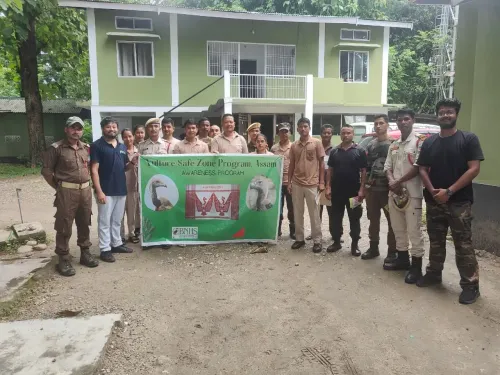
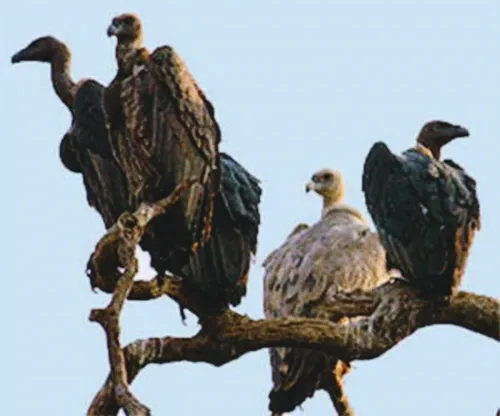
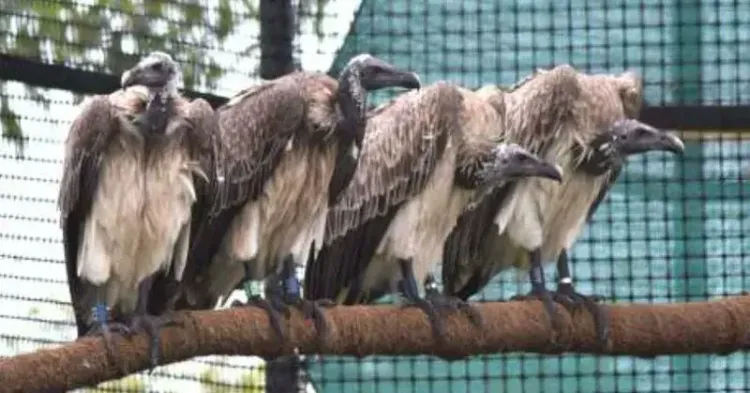
Assam Frees GPS-Tagged Captive-Bred Slender-Billed Vultures
Synopsis
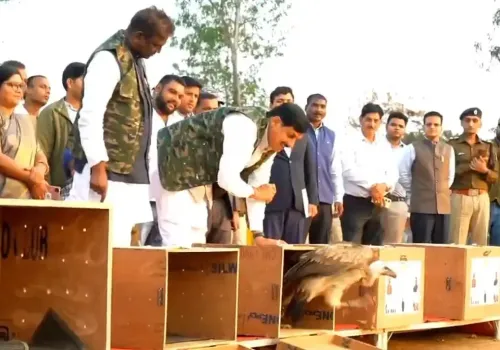
Assam has released captive-bred slender-billed vultures fitted with GPS trackers, marking India's most advanced reintroduction effort for a species that lost over 95 per cent of its population to veterinary diclofenac. The Chief Minister's Office announced the milestone on 10 August 2026.
Key Takeaways
Assam has released GPS-tracked captive-bred slender-billed vultures — a conservation first for the state and a major step in India's vulture recovery programme.
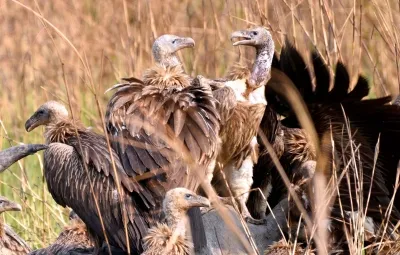
The slender-billed vulture ( Gyps tenuirostris ) is critically endangered, with populations having collapsed by over 95 per cent due to veterinary diclofenac poisoning.
India banned veterinary diclofenac in 2006 , halting the primary cause of decline, but natural population recovery has been slow.
Captive-breeding centres for Gyps vultures have operated in India since the mid-2000s ; Assam's release marks the transition from breeding to active reintroduction.
GPS tracking on released birds will provide real-time data on survival, movement, and habitat use, informing the pace of future releases.
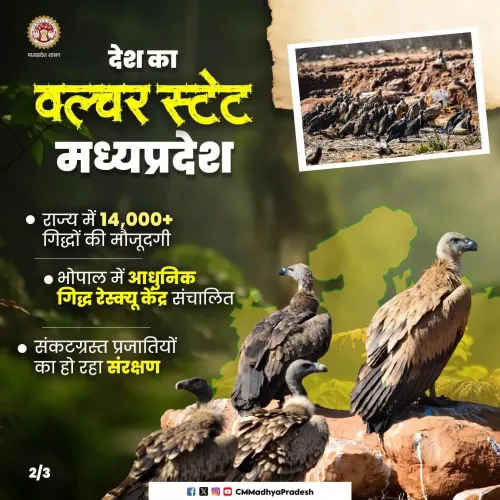
Vultures serve as a critical ecological sanitation system; their recovery has direct public-health implications for India.
India's northeast has quietly scripted a conservation first: Assam has released captive-bred slender-billed vultures — one of the continent's most critically endangered raptors — fitted with GPS trackers, marking a landmark step in the country's decades-long fight to pull the species back from the brink. The Chief Minister's Office of Assam announced the milestone on Monday, 10 August 2026, signalling that the state's wildlife programme has crossed from captive breeding into active field recovery.
Why the slender-billed vulture nearly vanished
The story behind this release is one of modern conservation's starkest cautionary tales. Across the 1990s and early 2000s, vulture populations on the Indian subcontinent collapsed by more than 95 per cent — one of the fastest declines of any bird species ever recorded. The culprit was diclofenac, a cheap veterinary painkiller widely administered to cattle. When vultures fed on carcasses of treated animals, the drug caused fatal kidney failure. India banned veterinary diclofenac in 2006, but by then populations had already been decimated and natural recovery remained agonisingly slow.
The slender-billed vulture (Gyps tenuirostris) was among the hardest hit. Historically found across a broad arc from the Gangetic plains into Southeast Asia, the species now survives in fragments, with Assam and the northeastern states holding some of the last viable wild populations on Indian soil.
From captive-breeding centre to open sky
India's response to the crisis involved establishing captive-breeding centres for critically endangered Gyps vultures from the mid-2000s onward. The goal: build insurance populations in controlled environments while the wild stabilised post-diclofenac. Assam's release represents the next, harder phase — reintroduction. Attaching GPS tracking devices to the released birds is a critical scientific step, allowing researchers to monitor ranging behaviour, habitat use, and survival rates in real time. That data will determine whether — and how fast — further releases can be scaled up.
Conservation groups working on vulture recovery have long argued that reintroduction without rigorous post-release monitoring is a gamble. GPS tagging addresses exactly that gap, turning each bird into a living data point.
What the trackers will tell scientists next
The outcomes of the GPS monitoring will be closely watched. If the birds survive, establish territories, and avoid poisoning risks, Assam's programme could become the template for other states with remnant populations. The broader question is whether India's captive-breeding network — built patiently over two decades — is now ready to shift into a sustained release pipeline. Vultures are not charismatic megafauna in the popular imagination, but they are irreplaceable: nature's most efficient sanitation system, suppressing disease and keeping landscapes clean. Losing them has measurable public-health consequences. Getting them back matters just as much.
Assam has drawn the first GPS line in the sky. The trackers are live, the birds are free, and the data will write the next chapter.
Point of View
Moving the programme from passive captive breeding to evidence-based field recovery. It fits a broader pattern of northeastern states emerging as frontline actors in India's biodiversity commitments — areas where forest cover and political will occasionally align. The real policy test will come when tracker data is published: if survival rates are strong, it will pressure the central government and other states to accelerate releases and expand breeding capacity. Vulture conservation has long been underfunded relative to tigers and elephants; a successful Assam model could reframe that calculus.
NationPress
10 Aug 2026
Frequently Asked Questions
Why are slender-billed vultures endangered in India?
Slender-billed vultures suffered catastrophic population collapse — over 95 per cent — primarily due to diclofenac, a veterinary painkiller that caused fatal kidney failure when vultures fed on treated livestock carcasses. India banned the drug for veterinary use in 2006, but populations have recovered very slowly since.
What is the significance of GPS tracking on released vultures?
GPS trackers allow scientists to monitor where released birds travel, which habitats they use, and whether they survive after reintroduction. This data is essential for assessing the success of releases and planning future ones, making the programme scientifically rigorous rather than symbolic.
Where are India's captive vulture breeding centres located?
India has operated captive-breeding centres for critically endangered Gyps vultures since the mid-2000s. Assam and other northeastern states host some of the last viable wild populations of the slender-billed vulture on Indian soil, making the region central to recovery efforts.
What happened after India banned diclofenac for veterinary use?
The 2006 ban on veterinary diclofenac removed the primary cause of vulture deaths, stabilising — but not reversing — the decline. Captive-breeding programmes were established to build insurance populations, and Assam's 2026 release represents the first GPS-monitored reintroduction phase of that longer effort.
Why do vultures matter for public health in India?
Vultures are nature's most efficient scavengers, rapidly consuming animal carcasses and preventing the spread of disease. Their decline has been linked to increases in feral dog populations and anthrax risk in some regions, making their recovery a genuine public-health priority, not just an ecological one.