Assam's Groundbreaking Release of Endangered Vultures
Synopsis
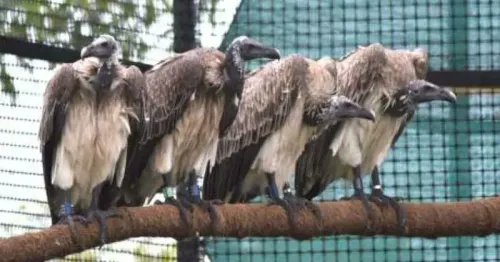
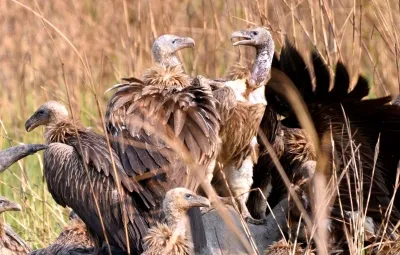
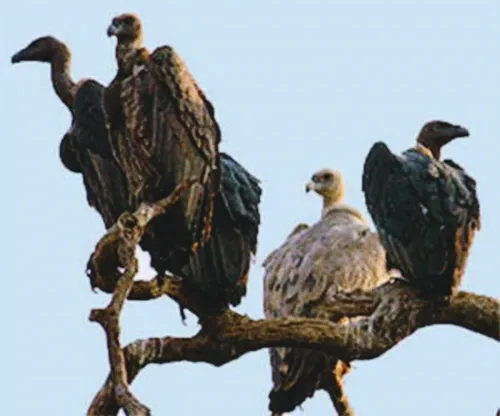
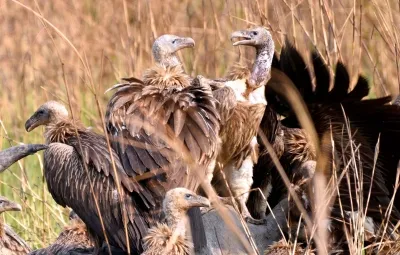
In a major conservation milestone, Assam has released six critically endangered white-rumped vultures, marking a hopeful step in vulture recovery. With GPS tracking, these birds are being monitored closely as part of a larger initiative to combat the decline of vulture populations.
Key Takeaways
Six critically endangered white-rumped vultures were released in Assam.
All vultures have been fitted with GPS/satellite transmitters for monitoring.
The project aims to recover vulture populations affected by toxic drugs.
Assam has banned harmful veterinary drugs like nimesulide .
The initiative is backed by BNHS and RSPB, showcasing collaborative conservation efforts.
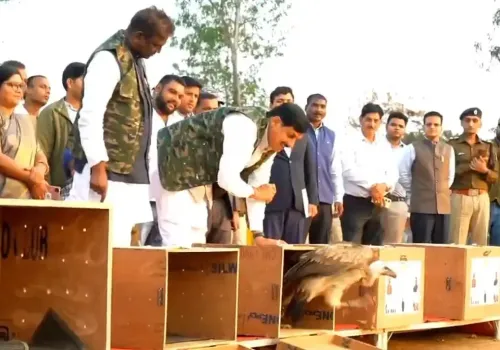
New Delhi, March 19 (NationPress) In a significant conservation effort, the Assam State Forest Department successfully released six critically endangered white-rumped vultures during a pilot initiative at the Vulture Reintroduction Aviary located in the Rani Range, near Kamrup district, on Thursday. Each bird has been equipped with GPS/satellite transmitters for thorough monitoring.
Additionally, four wild vultures that were rehabilitated by the BNHS vulture team have also been tagged and released alongside the captive-bred vultures, increasing the total number of released vultures to 10.
This release is a pivotal moment in the recovery of vulture populations, which have significantly declined across Asia due to toxic veterinary medications.
Recent studies indicate that Assam has relatively low levels of these hazardous veterinary drugs, although the presence of nimesulide has been on the rise. Thankfully, the Indian government has recently banned nimesulide, alongside aceclofenac and ketoprofen, fostering hope for a safer environment as these bans take effect.
It is well documented that toxic veterinary painkillers used in cattle can severely threaten vulture populations. The Assam Forest Department's project, overseen by BNHS, is actively gathering cattle carcass samples to ensure that no toxic drugs are in circulation.
Research has revealed that exposure to less than one percent of cattle carcasses containing deadly levels of diclofenac was sufficient to cause the drastic vulture population declines observed in India from the mid-1990s to the early 2000s.
To confirm the absence of diclofenac in vulture food, a target of 800 samples has been established. So far, 150 samples have been examined and found free of harmful NSAIDs, with the collection of an additional 650 samples planned within a 100-km radius of the release site.
The six captive-bred vultures were all hatched at the nearby Rani Vulture Conservation Breeding Centre, run by BNHS with support from the Royal Society for the Protection of Birds (RSPB) and the Assam Forest Department.
Dr. Sachin Ranade, manager of the BNHS centre, stated that the team will continually monitor the birds' movements and take necessary actions.
Chief Wildlife Warden Vinay Gupta expressed that Assam has made significant strides in eliminating harmful veterinary drugs and is nearing the achievement of a safe habitat for vultures.
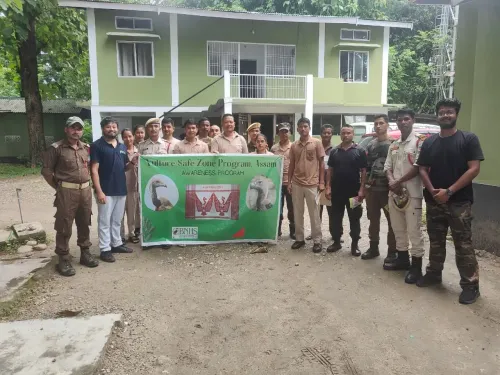
SAVE Chair Jemima Parry-Jones noted that with the decreased use of toxic veterinary painkillers and strong backing from RSPB, the region is approaching a true “Vulture Safe Zone.”
BNHS Director Kishor Rithe emphasized the need for greater awareness among veterinarians and farmers regarding safer alternatives like meloxicam and tolfenamic acid, though he acknowledged that considerable progress has been made.
Chris Bowden, representing RSPB, expressed delight over the release, stating that the journey to address drug-related threats and accidental poisoning has been long and maintaining captive populations has been crucial for future releases.
Point of View
The release of critically endangered vultures in Assam represents a significant advancement in wildlife conservation efforts. This initiative not only addresses the concerning decline in vulture populations but also highlights the importance of collaborative efforts in ensuring a safer environment for these birds. The proactive measures taken by the Assam State Forest Department and BNHS set a commendable example for conservation practices across the country.
NationPress
7 Oct 2026
Frequently Asked Questions
What species of vultures were released?
Six critically endangered white-rumped vultures were released.
Where was the release conducted?
The release took place at the Vulture Reintroduction Aviary in the Rani Range, Kamrup district, Assam.
What measures are being taken to monitor the vultures?
The vultures have been fitted with GPS/satellite transmitters for intensive monitoring.
Why have vulture populations declined?
Vulture populations have been decimated primarily due to toxic veterinary drugs used in cattle.
What is the goal of this release initiative?
The goal is to recover and stabilize vulture populations in the region.