MP CMO Declares State India's 'Vulture State'
Synopsis
The Chief Minister's Office of Madhya Pradesh proclaimed the state India's 'Vulture State' on 23 May 2026, reinforcing its conservation credentials after decades of national vulture-recovery efforts following the diclofenac crisis.
Key Takeaways
The Chief Minister's Office of Madhya Pradesh officially proclaimed the state India's 'Vulture State' on 23 May 2026 .
Madhya Pradesh already holds the top rank in India's national tiger census, making this a second major wildlife identity for the state.
India's vulture population collapsed after the 1990s due to diclofenac contamination; recovery programmes have been active since the drug's veterinary ban.
The state's large contiguous forest cover and protected areas make it a strategic location for vulture breeding and 'Vulture Safe Zone' initiatives.
The designation has implications for eco-tourism growth and central government funding under species-recovery schemes.
Forthcoming state-level wildlife surveys will be critical to substantiating the 'Vulture State' claim with verified population data.
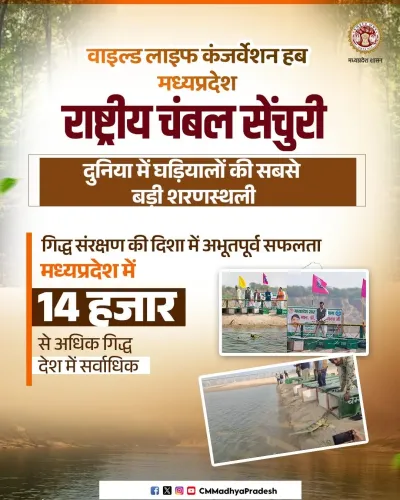
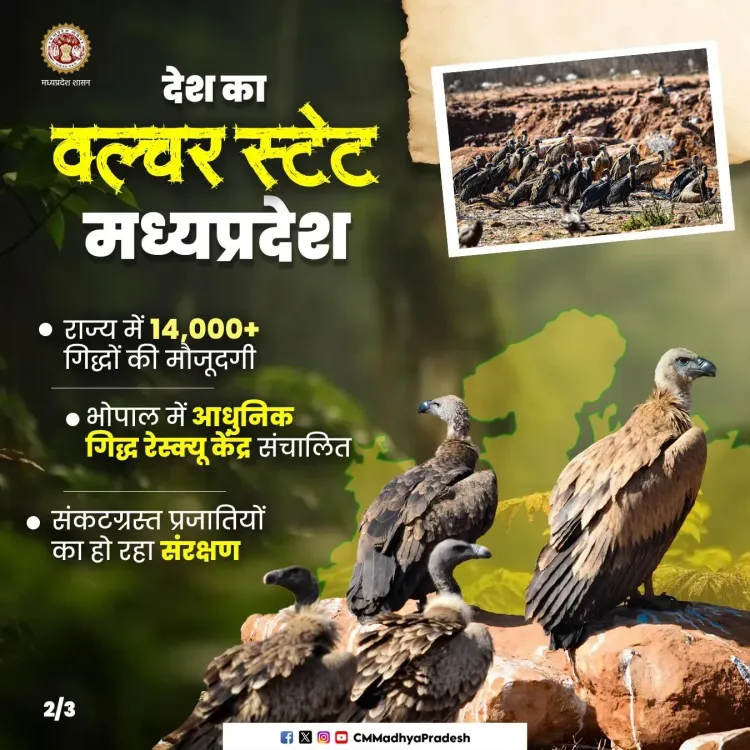
The Chief Minister's Office of Madhya Pradesh declared on Saturday, 23 May 2026 that the state has earned the distinction of being India's 'Vulture State,' sharing the announcement via an official post on X accompanied by an image. The proclamation adds a new conservation identity to a state already recognised as India's leading tiger habitat.
Context
The CMO's post, written in Hindi, reads: 'देश का वल्चर स्टेट — मध्यप्रदेश' ('The Vulture State of the country — Madhya Pradesh'). The announcement positions Madhya Pradesh as the foremost state in India for vulture conservation, a claim that builds on the state's well-established record in large-mammal protection. The post did not specify the census figures or the particular vulture species underpinning the designation.
Policy Backdrop
India's vulture populations collapsed dramatically after the 1990s when the veterinary anti-inflammatory drug diclofenac entered the food chain through livestock carcasses, wiping out an estimated 99 per cent of the subcontinent's vulture population across several species. The central government subsequently banned diclofenac for veterinary use and launched targeted vulture breeding and 'Vulture Safe Zone' programmes across multiple states. Madhya Pradesh, with its large contiguous forest tracts and multiple protected areas, has been a key geography for these recovery efforts. The state's forest department has worked alongside conservation organisations to establish breeding centres and monitor wild populations.
The state's credibility in wildlife governance is anchored partly by its successive top rankings in India's national tiger census since 2010. Branding itself as the 'Vulture State' follows a familiar playbook: states that demonstrate measurable conservation outcomes use that record to attract eco-tourism investment and secure priority funding under central species-recovery schemes.
Stakeholders and Impact
The Madhya Pradesh Forest Department is the primary institutional actor responsible for managing vulture habitats and breeding facilities within the state. Conservation non-governmental organisations working on raptor recovery in central India are also key partners in monitoring and community outreach. For local communities near protected areas, a stronger vulture population signals a healthier ecosystem and potential growth in wildlife tourism, which supports livelihoods. Vultures play a critical ecological role as scavengers, preventing the spread of disease by rapidly consuming animal carcasses — a service whose economic value to agriculture and public health is substantial.
What's Next
Attention will now turn to the next round of state-level wildlife population surveys, which are expected to provide verifiable data on vulture numbers across Madhya Pradesh. Any formal expansion of vulture breeding facilities or the declaration of additional 'Vulture Safe Zones' by the state forest department would be the concrete policy steps that follow such a public designation. Observers will also watch whether the central government formalises the 'Vulture State' tag through a national programme, as it has done with tiger and leopard census rankings for other states.
Point of View
Following the same strategic logic that made its 'Tiger State' identity a durable political and tourism asset. By publicly claiming the designation before a formal census-backed announcement, the CMO is staking a first-mover position in a policy space — raptor recovery — that is gaining traction at the national level. This move also signals to the central government that Madhya Pradesh expects priority consideration in the next round of wildlife funding allocations. The real test will be whether the claim is backed by independently verified population data in the next survey cycle.
NationPress
7 Oct 2026
Frequently Asked Questions
Why is Madhya Pradesh called the Vulture State of India?
The Chief Minister's Office of Madhya Pradesh declared the state India's 'Vulture State' on 23 May 2026, citing its conservation record. The state's large forest cover and protected areas have made it a key location for vulture breeding and recovery programmes following the national population collapse caused by diclofenac contamination in the 1990s.
Which vultures are found in Madhya Pradesh?
Madhya Pradesh is home to several vulture species found in central India, including the White-rumped Vulture, Long-billed Vulture, and Indian Vulture. The state's forest department and conservation partners maintain breeding centres and monitor wild populations, though specific census figures from the 2026 designation have not yet been publicly released.
What caused the decline of vultures in India?
India's vulture population crashed by an estimated 99 per cent after the 1990s due to diclofenac, a veterinary anti-inflammatory drug given to livestock. Vultures that fed on treated carcasses suffered fatal kidney failure. The government subsequently banned diclofenac for veterinary use and launched targeted species-recovery programmes.
Is Madhya Pradesh also the Tiger State of India?
Yes. Madhya Pradesh has held the top rank in India's national tiger census since 2010, earning the informal title of 'Tiger State.' The new 'Vulture State' claim adds a second major wildlife conservation identity to the state's profile.
What are Vulture Safe Zones in India?
Vulture Safe Zones are designated areas where the use of diclofenac and other vulture-toxic drugs is prohibited and monitored, and where carcass dumps are managed to provide safe food for vultures. They are a key tool in India's national vulture recovery strategy, and Madhya Pradesh has been an active participant in establishing such zones.