CM Himanta Grants Free UG Admissions to 1.5 Lakh Assam Students
Synopsis
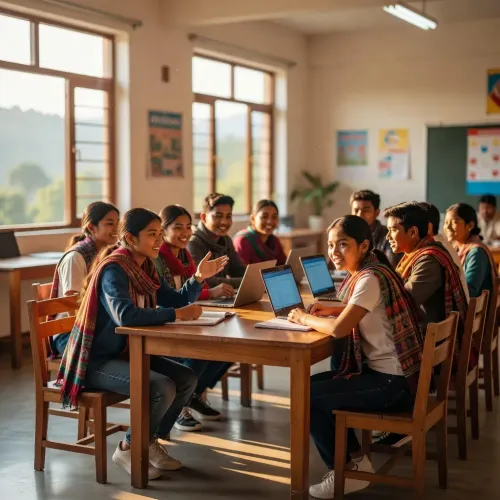
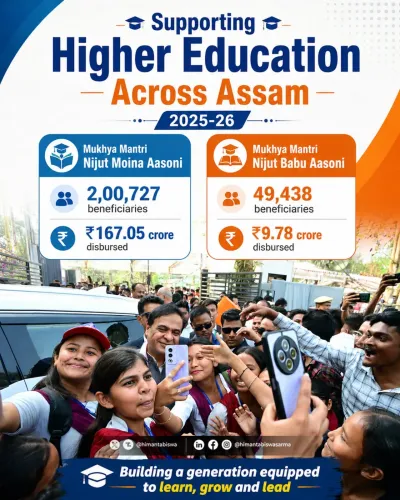
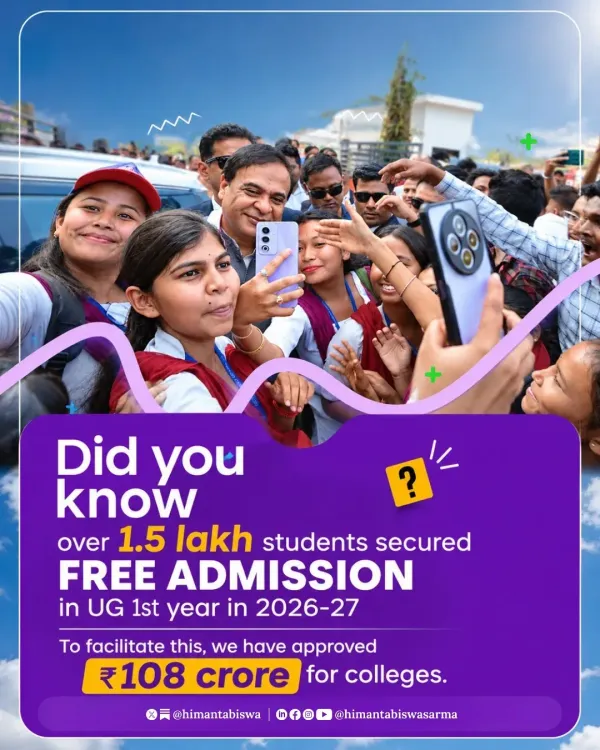
Assam Chief Minister Himanta Biswa Sarma announced that over 1.5 lakh students secured free first-year undergraduate admissions in 2026, with ₹108 crore approved for colleges — a targeted push to eliminate financial barriers at the most critical entry point in higher education.
Key Takeaways
Over 1.5 lakh students secured free undergraduate first-year admissions in Assam this academic year.
The state approved ₹108 crore in direct funding to colleges to cover the cost of fee waivers.
The initiative targets low-income students for whom first-semester fees are the primary dropout trigger.
The move builds on earlier federal infrastructure laid by the Rashtriya Uchchatar Shiksha Abhiyan (RUSA) since 2013 .
CM Himanta Biswa Sarma positioned the scheme as part of a systemic push to make higher education financially accessible regardless of a student's economic background.
Implementation tracking — fund utilisation and multi-semester retention rates — will determine whether the scheme's impact extends beyond first-year enrollment numbers.
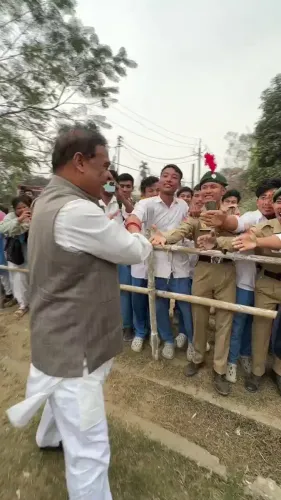
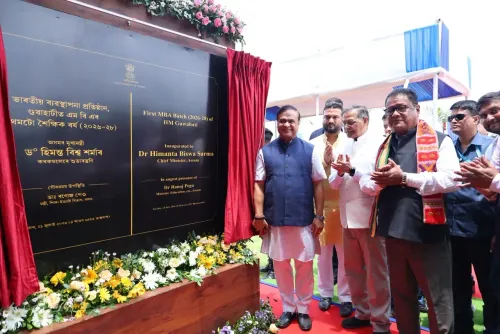
A single policy decision in Assam is quietly rewriting the life trajectories of more than a lakh and a half young people. Assam Chief Minister Himanta Biswa Sarma announced on Thursday, November 19, 2026, that over 1.5 lakh students secured free undergraduate first-year admissions this academic year, backed by a state-approved fund of ₹108 crore disbursed directly to colleges.
₹108 Crore Behind the Promise
The numbers tell a story the policy jargon often obscures. ₹108 crore approved for colleges is not an abstract budgetary line — it is the difference between a student from a low-income household enrolling in a degree programme and simply not going at all. CM Sarma framed the initiative in explicit terms: 'We aim to create a system where every student gets the opportunity to pursue higher education and realise their potential, regardless of financial circumstances.'
The funding flows directly to participating colleges to cover admission fee waivers for first-year undergraduates, insulating institutions from the revenue loss that such concessions can otherwise create. That design detail matters — without it, colleges resist, and the scheme stays on paper.
Assam's Wider Push to Close the Enrollment Gap
This announcement does not arrive in a vacuum. Assam has spent several years building state-level welfare architecture around higher education access, particularly targeting government and government-aided colleges where the bulk of first-generation learners enrol. The North-East historically records lower Gross Enrollment Ratios in higher education compared to the national average — a gap that initiatives like this one are designed to narrow.
The Centre's Rashtriya Uchchatar Shiksha Abhiyan (RUSA), launched in 2013, laid an earlier federal foundation for strategic funding to state higher-education institutions in regions like Assam. The state's current free-admission drive builds on that institutional scaffolding, adding a direct, student-facing layer that RUSA's infrastructure funding alone could not deliver.
Who Actually Gets Through the Door
The 1.5 lakh figure represents first-year undergraduate seats — the entry point where financial barriers most brutally cut opportunity short. Students from families who cannot absorb even a few thousand rupees in fees at the moment of admission are the primary beneficiaries. For many, the cost of that first semester is the precise cliff-edge between continuing education and dropping out.
What to watch next: how effectively colleges utilise the ₹108 crore disbursement, whether enrollment retention holds across all four semesters of a degree programme, and whether Assam's model is adopted more broadly across NEDA-aligned North-Eastern states facing similar structural enrollment challenges.
One lakh and fifty thousand students walked through a door this year that financial circumstance had previously kept shut. The real test is whether the state keeps that door open all the way to graduation.
Point of View
They find ways to resist. CM Sarma is also making a calculated political statement ahead of potential state electoral cycles, anchoring BJP governance in North-East India to tangible welfare delivery rather than purely identity-based mobilisation. The 1.5 lakh figure, if it holds up to scrutiny, is a substantial share of Assam's annual undergraduate intake — signalling scale, not a symbolic pilot. The critical question for analysts is whether this translates into genuine retention gains or simply shifts dropout pressure from admission to the second year.
NationPress
19 Nov 2026
Frequently Asked Questions
What is Assam's free undergraduate admission scheme in 2026?
Assam's state government has waived first-year undergraduate admission fees for eligible students, with ₹108 crore approved to reimburse colleges for the revenue shortfall. Over 1.5 lakh students benefited in the current academic year.
How many students got free college admission in Assam this year?
Over 1.5 lakh students secured free undergraduate first-year admissions in Assam during the 2026 academic cycle, according to Chief Minister Himanta Biswa Sarma.
How much money did Assam approve for the free admission scheme?
The Assam government approved ₹108 crore for colleges to cover the cost of waiving first-year undergraduate admission fees for eligible students.
What is RUSA and how does it relate to Assam's education funding?
The Rashtriya Uchchatar Shiksha Abhiyan (RUSA) is a central government scheme launched in 2013 to provide strategic funding to higher education institutions in states including Assam . The state's current fee-waiver initiative builds on the institutional infrastructure that RUSA helped establish.
Which students are eligible for free first-year admissions in Assam?
The scheme primarily targets students from low-income backgrounds enrolling in government and government-aided colleges in Assam for their first year of undergraduate study. The state's stated goal is to remove financial barriers to higher education regardless of a student's economic circumstances.