CM Sai's Cabinet Clears Rural Water Rules for Chhattisgarh
Synopsis
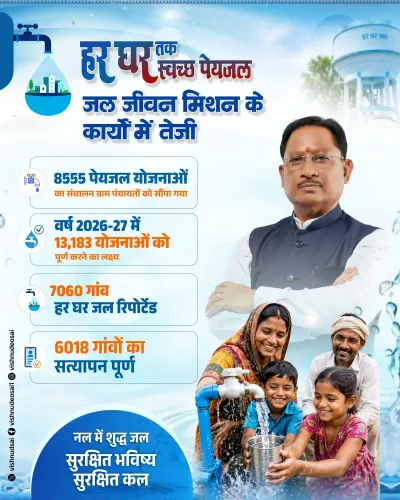
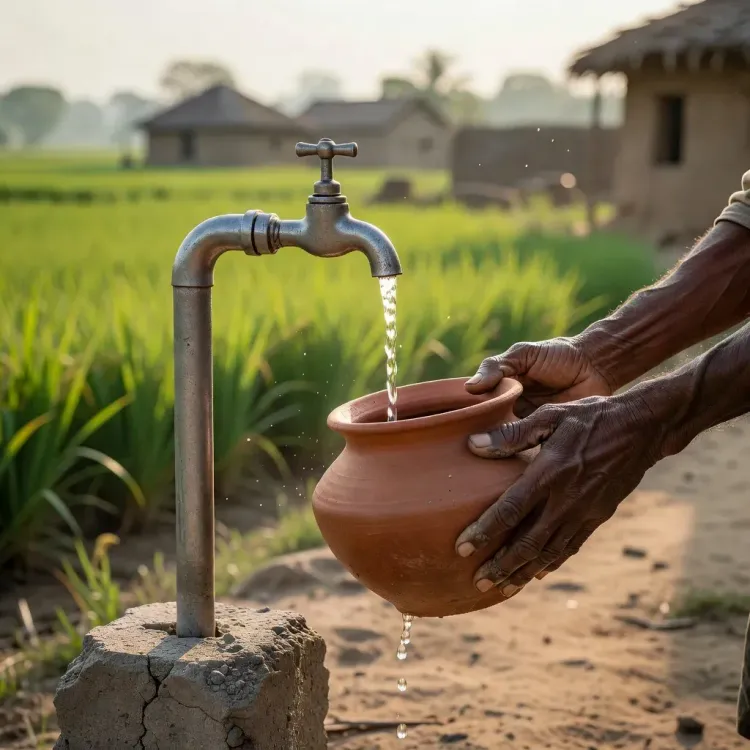
Chhattisgarh CM Vishnu Deo Sai says the state cabinet has approved the draft 'Chhattisgarh Panchayat (Rural Piped Water Operation, Maintenance and Management) Rules, 2026', empowering gram panchayats to manage rural drinking-water infrastructure — a key pillar of the Jal Jeevan Mission's sustainability model.
Key Takeaways
The Chhattisgarh cabinet approved the draft 'Chhattisgarh Panchayat (Rural Piped Water Operation, Maintenance and Management) Rules, 2026' on November 19, 2026 .
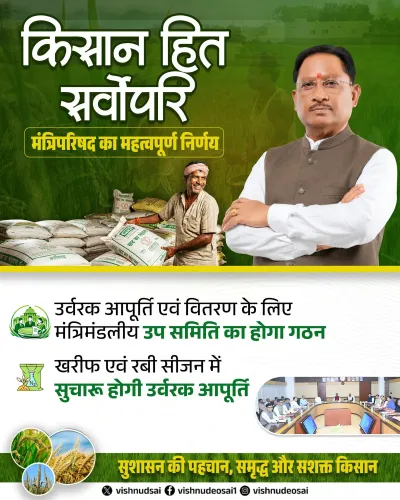
CM Vishnu Deo Sai described the move as central to his government's 'good governance' mandate for rural areas.
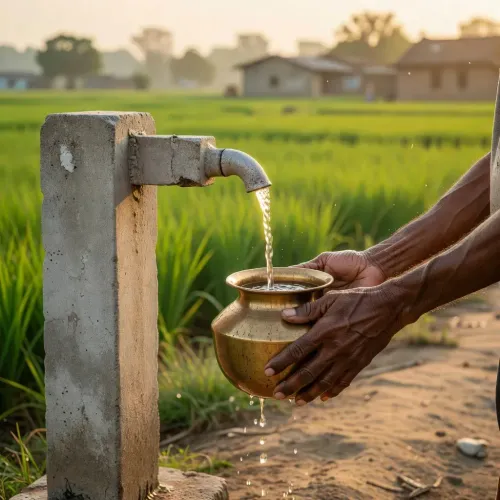
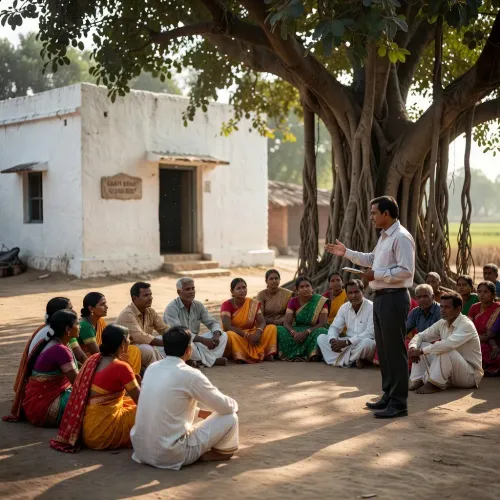
The rules will empower gram panchayats to operate, maintain, and manage rural piped-water schemes locally.
The framework aligns with the Jal Jeevan Mission (launched 2019), which requires states to build panchayat-level operation-and-maintenance structures.
Cabinet approval of the draft is the key political milestone; formal gazette notification and fund-devolution orders are the next critical steps.
Clean drinking water for every village home is not a promise being made — it is now being structured into law. Chhattisgarh Chief Minister Vishnu Deo Sai announced on Thursday, November 19, 2026, that the state cabinet has approved the draft of the 'Chhattisgarh Panchayat (Rural Piped Water Operation, Maintenance and Management) Rules, 2026', a framework designed to put gram panchayats firmly in charge of rural water supply.
Posting on X in Hindi, CM Sai framed the cabinet decision as a cornerstone of his government's 'good governance' agenda: 'सुशासन सरकार में सुदृढ़ हो रहा ग्रामीण पेयजल प्रबंधन' ('Rural drinking-water management is being strengthened under a good-governance government'). The approved draft, he said, will encourage gram panchayats to better operate and maintain water infrastructure, and will help deliver 'regular and pure drinking water' to rural families across the state.
Panchayats as the last-mile guarantee
The logic behind the new rules runs deep. India's 73rd Constitutional Amendment explicitly listed water supply among the functions to be devolved to local bodies — but devolution on paper and delivery on the ground are two different things. For decades, rural piped water schemes installed by state agencies deteriorated because no one at the village level had a clear mandate — or the resources — to maintain them.
The Jal Jeevan Mission, the Central government's flagship scheme launched in 2019 to provide functional household tap connections in every rural home, specifically required states to build operation-and-maintenance frameworks that vest responsibility with gram panchayats. Several states have issued such rules; Chhattisgarh's draft now joins that national pattern, anchoring accountability at the most local level possible.
What the cabinet approval sets in motion
Cabinet approval of the draft is the decisive political step — it clears the rules for formal notification. Once notified, panchayat bodies in Chhattisgarh's rural areas will have a defined legal framework for collecting user charges, managing maintenance funds, and coordinating with district administrations on repairs. The key watch-point now is the final gazette notification and any accompanying orders on fund devolution or training for panchayat functionaries who will operate these systems day to day.
For a state where large swaths of the population live in forested and remote villages — many of them tribal communities historically underserved by infrastructure — a rules-backed local management system could be the difference between a tap that works and a pipe that rusts. The cabinet's signature turns a policy intent into an enforceable structure. The water still has to flow.
Point of View
And states must now supply the institutional plumbing. By vesting operational authority in gram panchayats, the Sai government is betting that local ownership will solve the perennial last-mile maintenance failure that has plagued centrally-funded infrastructure. The move also carries political weight — durable water supply in tribal and forested villages directly tests BJP's rural governance pitch ahead of the next electoral cycle. The real test, however, will be whether fund devolution and capacity-building orders follow the gazette notification with the same speed as the cabinet stamp.
NationPress
19 Nov 2026
Frequently Asked Questions
What are the Chhattisgarh Panchayat Rural Piped Water Rules 2026?
They are a draft framework approved by the Chhattisgarh cabinet on November 19, 2026, that empowers gram panchayats to operate, maintain, and manage rural piped drinking-water schemes in the state.
What is the Jal Jeevan Mission and how does it relate to these rules?
The Jal Jeevan Mission is a Central government scheme launched in 2019 to provide piped tap water to all rural households. It requires states to build local operation-and-maintenance frameworks — exactly what Chhattisgarh's new rules are designed to deliver.
What role will gram panchayats play under the new rules?
Gram panchayats will be responsible for the day-to-day operation, maintenance, and management of rural piped-water infrastructure in their jurisdictions, putting accountability at the most local level.
Has the Chhattisgarh cabinet formally notified these rules yet?
As of November 19, 2026, the cabinet has approved the draft rules. Formal gazette notification and any accompanying orders on fund devolution are the pending next steps.
Which Chhattisgarh CM announced the rural water management rules?
Chief Minister Vishnu Deo Sai, who took office in December 2023, announced the cabinet approval of the draft rules as part of his government's good-governance agenda.