Vrindavani Vastra: Assam eyes return of 16th-century textile from UK by 2027
Synopsis
A 16th-century Assamese silk masterpiece commissioned by saint Srimanta Sankardeva has sat in London's Victoria and Albert Museum for decades. Now, with Chief Minister Himanta Biswa Sarma backing the push, Assam's Assembly Speaker says the Vrindavani Vastra could finally come home by 2027 — and a second rare textile in Paris may follow.
Key Takeaways
Assam Legislative Assembly Speaker Ranjeet Kumar Dass expressed confidence on 27 June that the Vrindavani Vastra will be brought to Assam for public display by 2027 .
The 16th-century silk textile, commissioned by saint Srimanta Sankardeva , is currently preserved at the Victoria and Albert Museum in London .
Chief Minister Himanta Biswa Sarma has intervened directly to support the repatriation effort, and arrangements have reportedly been initiated.
Speaker Dass personally visited London and Paris in connection with the initiative, calling it an international matter requiring sustained effort.
A second rare Assamese textile housed in a Paris museum is also being pursued for future public viewing in Assam.
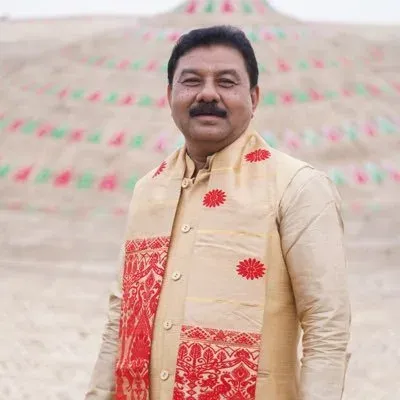
Assam Legislative Assembly Speaker Ranjeet Kumar Dass on Saturday, 27 June expressed confidence that the Vrindavani Vastra — a priceless 16th-century Assamese silk textile currently preserved at the Victoria and Albert Museum in London — would be brought to Assam for public display, with a target of 2027 set for the homecoming. Dass also said efforts are underway to secure a viewing of a separate rare Assamese textile held in a Paris museum.
Decades-Long Dream, Now With Political Backing
According to Dass, the campaign to repatriate — or at least secure a loan exhibition of — the Vrindavani Vastra has been pursued for several years. The initiative has now gained significant momentum following the direct intervention of Chief Minister Himanta Biswa Sarma, who has lent political weight to what was previously a cultural department endeavour.
Dass said he had personally visited both London and Paris in connection with the matter, describing it as an international issue requiring sustained diplomatic and cultural effort. He noted that arrangements to bring the textile from the Victoria and Albert Museum to Assam for exhibition have already been initiated.
What Is the Vrindavani Vastra
The Vrindavani Vastra is regarded as one of Assam's most significant cultural and spiritual artefacts. Commissioned by the 16th-century Vaishnavite saint and social reformer Srimanta Sankardeva, it was woven by associates of master craftsman Madhavdeva at Tantikuchi, near Barpeta. The textile depicts scenes from the life of Lord Krishna and the Bhagavata Purana through intricate silk weaving, blending religious devotion with extraordinary artistic craftsmanship.
Originally spanning several metres in length, surviving portions of the fabric are now housed at the Victoria and Albert Museum in London, making it one of the most consequential surviving examples of Assam's civilisational heritage.
The Paris Connection
Beyond the UK, Dass indicated that another important Assamese textile is preserved in a museum in Paris. He expressed hope that this piece, too, could be brought to Assam for public viewing in the future, though no specific timeline was provided for the Paris artefact.
Cultural Significance and What Comes Next
The Assam government has framed these efforts as part of a broader initiative to preserve and promote the state's rich civilisational legacy. Dass said the people of Assam have long cherished the aspiration of seeing the Vrindavani Vastra in their home state, and he expressed confidence that this dream would be realised by 2027.
This comes amid a wider national conversation on the repatriation of cultural artefacts held in foreign institutions — a subject that has gained traction globally as museums reconsider colonial-era acquisitions. Whether Assam secures a permanent return or a temporary loan exhibition will depend on ongoing negotiations with the Victoria and Albert Museum.
Point of View
But the practical pathway remains opaque. The Victoria and Albert Museum has historically been reluctant to permanently deaccession items, meaning Assam is likely pursuing a loan exhibition rather than a full repatriation — a distinction that matters enormously for cultural sovereignty. Speaker Dass's 2027 target is politically convenient given the Assam assembly election cycle, and Chief Minister Sarma's personal backing adds urgency. However, without a formal bilateral cultural agreement or a confirmed loan arrangement made public, the timeline should be read as aspirational. The broader question — why a masterpiece of Assamese civilisation has sat in London for so long without a serious repatriation push — deserves more scrutiny than it has received.
NationPress
28 Jun 2026
Frequently Asked Questions
What is the Vrindavani Vastra?
The Vrindavani Vastra is a 16th-century Assamese silk textile commissioned by Vaishnavite saint and reformer Srimanta Sankardeva and woven by associates of master craftsman Madhavdeva at Tantikuchi, near Barpeta. It depicts scenes from the life of Lord Krishna and the Bhagavata Purana and is considered one of Assam's greatest cultural and spiritual artefacts.
Where is the Vrindavani Vastra currently kept?
Surviving portions of the Vrindavani Vastra are preserved at the Victoria and Albert Museum in London, United Kingdom. A separate rare Assamese textile is also reportedly housed in a museum in Paris.
When could the Vrindavani Vastra return to Assam?
Assam Legislative Assembly Speaker Ranjeet Kumar Dass has expressed confidence that the textile could be brought to Assam for public display by 2027. He said arrangements have already been initiated following Chief Minister Himanta Biswa Sarma's intervention.
Is the Assam government seeking permanent repatriation or a loan exhibition?
According to reports, the Assam government has been pursuing efforts to bring the textile to the state at least on loan for a public exhibition, as part of initiatives to preserve and promote the state's civilisational heritage. A permanent return would require separate negotiations.
Who commissioned the Vrindavani Vastra and what does it depict?
The Vrindavani Vastra was commissioned by 16th-century Vaishnavite saint Srimanta Sankardeva and woven by associates of master craftsman Madhavdeva at Tantikuchi near Barpeta. It depicts scenes from the life of Lord Krishna and the Bhagavata Purana through intricate silk weaving.