Assam CM Office: Vaishnavite heritage at UK Parliament June 17

Synopsis
The Chief Minister's Office of Assam has announced that the state's neo-Vaishnavite heritage, rooted in the legacy of saint-scholar Srimanta Sankardev and preserved in its Satra monasteries, will be presented at the British Parliament on June 17, 2026, as part of Assam's international cultural outreach.
Key Takeaways
The Chief Minister's Office of Assam announced on June 13, 2026 that Assam's Vaishnavite heritage will be showcased at British Parliament on June 17, 2026 .
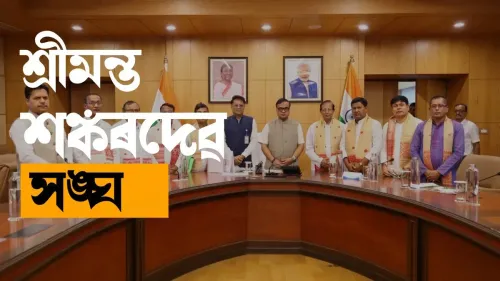
The tradition traces its roots to Srimanta Sankardev , the 15th-16th century saint-scholar who founded Assam's neo-Vaishnavite movement.
Satras — Vaishnavite monasteries across Assam — are the living custodians of this heritage, including Borgeets and Ankiya Naats.
Majuli island, home to several historic Satras, has been on UNESCO's tentative World Heritage list since 2019 .
The event is expected to engage the Assamese diaspora in the UK and could generate cultural-exchange or tourism partnership announcements.
The Chief Minister's Office of Assam announced on Saturday, June 13, 2026 that the state's Vaishnavite heritage will be showcased at the British Parliament on June 17, marking a significant step in Assam's international cultural outreach.
Context
Assam's neo-Vaishnavite tradition, founded by the 15th-16th century saint-scholar Srimanta Sankardev, is among the most distinctive living cultural traditions in South Asia. Sankardev's legacy encompasses Borgeets (devotional compositions), Ankiya Naats (one-act plays), and a rich corpus of performing arts that continue to be practised across the state's Satras — Vaishnavite monasteries that serve as custodians of this heritage.
The announcement positions British Parliament as the venue for what is expected to be a high-profile cultural presentation, bringing Assam's intangible heritage before an international legislative audience and the Assamese diaspora in the United Kingdom.
Policy Backdrop
The event fits within a broader pattern of Indian states using parliamentary and institutional venues abroad for cultural diplomacy. The Government of Assam has been actively promoting its intangible heritage through international outreach, and this event at Westminster represents one of the more prominent platforms secured for that purpose.
Majuli, the river island in Assam that is home to several historic Satras, was placed on UNESCO's tentative World Heritage list in 2019 for its living neo-Vaishnavite cultural landscape. That recognition has lent additional international credibility to Assam's efforts to project this tradition globally. The British Parliament showcase builds on that momentum, aligning state cultural promotion with India's broader soft-power strategy.
Stakeholders and Impact
The primary beneficiaries of such visibility are the Satra institutions themselves, whose practitioners — dancers, musicians, dramatists, and manuscript scholars — stand to gain global recognition. The Assamese diaspora in the UK is expected to be a key audience, offering a community connection to a tradition that many carry as a marker of cultural identity.
Assam's tourism sector also stands to benefit. International showcases of this nature typically generate interest in heritage travel to sites like Majuli and other Satra centres, potentially translating cultural visibility into economic opportunity for local communities.
What's Next
The June 17 programme at British Parliament will be closely watched for any announcements of cultural-exchange agreements or tourism partnerships between Assam and UK-based institutions. Such events have, in comparable cases, led to memoranda of understanding on heritage preservation and academic collaboration.
Observers will also track whether the Assam government follows up with dedicated budget allocations for international heritage promotion, a metric that would indicate how institutionalised this outreach effort becomes beyond individual events.
Point of View
Reflecting the Government of Assam's sustained push to globalise its intangible heritage narrative. The move fits a well-established pattern among Indian states of using high-profile foreign institutional venues to project regional identity and attract diaspora engagement. With Majuli's UNESCO tentative listing providing an international legitimacy anchor, Assam is methodically building a case for its Vaishnavite tradition as a world-class heritage asset. The real test will be whether this event catalyses lasting institutional partnerships or remains a one-off ceremonial showcase.
NationPress
19 Sept 2026
Frequently Asked Questions
What is Assam's Vaishnavite heritage?
Assam's Vaishnavite heritage refers to the neo-Vaishnavite tradition founded by saint-scholar Srimanta Sankardev in the 15th-16th century, encompassing devotional music (Borgeets), one-act plays (Ankiya Naats), and performing arts preserved in Satra monasteries across the state.
Why is Assam's heritage being showcased at British Parliament?
The Chief Minister's Office of Assam announced the event as part of the state's international cultural outreach, using a prominent legislative venue to highlight Assam's living traditions to a global audience and the Assamese diaspora in the UK.
What are Satras in Assam?
Satras are Vaishnavite monasteries in Assam that serve as the primary custodians of the state's neo-Vaishnavite cultural tradition, preserving distinctive dance, drama, music, and manuscript heritage established by Srimanta Sankardev.
Is Majuli a UNESCO World Heritage Site?
Majuli is on UNESCO's tentative World Heritage list, placed there in 2019 for its living neo-Vaishnavite cultural landscape. It has not yet received full World Heritage Site status.
When is the Assam cultural event at British Parliament?
The event is scheduled for June 17, 2026, as announced by the Chief Minister's Office of Assam on June 13, 2026.